
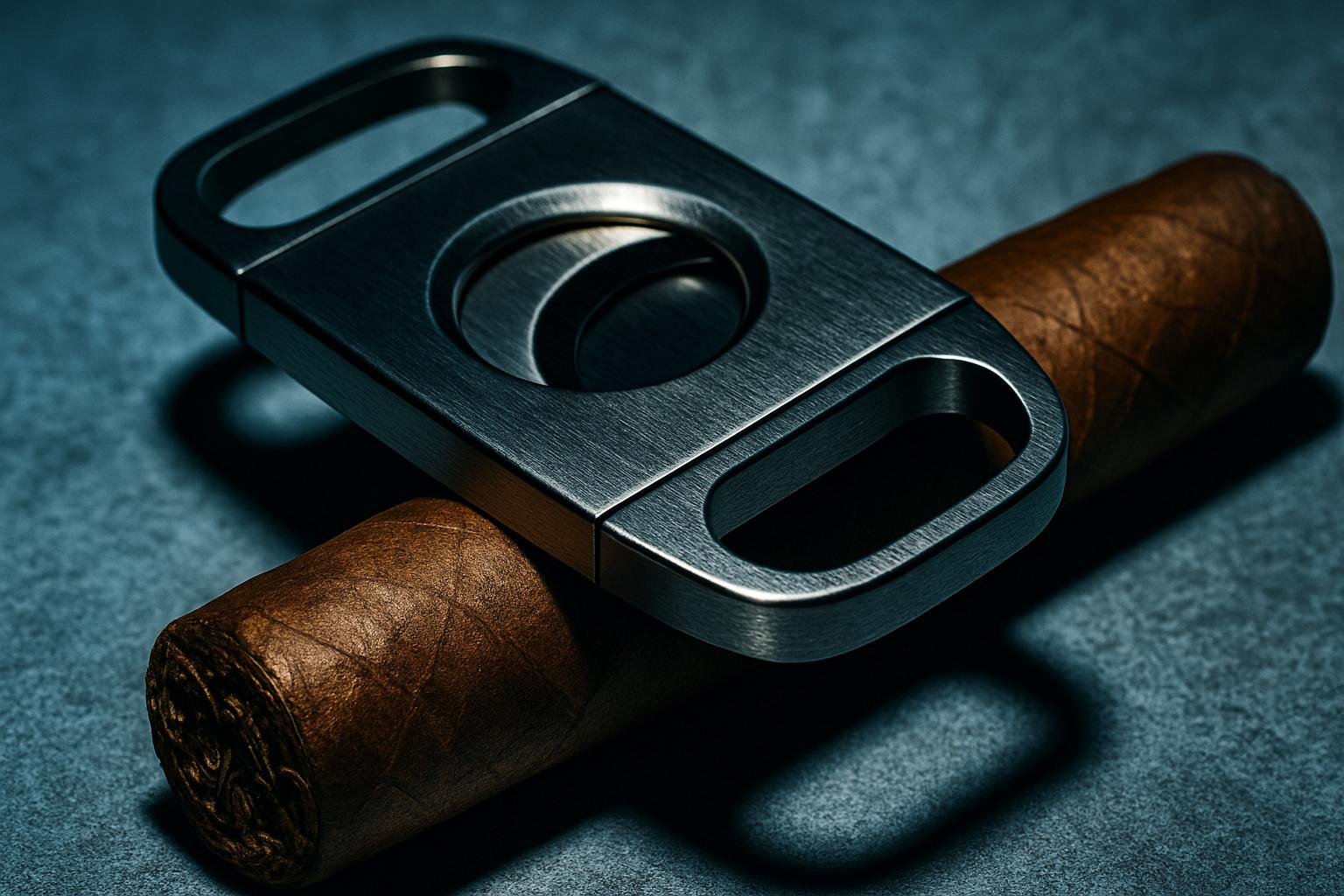
Finding the best cigar cutter can be tricky. There are so many types, and even small details matter. If the cut is off, the smoke can be rough or the wrapper can tear. That is not fun. The right cutter makes a difference. Here are our top picks, based on what users like most:
Why Choosing the Right Cigar Cutter Really Matters
Getting a clean cut is key if you want your cigar to draw well and taste good. A bad cut can ruin an expensive cigar. You might get an uneven burn, unravelling, or bitter flavors. That is frustrating, especially when you invested time and money hoping for a great experience.
A good cigar cutter does not have to be expensive, but it should always feel sharp and easy to control. A dull or badly designed cutter will spoil even the best cigars.
We see many people go with the cheapest option and regret it. Others buy something high-end but never quite figure out how to use it. So it is worth taking a minute to look closer at the main types, what works, and what really does not.
Types of Cigar Cutters and Their Differences
Cigar cutters come in a few main types. Knowing which one suits your style makes it easier to get a reliable cut every time.
- Straight (guillotine) cutters: Classic style, works for most cigars
- V-cutters: Create a wedge-shaped notch, for a focused draw
- Punch cutters: Make a small circle in the cap, keeps the end neat
- Scissor-style cutters: Larger, for very big ring gauge cigars or for a traditional feel
Each style has strengths and some downsides. For example, the straight cutter is easy for beginners and makes a simple, clean cut. But with large cigars, something like a scissor or punch might work better.
What Makes a Good Cigar Cutter?
There are more details than most people realize. When trying a new cutter, pay attention to these:
- Sharp blades: Dull blades crush rather than slice, which can damage the cigar
- Solid construction: Feels sturdy in the hand and does not flex
- Smooth action: The blades should open and close with minimal effort
- Comfortable grip: Should be easy to control, especially for larger hands
- Size compatibility: Make sure it fits the types of cigars you smoke most
If the blades do not line up or the action feels rough, skip it. Those problems will only get worse over time and make cutting cigars harder than it should be.
We find that even small flaws, like slightly uneven blades, can have a big impact. You might not notice at first, but after a few cuts, it gets annoying.
| Type | Best For | Main Drawback |
| Straight Cutter | Most cigars | Possible unravelling with careless use |
| V-Cutter | Medium to large cigars | Too deep of a cut can split cap |
| Punch Cutter | Small ring gauge | May clog or restrict draw |
| Scissor Cutter | Large ring gauge, figurado shapes | Bulkier, sometimes less precise |
Blade Quality: The Real Secret
The steel used in the blade is what separates an average tool from a top performer. Stainless steel is common. Some brands use ceramic or even carbon steel. What matters is sharpness and blade alignment.
A good blade should last for hundreds of cuts without losing its edge. Test by slicing a thin piece off a paper card; if it glides through, the blade is sharp enough.
Watch for things like blade wobble or looseness. Even with sharp steel, if the action is loose, it will be tough to get a precise cut. This is more common with cheap, mass-produced cutters than better-made models.
Comfort and Ergonomics
It may sound odd, but the way a cutter feels in your hand matters. Some are small and easy to drop. Others are too wide for smaller hands. Look for a shape and weight that fits you.
- Smooth, rounded edges - less likely to irritate fingers
- Non-slip material - especially important if hands get sweaty
- Simple, satisfying opening and closing action
Some users like a bit of heft, while others prefer lightweight tools. There is no perfect answer. If possible, try holding different styles before buying.
Ease of Maintenance
Over time, ash and tobacco bits can gum up a cutter. Tools that come apart for cleaning will stay in good shape much longer. Some brands include a small brush or cleaning cloth.
Oiling the blade pivot with a drop of light machine oil can help keep the action smooth. Just do not overdo it; too much oil will cause other problems.
Price vs. Quality - Is Expensive Always Better?
High prices do not always mean top performance. Plenty of mid-priced options work just as well as some luxury models. The difference is often about how long they last, and sometimes about how they feel or look.
- Clean, consistent cuts every time
- Sturdy build quality
- Comfortable grip and easy to use
- Sharp blade that holds its edge
- Easy to carry and store
- Suitable for different cigar sizes
- Simple cleaning and low upkeep
- Good customer feedback
- Secure locking mechanism if needed
- Precision blade alignment
- Too bulky for some pockets
- Certain models dull quickly
- Cheaper materials may warp
- Some cutters gum up after frequent use
- Blade can’t be replaced on most models
- Some types not suited for all cigars
- Difficult for left-handed users
- May require extra care to avoid breaking
- Price does not always match quality
- Occasional reports of uneven cuts
It is possible to buy a great tool at a bargain price. At the same time, not every expensive model delivers a better experience. Try to match quality and ease of use to how often you smoke cigars, instead of just shopping for a brand name.
Best Situations for Each Cutter Type
Best for Beginners
Best for Big Cigars
Straight cutters tend to be easiest to use for most cigar shapes. They are simple to line up and rarely slip. Good for beginners who want to avoid mistakes and wasted cigars. Look for a straight guillotine type with a sharp blade and dual sides for the cleanest cut.
Big, thick cigars often need a punch or a scissor-style cutter. These can handle larger ring sizes without tearing the wrapper. If you like torpedos or big ring vitolas, a scissor type will give you the control needed without forcing the cut.
How To Cut a Cigar Without Making a Mess
If you are still getting an uneven cut, check your cutter blades for damage. Or, try a different style, some hands just fit punch or v-cutters better.
Choosing Based On Lifestyle or Use
The “best” cutter might change based on where and how you smoke.
- For travel: Compact, locking models work well (punch cutters often fit on keychains)
- At home: Size and weight can be larger for comfort and control
- For gifts: Look for models in gift boxes or with warranty
- Specialty cigars: Torpedoes or figurados work best with scissors or sharp v-cutters
Many choose to keep one tool in their pocket and another at home. This is normal and practical, especially if you smoke with friends.
How We Chose Features That Matter Most
When reviewing cigar cutters, user reviews matter a lot. Cut quality, blade sharpness after repeated use, how the action feels, and grip comfort stand out in good feedback. Fancy packaging or branding barely moves the needle. People care about real-user results more than hype.
Issues that come up again and again with less reliable products:
- Blade dulls or chips after a few uses
- Cutter does not close tightly, leaving ragged edges
- Spring mechanism fails or breaks
- Difficult to clean or comes apart too easily
- Not suitable for larger cigar sizes
- Blades do not line up, making cuts uneven
On the other hand, the models that get repeat praise all seem to make cutting easy, satisfying, and repeatable. For most smokers, that is more important than anything else. A tool you do not have to think much about is worth its weight in gold.
Frequently Asked Questions About Best Cigar Cutter
What type of cigar cutter is best for beginners?
Straight cutters, sometimes called guillotine cutters, are often easiest for beginners. They are simple to use, easy to line up, and work with most common cigar shapes.
How do you know if a cigar cutter blade is sharp enough?
Try cutting a thin business card or a spare cigar cap. If it slices smoothly without crushing, the blade is sharp. Ragged or slow cuts mean it is time to replace the tool.
Why does my cigar unravel after being cut?
Unravelling usually happens because the cut went too deep, or the blade crushed the cap instead of slicing it. Use a sharp cutter and aim just above the shoulder of the cap.
Is a v-cutter or punch better for large cigars?
V-cutters work best for medium to large cigars and give a deeper notch for a strong draw. Punch cutters are better for smaller ring gauges as they can clog with big cigars.
Can you use a cigar cutter for different cigar shapes?
Most straight cutters can handle round cigars and even torpedoes if you are careful with placement. Scissors offer the most flexibility for odd shapes. Punches do not work well with pointed or flat caps.
Picking a cigar cutter is not always easy, but paying attention to how it feels and cuts is worth the time. Are there little details about your cigar habits that change what type of cutter you prefer?