
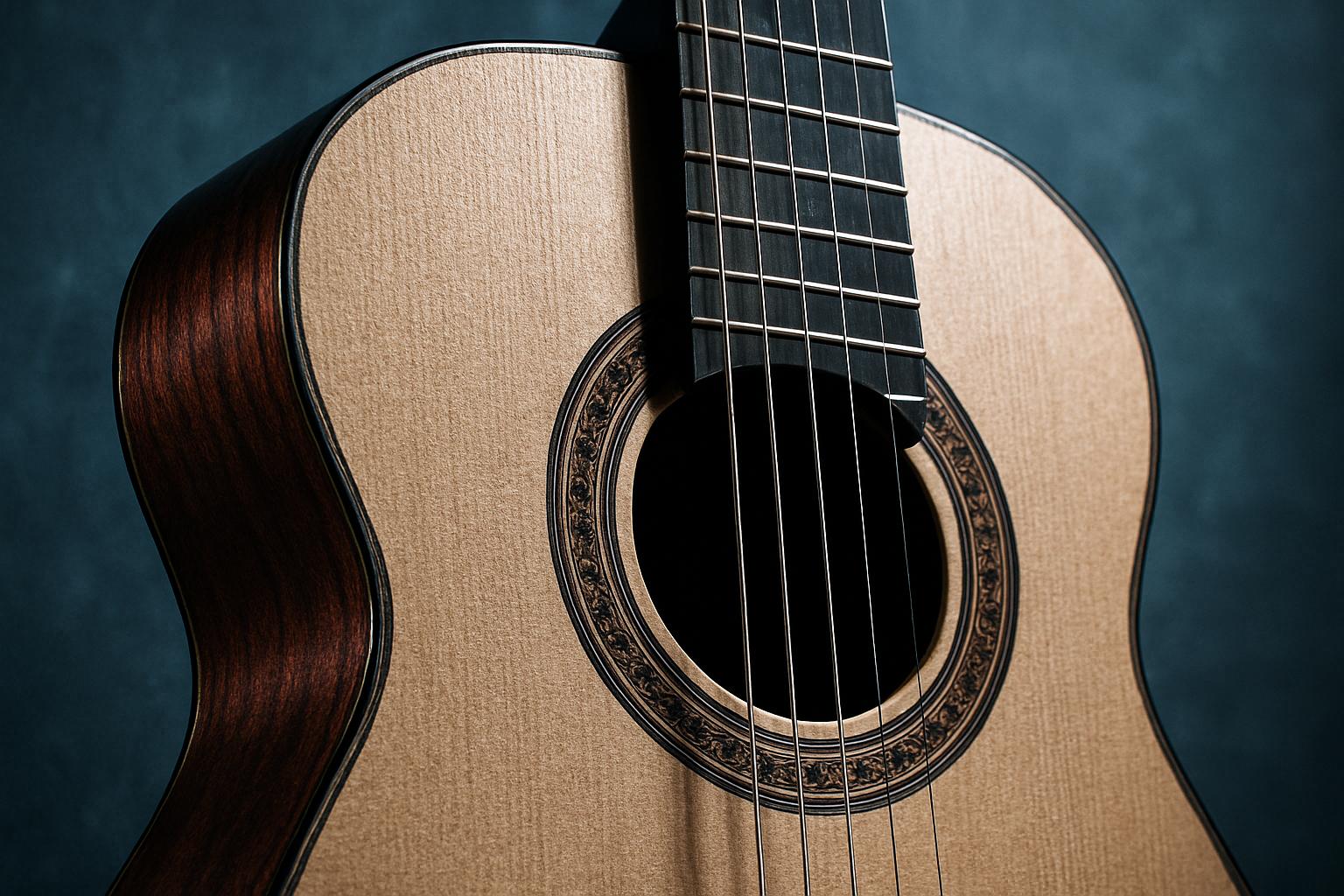
Shopping for the right classical guitar can feel tricky. Sometimes you find yourself reading conflicting advice, or sorting through endless specs with no real idea what matters for your playing needs. If your goal is tone, comfort, and value, or simply a guitar that gives you joy to pick up, you are not alone. Here are five top choices based on what real players say:
What Makes a Classical Guitar Stand Out?
Not all classical guitars are created for the same player or situation. Some are light, easy for beginners, others offer richness and detail a recording artist wants. The details might look subtle, but they change playability and sound dramatically.
Key Features to Consider
Sometimes, the difference between an inspiring guitar and a dud is only clear after you have played for a few hours.
Here are qualities that really define a good classical guitar:
- Top wood type (spruce or cedar for most classicals) changes tone and response.
- Fingerboard and neck shape affect comfort, especially for smaller hands.
- Scale length (distance from nut to saddle) affects string tension, so pay attention if you prefer easy action.
- Build quality, even small misalignments or rough edges can ruin the playing experience.
- Finish and design do matter: gloss is traditional but can feel sticky; satin is less flashy but easy to play.
Many beginners expect more expensive guitars to be always better. In practice, quality control is more important than price alone. Sometimes you get lucky finding a hidden gem for less. And sometimes, you try something supposedly high-end and it just does not feel right to play.
Classical Guitar Woods Explained
Certain tonewoods dominate the world of classical guitars. The most common choices for tops are spruce or cedar, with rosewood or mahogany for backs and sides.
| Wood | Tonal Character |
| Spruce | Bright, clear, plenty of attack, popular for projection and traditional sound |
| Cedar | Warm, rich bottom, more round and intimate, popular with fingerstyle and softer styles |
| Mahogany | Smooth, woody, less complex overtones, middle-focused |
| Rosewood | Deep, articulate bass, lush trebles, strong sustain |
Sound preferences are personal. Some players say spruce is too cold, others think cedar gets muddy. It often depends on your playing style and the rooms you play in. Try to find a shop where you can compare these side by side.
Common Classical Guitar Sizes
There is no true one-size-fits-all in classical guitars. What works for a large-handed adult might not suit a child or someone with small hands. Here is a quick overview:
- Full-size (4/4): best for most adults; typically 650mm scale.
- 3/4 size: good choice for children, teens, or adults with very small hands.
- 1/2 and 1/4 size: for very young beginners.
- Thinline or slim body: easier to hold for smaller frames, less deep sound.
It is easy to overlook smaller sizes, but for many learners, a good 3/4 guitar makes all the difference in enjoying practice.
Comfort Factors and Playability
Comfort is not as easy to measure as tone, but it is even more critical for learning and enjoyment. If a guitar is uncomfortable, you will lose motivation fast.
Areas to focus on:
- Neck width: Classical guitars almost always have a wider neck (typically 2 inches at the nut), which can be tough for small hands.
- String height (action): Too high and it is hard to press; too low and you get buzzing.
- Body depth and weight: Lighter, slimmer bodies are more manageable for younger players.
- Finish: Rough frets or sharp edges kill practice time.
People often forget setup and adjustability. A properly set up instrument, regardless of price, will feel a lot smoother to play.
What Should You Spend?
People ask this all the time: how much should a classical guitar cost for a learner? There is no single answer, but it is possible to classify guitars like this:
| Price Range | What to Expect |
| Entry ([price omitted]-[price omitted]) | Laminated tops, simple finish, good starter for beginners, needs setup |
| Intermediate ([price omitted]-[price omitted]) | Solid wood top, better tuners, improved build, more balanced tone |
| Advanced ([price omitted]+) | All-solid woods, handmade details, beautiful tone, suitable for recording and performing |
Saving money on the initial purchase may seem attractive, but very cheap guitars often arrive with high action, rough frets, or tuning instability. That can be more frustrating in the long run. Still, expensive models are not always better. Some brands raise the price for style, not sound quality.
Buyer’s Guide: Step-by-Step
Solid Top vs. All-Laminate
Gloss vs. Matte Finish
Solid wood tops (spruce or cedar) usually resonate better and age well. All-laminate guitars are more durable for travel or beginners but can sound duller and lack complexity.
Gloss finishes offer a shiny, eye-catching look but may feel sticky against your arm when playing long sessions. Matte or satin finishes feel smoother and show less fingerprints but may appear less striking up close.
Table of Pros and Cons: Common Beginner Mistakes
- Solid top improves sound over time
- Wide neck gives space for clean fretting
- Laminates handle rough play without damage
- Matte finish is less prone to fingerprints
- Affordable models can still sound decent
- Lighter guitars are easier for long lessons
- Some have truss rods for easy adjustment
- Comes with extras like gig bag or tuner
- Cheap models may have bad fretwork
- High action on some makes playing hard
- No electronics for amplification
- Wide neck too much for small hands
- Laminates do not age as nicely as solid tops
- Case not always included
- Finish might chip or crack
- Tuning machines sometimes low quality
What Separates a Great Guitar from the Rest
If you ask ten players their favorite guitar, expect ten different answers. Some will look for looks or finish, others swear a certain wood type is non-negotiable. The best bet is always to start with the basics: sound, feel, and value in the price range you can handle.
If possible, avoid judging by looks alone. And honestly, the only fair test is how much you enjoy playing yours. If a guitar makes you want to play more, then you are already ahead.
Common Questions on the Best Classical Guitar
What is the best classical guitar for beginners?
The best classical guitar for beginners is usually a full-size or 3/4 size model with a solid wood top and a comfortable neck. Low action helps beginners avoid finger pain and makes learning more enjoyable.
How do I know what size classical guitar to buy?
Classical guitars come in several sizes. Most adults play a full-size (4/4). Children or smaller adults might prefer 3/4 or 1/2 size guitars to avoid hand fatigue.
Why do classical guitars have wide necks?
A wider neck makes it easier to play detailed classical pieces, as it gives more space between the strings. This helps with complex fingerstyle, but some people find it less comfortable at first.
Is a solid top worth paying extra for in a classical guitar?
In most cases, yes. A solid top improves sound and tone as the wood ages and resonates better. If budget allows, a solid top is often the best investment for long-term enjoyment.
How is a classical guitar different from an acoustic guitar?
Classical guitars use nylon strings and have wider necks for fingerstyle playing. Acoustic guitars use steel strings, are louder, and often have narrower necks better suited for strumming chords.
Finding the best classical guitar might take a few tries. Some factors will always matter most: comfort, setup, tone, and the urge you feel to play more. Is there one feature or feeling that convinced you a guitar was really the right one?