
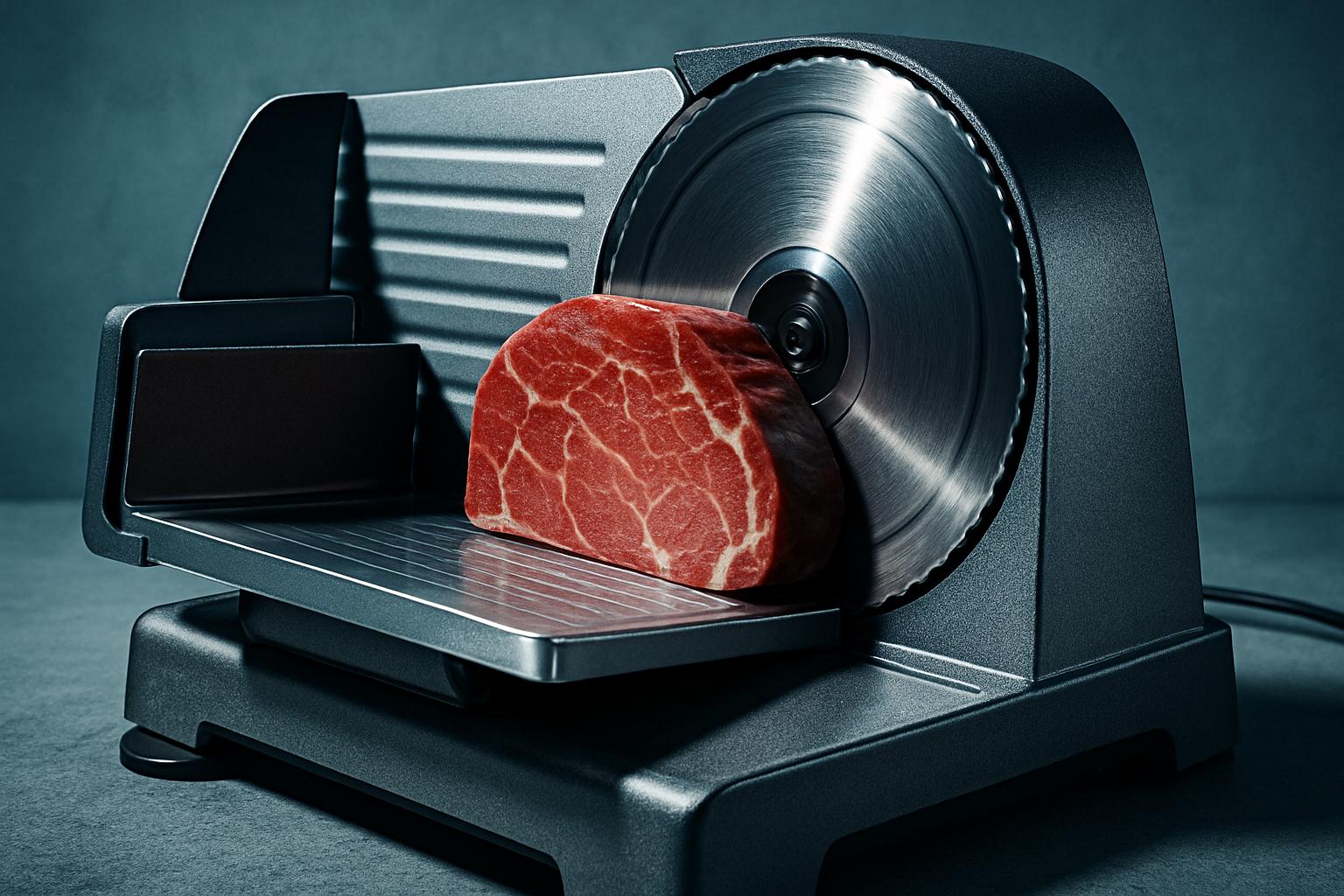
Shopping for a home meat slicer can feel overwhelming. There are so many types out there, and every kitchen has different needs. Whether you want thin slices for sandwiches or to prep jerky, finding a reliable machine without overspending can be frustrating. After going through dozens of user opinions and testing criteria, these are the ones that stand out:
What to Expect From a Home Meat Slicer
The biggest difference between home and commercial slicers is size. Most home machines are lighter and easier to store, but they might not cut through frozen meat or dense veggies as easily. Expect to see blades between 7 and 10 inches, plenty for most home cooks, but maybe not for bulk food prep.
People sometimes forget that cleaning is a big part of ownership. If the machine takes too long to take apart, it might never make it out of the cabinet. And if it does not slice consistently thin, it could just gather dust.
A powerful motor is not everything, a lighter motor can last longer if used in short bursts and allowed to cool between sessions.
Price is not always a perfect guide. Some of the better models cost less than you would expect. But be careful with bargain-bin slicers. They often struggle with thick cuts or will wear down sooner than you think.
Blade Type: What Really Matters
Most blades are made from stainless steel. Some are serrated, and others are smooth. Serrated blades grip dense meat and rustic bread better. Smooth blades excel at thin, even slices of deli meat. Both do the job, but for ultimate precision, smooth edges tend to be preferred in home kitchens. If you plan to slice cheese regularly, double-check that the model is rated for it. Cheese dulls blades quickly, and not all consumer-level slicers can handle it.
If your blade is not sharp, even the best slicer will feel underwhelming. Sharpening attachments can save time and hassle, but they are not always included.
How Big of a Slicer Do You Need?
This is one area where everyone overestimates. For most people, a 9-inch blade will cover nearly every job, from smoked brisket to vegetables. If your space is tight, a seven-inch model is easier to handle and easier to clean, but will not make quick work of large roasts.
| Blade Size | Use Case |
| 7 inches | Sandwich meat, cheese, veggies |
| 9 inches | Larger cuts, bread, bacon |
| 10 inches | Bigger roasts, semi-frozen meat |
Countertop space matters more than you think. Most slicers project about 18 inches from the back of the unit to the front of the food tray when loaded up. If your counter is shallow, measure before buying.
Safety Features That Actually Make a Difference
People often rush through set-up and cleaning, and accidents can happen. Slicers do not forgive mistakes. Look for:
- A recessed or covered on-off switch
- Blade guard to protect fingers
- Nonslip feet or suction cups for stability
- Locking mechanism to stop the blade when not in use
If kids are around, the simple act of unplugging after each use may save a trip to the ER. Even adults sometimes forget about the sharp edge when washing parts. Take five extra seconds to get familiar with the safety details of your model.
Which Settings Matter for Day-To-Day Use?
Slicing thickness is the number-one feature people look for. The adjustment knob should work smoothly and offer enough range for paper-thin cuts up to thicker steaks. Some models are clunky and jam at the thinnest or thickest settings. Try to find machines with good reviews for stability at every thickness setting. A decent slicer should go from about 1/32 inch thin up to a half inch for thick slices.
Cleaning is the next big test. If the tray and blade detach easily, maintenance takes less than ten minutes. If you have to reach around gears or struggle with screws, you may dread using the machine. Some trays and blades are marked as dishwasher-safe, but check your manual first, excess heat can dull stainless blades that are not heat-treated.
Electric vs. Manual: Pros and Cons
Electric models are much faster for bulk slicing. You can process several pounds in a matter of minutes. Manual slicers are rare in home kitchens but offer full control, and there is no risk of burning out a motor. Some people prefer the old-school approach, especially for small jobs where control matters more than speed.
Electric Slicer Features
Manual Slicer Features
Electric slicers work quickly and are easier for bulk slicing. Most have an adjustable thickness dial and built-in safety features. They often include removable trays for cleaning. Electric models require a power outlet and make more noise but save time for regular users.
Manual slicers take longer but offer more control. Good for slicing roasted meats, vegetables, or fruit. They are quieter, need no electricity, and are simple to maintain. Some people find them rewarding for specialty charcuterie or when space is limited.
How We Judge the Best Home Meat Slicers
Here is a closer look at the things that actually make a difference for slicing at home. A fancy brand sticker does not mean the product will last, and not all features translate into better results.
Maybe the most common user complaint is weak slicing power or skipping. A good slicer should not bog down on basic jobs like ham or roast beef. But there is a tradeoff, more power sometimes means a louder machine. In small apartments, go for less wattage, and just work slowly when slicing denser meats.
Bells and whistles sometimes distract from what matters: Does the machine slice evenly and clean up easily? A basic, sturdy handle and smooth moving tray will outlast “smart” panels or displays that break after a few months.
Construction Materials
Metal construction usually wins for durability. Some plastic housing is fine to save weight, but the contact points (like gears and edging) should be metal if possible. Plastic trays work, as long as they feel strong and sturdy.
You want a feeding chute that is easy to load. If it is awkward, you may have a hard time getting consistent slices, especially near the end of the roast or block of cheese. Try to envision using it every week for over a year, will those components hold up, or do they look cheap?
Best Home Meat Slicer Buyer’s Checklist
- Blade material (stainless steel or carbon steel for sharpness)
- Motor power (at least 150 watts for regular meat cutting)
- Size and weight (will it fit your counter and is it easy to store?)
- Slicing thickness range (should adjust from thin to thick cuts)
- Removable parts for fast cleaning
- Stable base (non-slip feet or suction cups)
- Safety features (recessed switch, blade lock, finger guard)
- Noise level (especially in apartments or for early mornings)
This is not an exhaustive list, but missing any item here will probably lead to disappointment over time. Extra accessories, like a second blade or tray, can seem minor but may really come in handy.
A slicer that is awkward to clean is a slicer you will rarely use. Fast set-up, fast takedown, and no frustrated swearing every time you want a sandwich, this saves headaches down the line.
Features That May Not Matter As Much
Some slicers advertise extra-thick blades, extra-large trays, or fancy add-ons. Most home kitchens do not need commercial-grade power or size. A quiet, middle-of-the-road unit that fits in your cupboard will get far more use.
USB charging, digital screens, or smart controls may sound modern but are more likely to break. Focus on performance and cleaning first, before getting distracted by gadgets.
- Even, consistent slices every time
- Faster food prep for sandwiches and snacks
- Can save money by buying whole cuts
- More control over portion sizes
- Pretty easy to clean with the right design
- Lets you prepare specialty cuts for jerky or charcuterie boards
- Usually compact enough to store away
- Safer than using a knife for large volumes
- Cleaning can still be time-consuming
- Cheaper models may struggle with dense foods
- Can be loud, depending on the motor
- Takes up counter or cupboard space
- Some parts may not be dishwasher safe
- Lower end machines can burn out from heavy use
- Initial setup takes effort to learn safety
- May not handle cheese or frozen meat unless rated for it
Maintenance and Cleaning Tips
The best way to make any slicer last is to clean and dry it after each use. Most owners seem to wait too long and let juices dry onto the blade, which makes each cleaning harder. Disassemble carefully, if something seems stuck, do not force it. Some owners skip sharpening entirely, which can slow down the slicer and lead to uneven cuts.
Store the machine with the blade guard in place and the cord wrapped, if possible. A plastic cover over the machine helps keep dust out if it sits on the counter.
Who is a Home Meat Slicer For?
Not everyone needs one, honestly. A serrated kitchen knife does fine for most things. But anyone making sandwiches for a big family will save time. Home cooks who buy roasts or blocks of cheese in bulk can save money over time. Special diets, like low sodium or keto, benefit from custom-thickness cuts that store-bought deli cannot match. People making jerky or prepping large batches of food for freezing also swear by owning one.
If the idea of washing another gadget sounds like a headache, it might be better to skip it. If you make two sandwiches a week, cutting by hand is fine. But if you want perfect slices and save money by buying in bulk, a good meat slicer pays for itself quickly.
What Can You (and Can Not) Slice?
Meat slicers do more than just slice meat. Thin slices of cucumber, zucchini, or onion for salads come out perfect. Bread can usually be handled, though you want to use a serrated blade for crusty loaves. Cheese works if the slicer is rated for it, but soft cheese may gum up the blade if it is not sharp enough. Slicing frozen meat is usually not recommended unless the manual says it is okay. Even then, it is best to partially thaw for the cleanest cuts.
Frequently Asked Questions About the Best Home Meat Slicer
Do I really need a home meat slicer or will a knife do the job?
For small amounts, a sharp kitchen knife can work well enough. But for anyone making regular sandwiches, prepping meals ahead, or slicing bulk meat for jerky, a home meat slicer saves time and gives more even results. Many find that once they own one, they use it for bread, cheese, and vegetables as well.
What kind of maintenance does a home meat slicer require?
Clean it thoroughly after each use, preferably by taking apart all food-contact parts. Blades may need sharpening with regular use. Wipe down the main body with a damp cloth and dry every part well before storage. Store with the blade guard in place.
What should I look for when buying the best home meat slicer for cheese and hard foods?
Look for a slicer rated for cheese, check product details for this. A smooth blade is usually better for even results, but harder cheeses or denser foods may need a more powerful motor and thicker blade. Removable trays help a lot with sticky cheese clean-up.
Can I use a home meat slicer for bread and vegetables?
Most models are able to slice bread and vegetables. Use the right blade, serrated for bread, smooth for veggies. Avoid slicing very soft or overripe foods, as they may not hold shape well. Check your slicer’s manual for recommended uses.
Can I slice frozen meat with a home meat slicer?
Most home meat slicers are not designed for fully frozen meat. Partially thawing the meat works best, making uniform slices and protecting the blade. Trying to slice rock-hard frozen cuts may dull or damage the knife edge.
Which feature matters most to you when picking the best home meat slicer, slice thickness, cleaning time, or power? It is not always easy to decide, but focusing on what you actually cook can make the choice much clearer.