
START HERE
The short answer
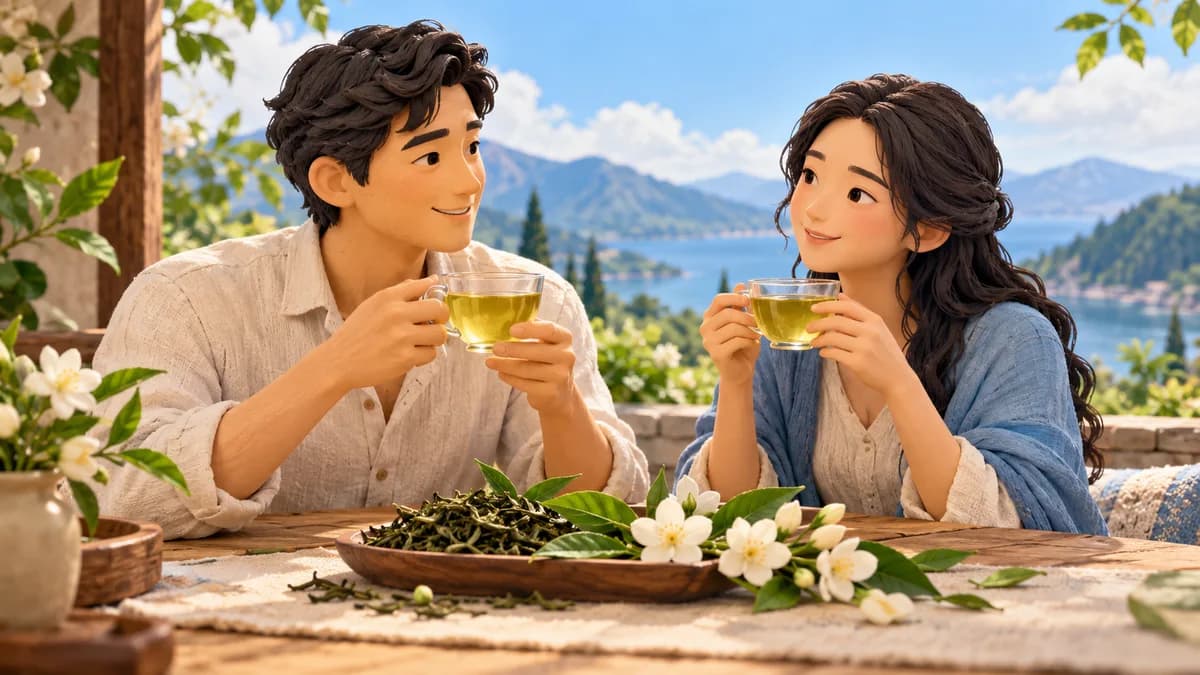
Green tea describes the tea base; jasmine describes a floral scent or ingredient. Many jasmine teas are green teas scented with jasmine blossoms, so these are overlapping descriptions rather than opposing categories.
- Check the tea base instead of relying on the front name.
- Floral aroma does not make tea caffeine-free.
- Compare the same serving size and brewing method.
The tea base explains the overlap
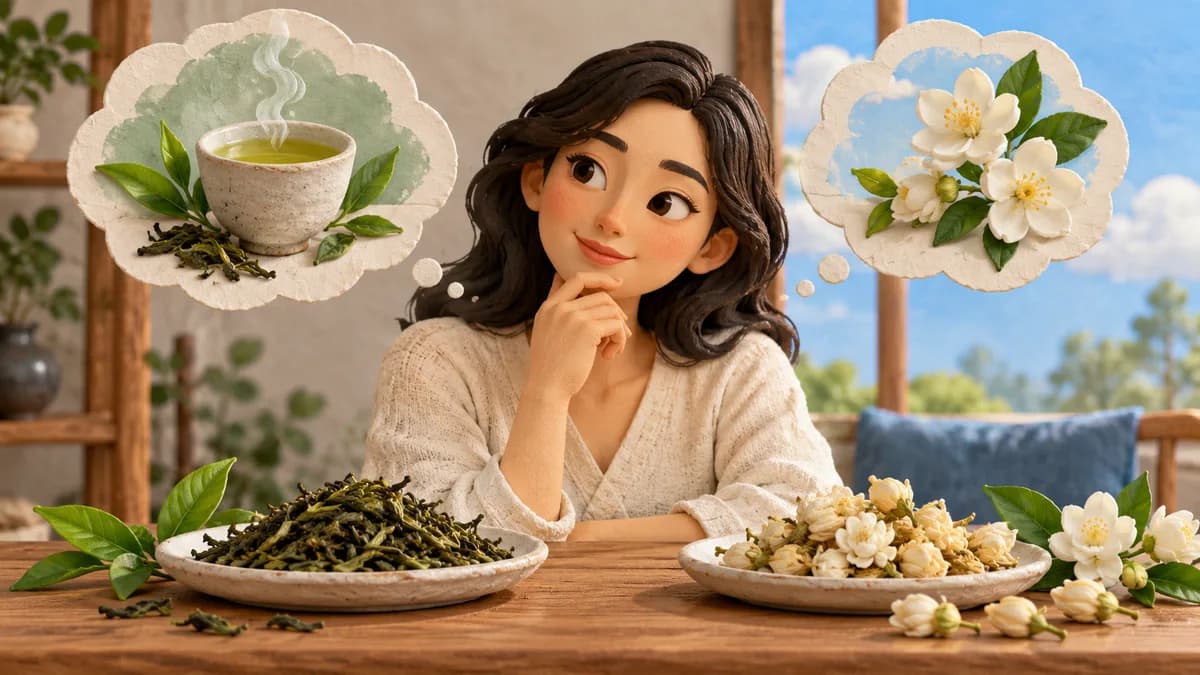
A product can be both jasmine tea and green tea. Numi's ingredient list, for example, identifies green tea scented with jasmine flowers. The green leaves provide the base, while the jasmine adds another aromatic component. Buying jasmine does not necessarily mean switching away from green tea.
Read beyond a decorative flower image. Some blends may include other tea types or botanicals, and the ingredient list is the simplest way to tell what is actually inside. Harney's Dragon Pearl Jasmine also describes white tips in its green-tea blend, showing why a broad category name is not a complete recipe.
Sources: Numi Jasmine Green scenting and ingredients; Harney Dragon Pearl Jasmine ingredients and brewing
Scenting is different from leaving flowers in the cup
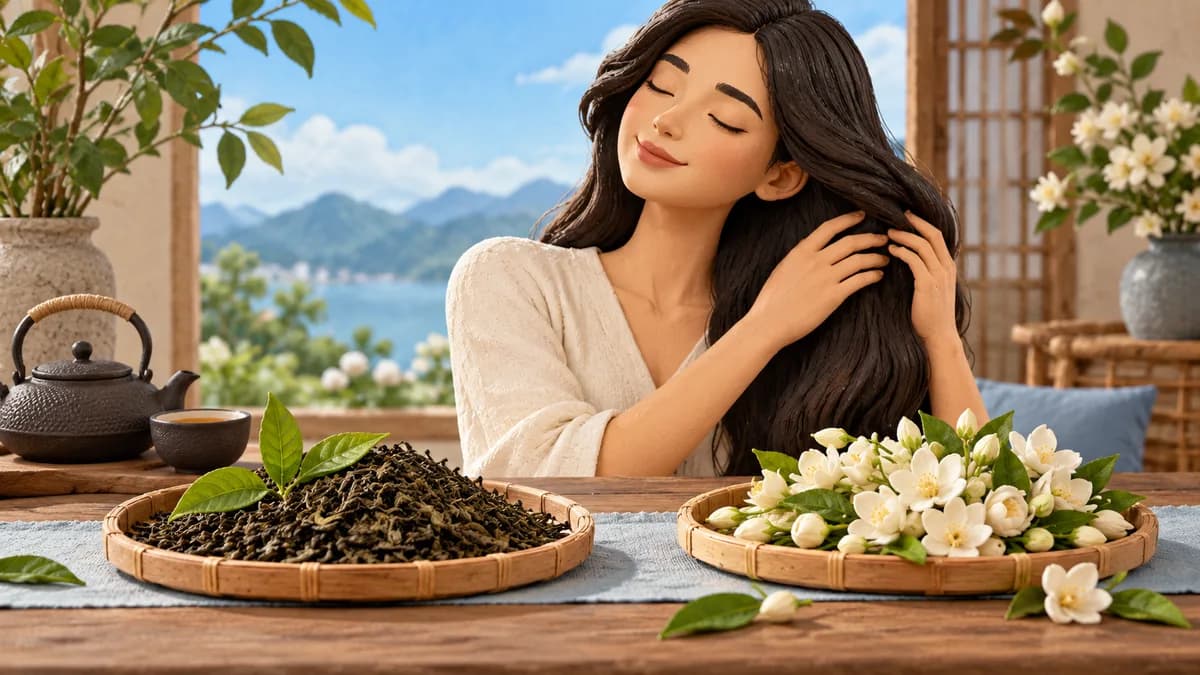
Traditional scenting lets tea leaves absorb aroma from jasmine blossoms. Numi describes repeating that process three times for its Jasmine Green. A finished tea therefore does not need a cup full of visible petals to have a jasmine character.
Other products may describe flavorings or additional ingredients differently. Compare the actual wording rather than assuming every jasmine tea follows the same process. A scenting description is useful information about production, but it is not a guarantee that you will prefer the resulting fragrance.
Taste depends on more than the category
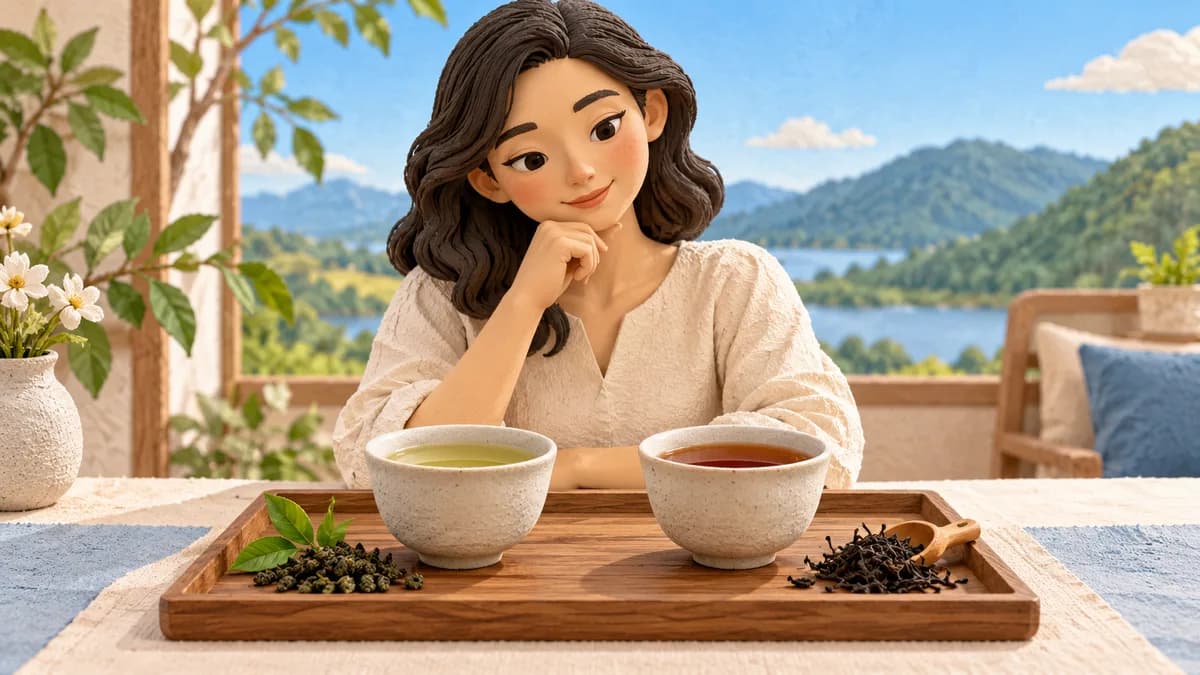
Plain green tea and jasmine-scented green tea can share a similar underlying leaf character, with the jasmine version adding a floral impression. Whether that seems delicate or overpowering is personal. We have not taste-tested the products to establish a universal preference.
Preparation can also change the result. A small mug, long infusion or hotter water can make a cup seem stronger than the same tea prepared to its package directions. When comparing two teas, keep the water amount and preparation consistent enough that you are comparing the tea rather than two unrelated recipes.
| Your preference | Useful starting choice | Check before buying |
|---|---|---|
| Explore the leaf flavor | Plain green tea | Origin, style and preparation |
| Prefer a floral aroma | Jasmine-scented tea | Base tea and scenting ingredients |
| Need simple preparation | Bags or sachets | Recommended mug size |
| Want dose flexibility | Loose leaf | Infuser and measured portion |
Jasmine does not remove caffeine
The tea base is the first caffeine clue. A jasmine-scented green tea still contains caffeine unless it has been specifically decaffeinated, and FDA notes that decaffeinated tea can retain some caffeine. A floral name or a pale cup is not evidence of zero caffeine.
Do not assign one exact caffeine figure to the entire jasmine category. Leaf quantity and brewing conditions affect the prepared drink. If you need a reliable limit, ask the manufacturer what its stated figure refers to and discuss individual restrictions with an appropriate professional.
Sources: FDA caffeine guidance; Rishi caffeine and brewing FAQ
Choose by routine and flavor preference
Start with a small package if you are unsure about floral teas. Wrapped bags are convenient away from home, sachets simplify portions, and loose leaf lets you adjust the dose. None of those formats alone proves that a tea is better.
Keep the package instructions and note what you changed between cups. If the first result is too intense, try a measured adjustment instead of deciding that all jasmine or all green tea tastes that way. Our buying guide compares exact jasmine formats without presenting customer opinions as tasting tests.
Sources: Harney Dragon Pearl Jasmine ingredients and brewing; Davidson loose-leaf jasmine directions
Common questions
Is jasmine tea always green tea?
No. Green tea is a common base, but check the ingredients of the specific blend.
Which one is healthier?
This comparison does not establish health superiority. Choose based on ingredients, caffeine needs and taste rather than treating either category as a remedy.
Does visible jasmine mean stronger flavor?
Not necessarily. Tea can absorb aroma during scenting, and visible petals do not measure the strength of the brewed cup.
PUT IT INTO PRACTICE
Compare your options
Compare bags, sachets and loose-leaf packages.
Compare jasmine teasSources and editorial approach
ChooseRight researched the sources below to explain the topic and its practical trade-offs. Examples are illustrations, not results from our own product testing. Sources checked October 28, 2026. Artwork is AI-generated for explanation and does not document hands-on testing.