
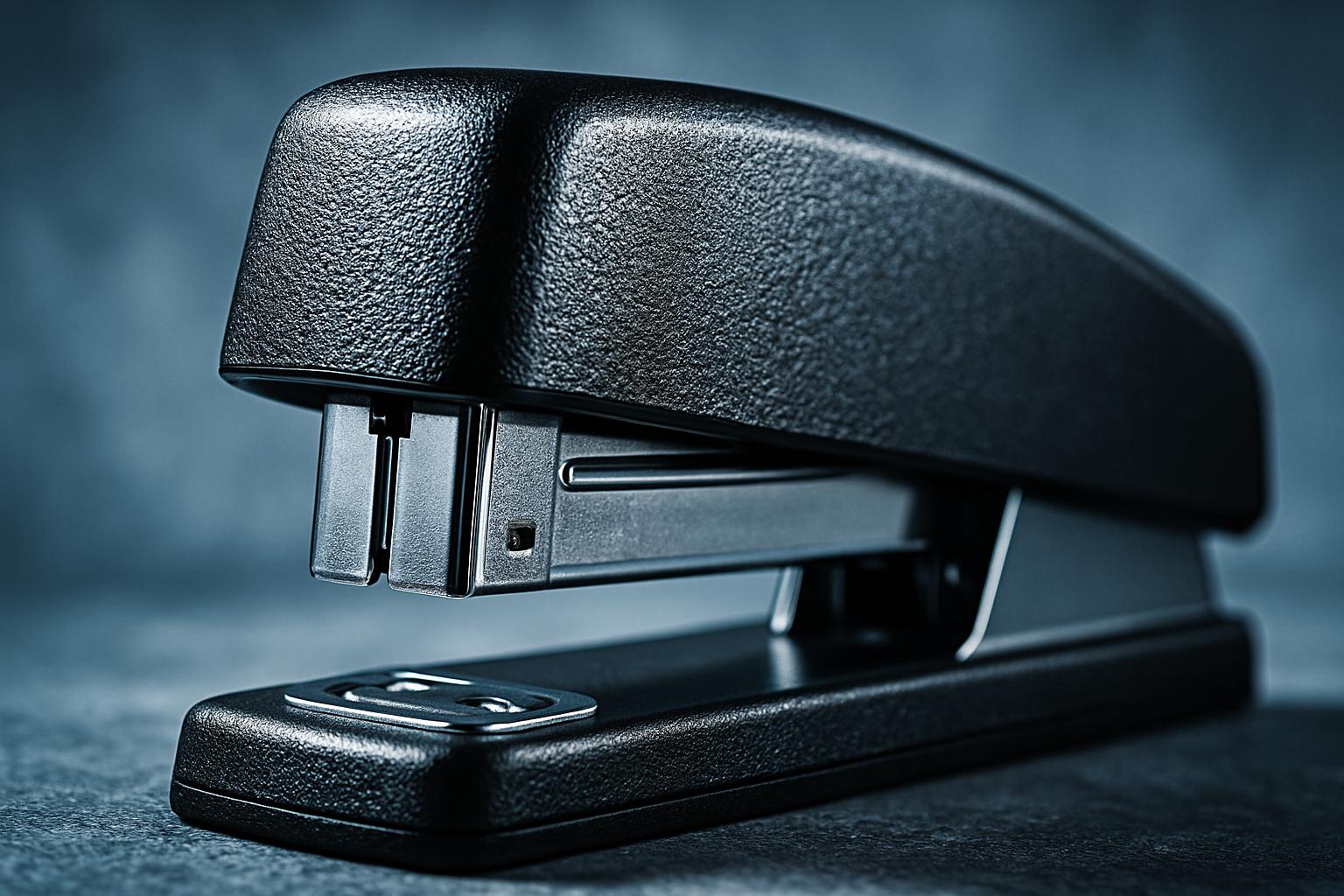
Anyone who has struggled with a stapler that jams or refuses to punch through a small stack knows how annoying it can be. Looking for one that actually works, day in and out, feels harder than it should. It should be simple, but the market is crowded and not every option delivers. Below are the top 5 choices picked after comparing user reviews and reliable testing:
What Makes a Stapler Worth Buying?
Not every stapler is made the same. Some only handle a few pages, others can take on thick reports. If reliability, comfort, and value matter, then it pays to focus on the small details most buyers skip. Does it feel balanced in your hand? Is refilling quick, or a hassle that brings you to a stop every time?
A good stapler should never jam during normal use. If you have to wrestle with it, or feel like it might snap, it is time to rethink the purchase.
One thing to remember is that price does not always mean performance. Many expensive models underperform, while some affordable ones just work well every single day. It comes down to parts quality, staple compatibility, and the mechanism inside, that is the unglamorous reality.
Key Features to Watch Out For
This is where things get interesting. All marketing aside, a few features actually matter. Here they are, but not every situation needs everything below:
- Sheet Capacity: The most common mistake is buying one that cannot handle your usual paperwork. Always check the maximum sheets it can staple.
- Jamming Mechanism: Some have anti-jam technology, others leave you picking out stuck staples. Reviews often mention jamming, do not ignore them.
- Staple Loading: Front-loading trays are usually faster and less messy. Bottom-loading models are harder to refill, especially if you are in a hurry.
- Size and Weight: Compact models are easier to store and move. Larger models handle more pages but take up more space.
- Base Grip: A non-slip base is underrated until you wrestle with a slippery one on a smooth desk.
- Build Quality: Plastic models crack over time, while full-metal builds tend to last longer.
- Opening Angle: If you post things on a board or wall, a model that opens flat is a necessity.
Extra Features, Do You Really Need Them?
Features like staple-removers or built-in counters sound great, but often, they end up unused. They can add to the cost, too.
Choose a stapler that does a few things well rather than one stuffed with extras. Simplicity often beats loaded features that break after a few months.
Manual Use
Electric Use
Manual staplers are cheap, lightweight, and fit anywhere. They are perfect for students or a small office, just grab and go. Less likely to break, too.
Electric models process large stacks fast, so you save time on big projects. They lower hand strain, but cost more and need batteries or a power outlet.
Stapler Types, Which One Fits Your Needs?
Here is a breakdown of the main types on the market. We have tested each type and saw some things that might surprise you. Not every design is for every desk.
| Type | Main Advantage | Main Drawback |
| Standard Desktop | Low cost, reliable, easy to refill | Limited to small stacks |
| Heavy Duty | Handles thick packets | Bulky, not portable |
| Electric | Fast, reduces effort | Needs power, more parts to break |
| Plier | Great for tags, small projects | Awkward for big stacks |
| Mini | Pocket-sized, lightweight | Only for very thin stacks |
Common Questions When Picking a Stapler
If you only staple a few pages, any basic model will work. But working with thick reports, often or for long stretches, calls for a heavy-duty or electric stapler. Think about your daily pattern.
Some people obsess over how far the staple bends, or whether the device sits flat. Sometimes, that matters. Other times, small quirks do not bother anyone. Ergonomics matter, though, if your hand hurts after a few uses, choose something else.
And try testing before you buy, if you can. Some products look sturdy but flex during use.
How to Find a Reliable Stapler: Step-by-StepSimple steps can help avoid disappointment. Here is a checklist that has worked well for most buyers.Decide on Manual or ElectricThink about how many pages you usually staple daily and whether you need to move your stapler between rooms.Check Sheet CapacityCompare your paperwork to the manufacturer’s stated maximum sheets. Always aim for a higher limit than your biggest regular bundle.Test the Grip and BalanceIf possible, hold it. Make sure the base does not slip or wobble on your main work surface.Read Real User Reviews CarefullyScan recent reviews for complaints about jamming or staple refills. Ignore the marketing copy and focus on negative user trends.Inspect Refill MechanismFast and tool-free loading saves frustration. Many buyers only discover refill flaws after the first jam.
Pros and Cons Table: Features That Matter
- Staples up to large stacks without bending
- Built-in jam clearing feature
- Comfortable handle reduces hand fatigue
- Easy one-handed operation
- Quick and clean staple reload
- Flat base for stable use
- Works well with standard and premium staples
- Some designs allow tacking to walls or boards
- No frequent misfires or staple skips
- Higher sheet capacity models cost more
- Plastic builds can crack under pressure
- Cheap models jam more often
- Some struggle with specialty or thick paper
- Larger designs are less portable
- Electric versions require batteries or power
- Manual models tire hands after many uses
- Refill trays can stick on budget versions
- Shiny finishes may scratch over time
Who Should Invest More in a Stapler?
Some buyers only need to staple a weekly flyer. For those, a basic model makes sense. Teachers, office managers, or home businesses need something a little more serious. Spending a bit more can mean fewer headaches later on. The best option feels like an extension of the work, not a constant annoyance.
We have heard from several users that switching to a heavy-duty model cut project time in half. But sometimes, that just means more weight and a bigger footprint on your desk. Personal taste plays a part here.
Tips for Getting the Most from Your Stapler
- Always use the recommended staple brand and size
- Keep the mechanism clean, dust leads to jams
- Store heavy models out of reach of kids
- Do not force it if you feel resistance, clear any jam
- Check if the model opens for bulletin board use
Frequently Asked Questions About the Best Staplers
What should I look for in the best stapler for office use?
Focus on sheet capacity, anti-jam features, sturdy build, and an easy refill mechanism. A non-slip base and comfortable grip are also key for long or frequent use.
What is the best stapler for teachers or classrooms?
A heavy-duty model that opens flat for bulletin boards is often preferred. It should handle lots of sheets without jamming, and a metal build helps it last longer in busy settings.
Do electric staplers work better than manual ones?
Electric staplers are faster and need less effort, but they require power and can break more easily. Manual models give you control and portability, if you do not staple often, manual is usually enough.
How can I stop my stapler from jamming?
Keep it clean, use quality staples, do not overload it, and empty the tray before it is totally full. If jams keep happening, the model or staple type might be the problem, not you.
Is metal construction always better for staplers?
Metal usually lasts longer but is heavier and sometimes costs more. Some tough plastics work fine if you do not staple huge stacks. For daily office use, metal is a safer bet, but it depends on your habits.
Buying the right stapler is mostly about knowing how much and how often you staple. People tend to overthink it, but when you focus on real needs and trust strong user feedback, it is hard to go wrong. Is there a feature you wish your current stapler had, or something it has that you never use?