
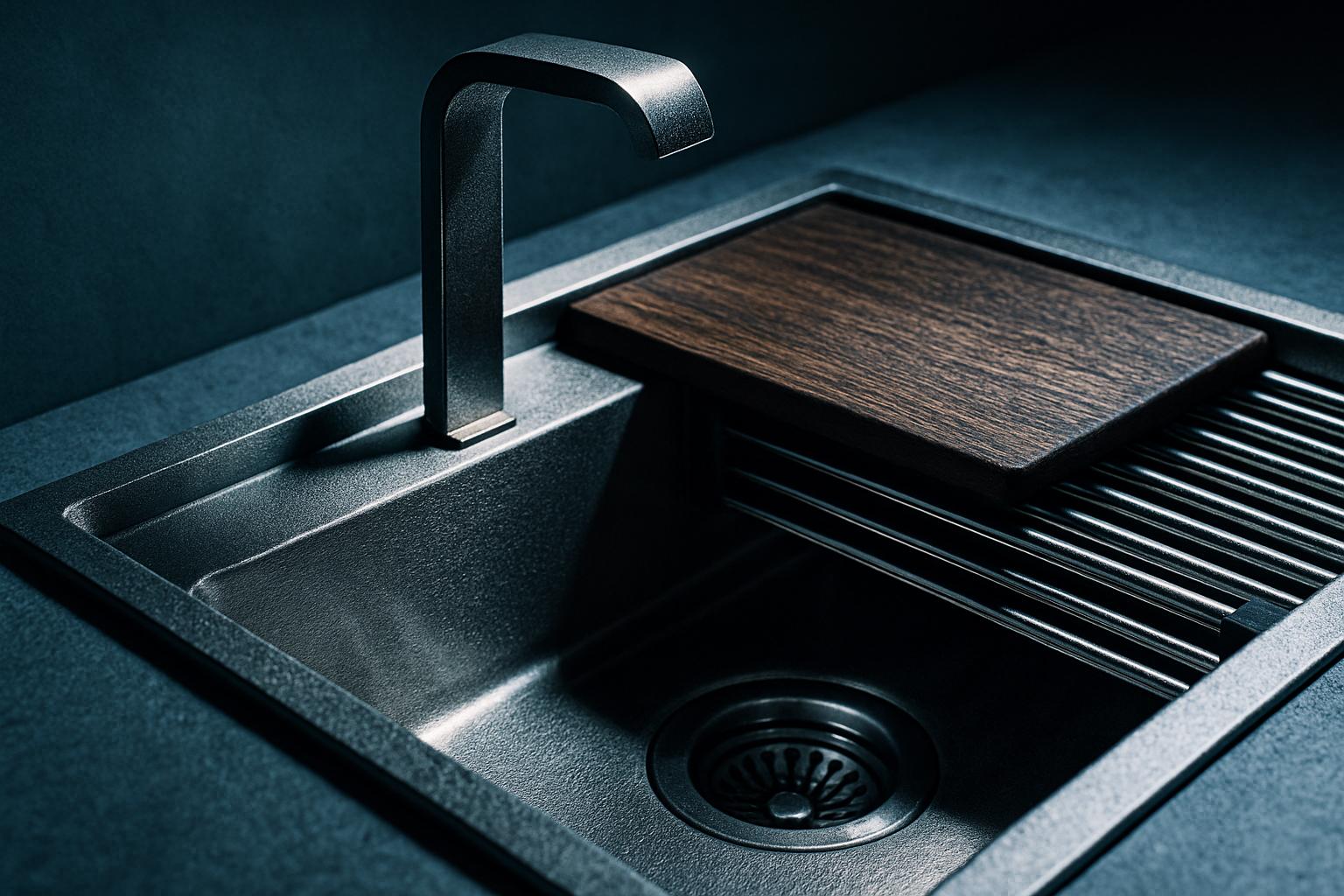
Picking a workstation sink can be overwhelming. There are sizes and features, and honestly, it is easy to get lost comparing options. From fast meal prep to easier cleaning, the right sink helps your kitchen work better. These are the top five, chosen for real-world performance and buyer satisfaction:
What Makes a Workstation Sink Great?
Workstation sinks have changed the way people use their kitchens. A good one does not just hold water. It is more like a prep center with built-in features. Yet, quality can vary a lot. So, how do you know what helps and what just looks good in pictures?
A workstation sink combines a bowl with smart extras, like cutting boards, racks, and sliding trays. But the best ones make these add-ons feel natural, not crowded.
Consider Bowl Size and Depth
The depth matters. A deeper bowl handles more, think big pans or lots of veggies. Yet, a very deep bowl might feel awkward if you are shorter or do not want to bend over much.
Most people go for something that balances capacity and comfort. Oversized sinks sound tempting, but sometimes they take up too much counter space. The size should make your daily work easier, not harder.
Material and Finish
Stainless steel is the most popular choice. It is tough, easy to clean, and matches most appliances. Look for 16 or 18-gauge steel for a solid feel. Cheaper, thinner models may sound loud or dent easily. There are other materials like granite composite and fireclay. These feel solid and quiet, but they can chip if you drop heavy pans. Matte or satin finishes hide scratches better than glossy ones.
Accessories Included
A real workstation sink comes with helpful tools built in or that fit along recessed ledges. Think cutting boards, drain mats, colanders, and drying racks. Some even have extra trays. Ask yourself, which tools do you actually use? Too many accessories can feel like clutter, and sometimes brands add items that look cool but never leave the box.
Sliding tracks that allow tools to move freely help a lot, it is not just about how much is included, but also how easy it is to use.
How to Choose the Right Workstation Sink for Your Space
Everyone’s kitchen is different. There is no “perfect” option that fits all countertops or habits. Start by measuring your base cabinet. Leave space for the faucet, soap dispenser, and any window ledges.
Drop-in and undermount models both exist. Undermount has a smooth look that is easier to wipe down, but installation takes more care. Drop-in is usually easier to replace, but has a lip around the edge.
| Type | Pros | Cons |
| Undermount | Clean look, easy to sweep crumbs in | Harder to install, stronger counter required |
| Drop-in | Simple install, fits most counters | Edge can trap debris, not as modern |
Drain Placement
Some workstation sinks have drains at the center or at the rear. Rear drains give more space for stacking dishes and improve under-sink storage. This also helps water flow better, making it easier to rinse around. Simple, but not everyone thinks of it.
Sound Dampening
An underrated feature. Thicker steel or a granite composite will be naturally quiet, but you want pads or undercoating for noise reduction too. Washing pans in a thin, hollow sink gets annoying. If peace and quiet matter, check for this before you buy.
Workstation Sink Features that Actually Matter
Let’s get into the features that make a difference day to day. Some are essential, some are nice to have, and others are just fluff.
Must-Have Features
Nice-to-Have Extras
- Well-fitted, sturdy cutting board
- Strong drying rack or grid
- Colander for fast draining
- Extra-deep bowl (at least 9 inches)
- Additional rack levels
- Built-in soap dispenser
- Integrated composter bin
- Custom-fit roll-up racks
Keep in mind, more extras do not always mean better function. A sturdy, easy-to-remove cutting board gets more use than a half dozen cheap racks.
How to Use Workstation Sinks Day in and Day Out
Pros and Cons of Popular Workstation Sink Features
- Maximizes counter space
- Built-in prep tools reduce clutter
- Deep bowls handle big jobs
- Saves time during meal prep
- Improves cleaning routine
- Tidy look with fewer loose items
- Easy to customize with add-ons
- Often fits both pro and home kitchens
- Some have easy-to-clean corners
- Can be expensive
- Accessories add to cost
- May not fit all cabinets
- Too many pieces can clutter
- Undermount needs pro installation
- Cheaper steel dents or scratches
- Heavy pans may chip composite models
- May need custom cutting for counter
- Parts can be hard to replace
What to Watch for When Shopping
There are little details that get missed on most product descriptions, but you will notice them in daily use. Some seem minor until they are a real headache:
- Sharp interior corners that trap debris
- Accessory ledges that are weak or badly placed
- Unstable cutting boards that wobble
- Noise from thin steel bowls
- Drains that clog easily
- Plastic parts that stain or crack
- Finish that scratches easily
If a sink looks fancy but feels light or rattles when you tap it, that is a red flag. Also, presloped bottoms can help water drain, but too much slope means things slide before you want them to! Nobody mentions that much, but it can be annoying.
When seeing a sink in person, pick up each accessory. If anything feels cheap or wobbles, move on. You will feel the difference between premium and corner-cut versions in your hands.
Maintenance and Cleaning Tips
Most workstation sinks are easy to wipe, but care makes a difference. Stainless steel needs a soft sponge, avoid rough pads that scratch. Granite and fireclay need to be dried to prevent water spots. Oils or mineral deposits can dull some finishes, so dry after use. Accessories like cutting boards should be washed and dried off the ledge, leaving them in standing water can cause damage, even with hardwood or bamboo.
Some stains or spots will happen over time, especially with hard water. Treating once a week with a bit of baking soda or gentle cleaner keeps the sink fresh.
Key Features Comparison Table
| Feature | Why it Matters |
| Bowl Depth | More room for pots but also means more bending |
| Accessory Fit | Loose tools are annoying; well-matched add-ons are satisfying |
| Drain Placement | Rear or side drains boost under-sink space |
| Material Thickness | Thicker (lower gauge for steel) means less noise, less denting |
Common Mistakes When Buying a Workstation Sink
- Measuring only the countertop, not the cabinet below
- Ignoring weight, some counters may not handle heavy materials
- Assuming included accessories are all high quality
- Not checking faucet height requirements (some ledges block tall spouts)
- Overlooking cleaning, tightly angled corners are tough to keep clean
- Skipping research on replacement add-ons
- Forgetting about plumbing, rear drains may need new piping
There is a real temptation to buy something loaded with extras. But after a month, most people use only two or three features every day. The basics matter most.
Frequently Asked Questions about Workstation Sinks
What does a workstation sink have that a normal sink does not?
A workstation sink usually comes with built-in ledges, accessories like racks and cutting boards, and extra depth for handling more than just washing dishes. It replaces separate prep spaces, making cooking easier and cleanup faster.
How does bowl depth affect workstation sink use?
Deeper bowls fit more dishes and make it simpler to wash large pots, but they might be uncomfortable for some. Taller sinks require more reaching and bending. The tradeoff is capacity versus comfort.
Are workstation sink accessories worth it?
The best accessories are the ones you know you will use, like a sturdy board or drying rack. Too many add-ons clutter the space. Choose quality over quantity.
What is the easiest workstation sink material to clean?
Stainless steel is the simplest to maintain and keeps stains away. Fireclay or granite takes a bit more care but resists odors well. No material is totally maintenance free.
What should you avoid when buying a workstation sink?
Watch out for low-quality accessories, corners too sharp to clean, and finishes that scratch. Measure carefully so the sink will fit your cabinet and counter before you buy.
There are so many options, but most of what matters will be clear when you use the sink every day. What would you want most, a bigger bowl, the easiest cleaning, or the best accessories? At the end of the day, making your kitchen work better should be the goal. What would make yours run smoother?