
START HERE
The short answer
Super glue is often useful for small, closely fitting joints, while a suitable epoxy can fill specified gaps and allow more positioning time. The exact formula, material exclusions and full-cure requirements matter more than the generic adhesive name.
- Check both materials in the joint, not just one.
- Set time is different from full cure or readiness for load.
- Neither epoxy nor super glue automatically bonds every plastic.
The names describe different adhesive families
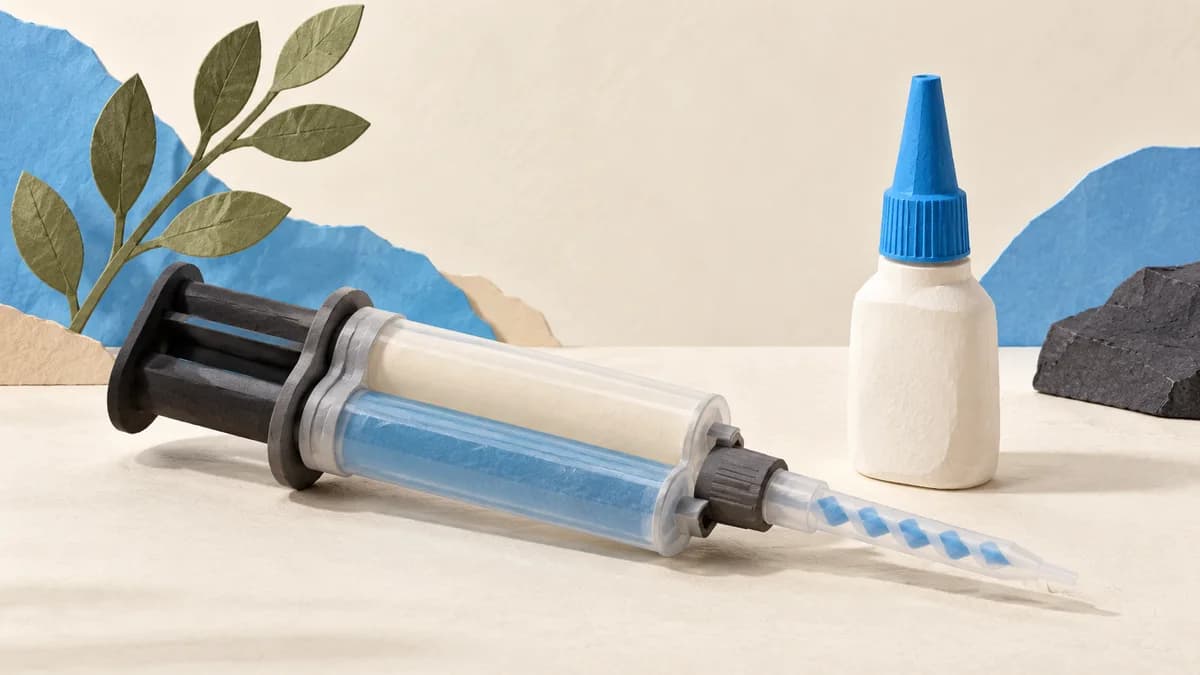
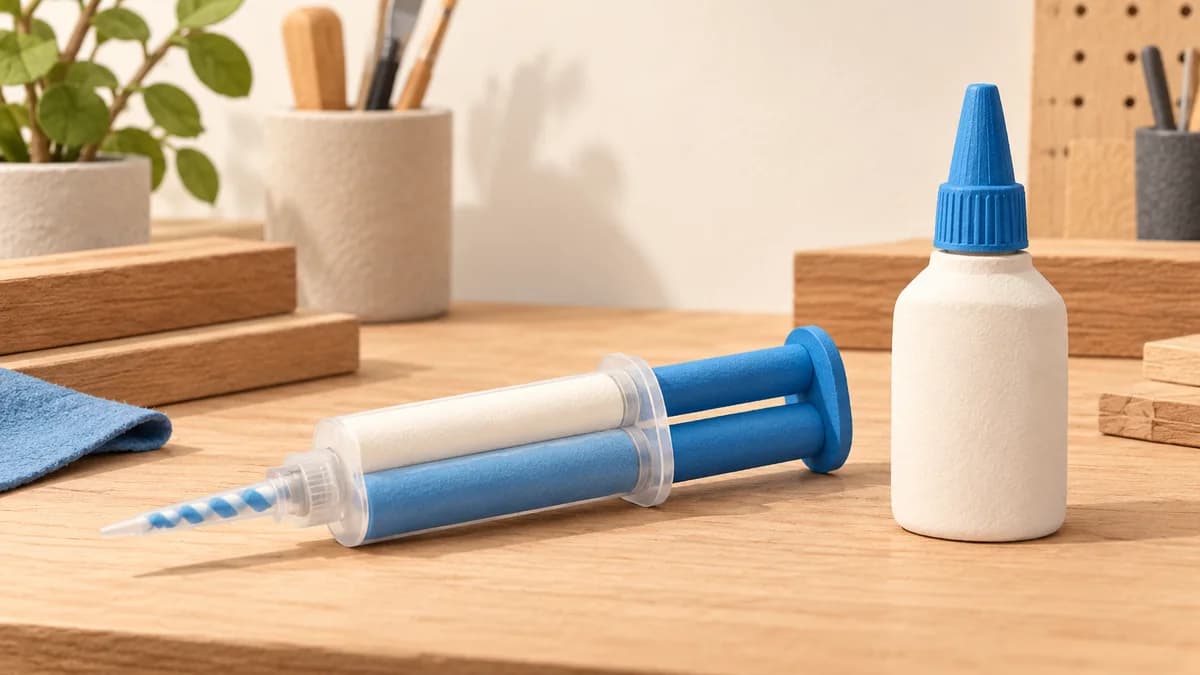
Common household epoxy products combine resin and hardener. The product instructions specify how they are dispensed and mixed. Super glue usually refers to a cyanoacrylate adhesive that is supplied ready to apply, although some plastic-bonding systems add a separate surface activator.
Do not transfer a mixing ratio or handling method from one product to another. A twin syringe may simplify dispensing, while a putty needs its own preparation. Even within a brand, similarly named products can use different chemistry. Read the technical sheet when a label such as plastic bonder does not make the formulation clear.
Sources: Henkel Loctite Instant Mix Epoxy technical data, April 2025; Loctite epoxy and super glue comparison
Match the adhesive to the space between the parts
A closely fitting break gives an instant adhesive a different job from a joint with missing material. Gorilla lists its standard Super Glue as non-gap-filling, while its epoxy is sold for gap-filling applications. These are examples of product-specific capabilities, not permission to fill an unlimited void with any epoxy.
Dry-fit the pieces before opening the adhesive. Can you align them accurately, hold them without touching the bond and support them through the required cure? If the original joint is badly distorted or an essential piece is missing, replacing the part may be more dependable than building up an improvised mass of adhesive.

| Repair feature | What to check |
|---|---|
| Close-fitting clean break | Compatible instant adhesive and alignment time |
| Gap or missing material | Specified gap-filling ability and allowed thickness |
| Flexible joint | Documented flexibility for the intended movement |
| Visible seam | Cured color and appearance on the actual material |
Sources: Gorilla Super Glue product instructions and exclusions; Gorilla Epoxy product instructions and exclusions
Plastic compatibility is not a single yes-or-no label
An adhesive can bond some plastics and exclude others. Polyethylene and polypropylene are particularly demanding because of their low surface energy. 3M explains that wetting the surface is part of forming a bond; an adhesive that beads or fails to make suitable contact cannot be judged by its strength on steel alone.
Look for the plastic identification and the exact product compatibility list. Also consider coatings, paint and the second material in the joint. A glue attaching to a weak paint layer does not strengthen the paint-to-object connection. If the material is unknown, ask the item or adhesive manufacturer rather than treating a small initial tack as proof of a lasting repair.

Give the repair the right conditions and time
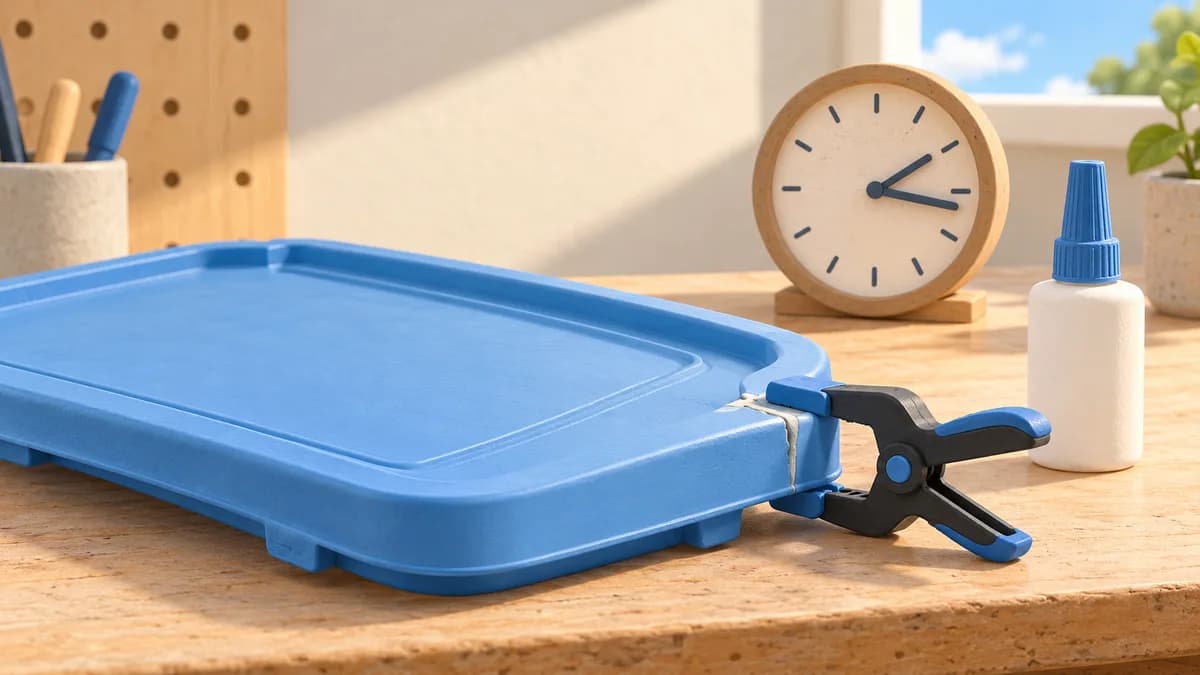
Working time, initial set, handling time and full cure describe different stages. A product with five minutes in its name is not necessarily ready for normal use after five minutes. The current Loctite Instant Mix technical sheet, for example, distinguishes early setting from later cure; use the full directions for the exact formula and conditions.
Plan a protected work area and the personal protection specified by the label or safety data sheet. Keep adhesive off skin and eyes and away from children and animals. Do not improvise heating, extra hardener or household chemical additives to speed the process. If an exposure occurs, follow the product first-aid guidance and seek appropriate medical help.
Sources: Henkel Loctite Instant Mix Epoxy technical data, April 2025; Gorilla adhesive safety information
Choose the product only after defining the repair
Write a short description: the two materials, how closely they fit, whether the part flexes and what heat or moisture it will encounter. Compare that description against the adhesive data sheet. This is a more useful selection process than ranking every epoxy above every super glue.
For a decorative indoor object, appearance and precise positioning may dominate. For an outdoor item, exposure limits become more important. Where failure would injure someone or contaminate food, stop and use an approved repair method or replacement part. A home bond that feels firm is not a certification test.

- Identify both surfaces and any coatings.
- Check gap size and movement.
- Read environmental and material exclusions.
- Plan support through full cure.
- Reject an improvised repair for a critical application.
Sources: 3M material bonding and surface energy; Gorilla Epoxy product instructions and exclusions; Gorilla Super Glue product instructions and exclusions
Common questions
Is epoxy always stronger than super glue?
No. Bond performance depends on the formula, surfaces, joint design and conditions. Strength figures from different tests or materials are not a universal ranking.
Can I use super glue to fill a crack?
Only if the exact product supports that gap and application. Standard liquid super glue is generally intended for closely fitting joints; some gels have different instructions.
Can either adhesive repair a drinking container?
Do not assume so. Food-contact suitability must be explicitly documented for the exact product, application and cure conditions. Replacement is the safer choice when that evidence is absent.
PUT IT INTO PRACTICE
Compare your options
Check exact materials, cure requirements and product limitations before choosing a repair adhesive.
Compare epoxy and bonders for plasticSources and editorial approach
ChooseRight researched the sources below to explain the topic and its practical trade-offs. Examples are illustrations, not results from our own product testing. Sources checked October 28, 2026. Artwork is AI-generated for explanation and does not document hands-on testing.