
START HERE
The short answer
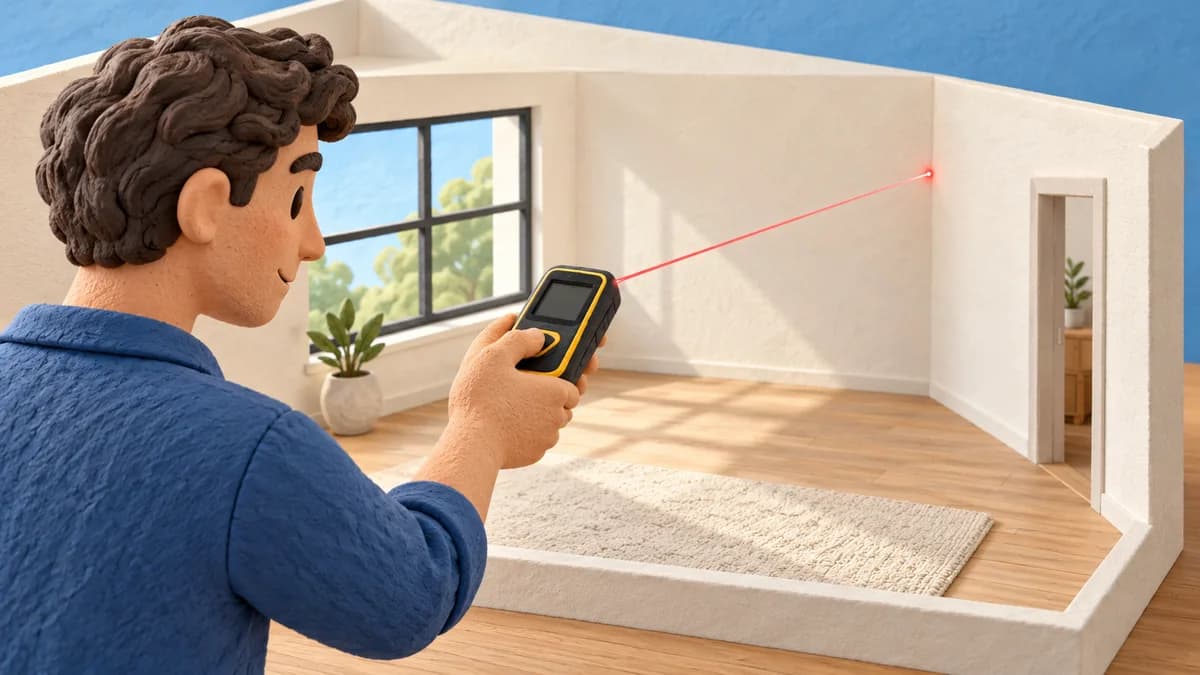
A laser measure sends light toward a target and analyzes the returning signal to calculate distance. The exact method varies; the tool also accounts for its selected reference point.
- Optical distance tools can use different signal methods.
- The selected reference changes the reported distance.
- Indirect calculations require correct geometry.
The returning light carries distance information
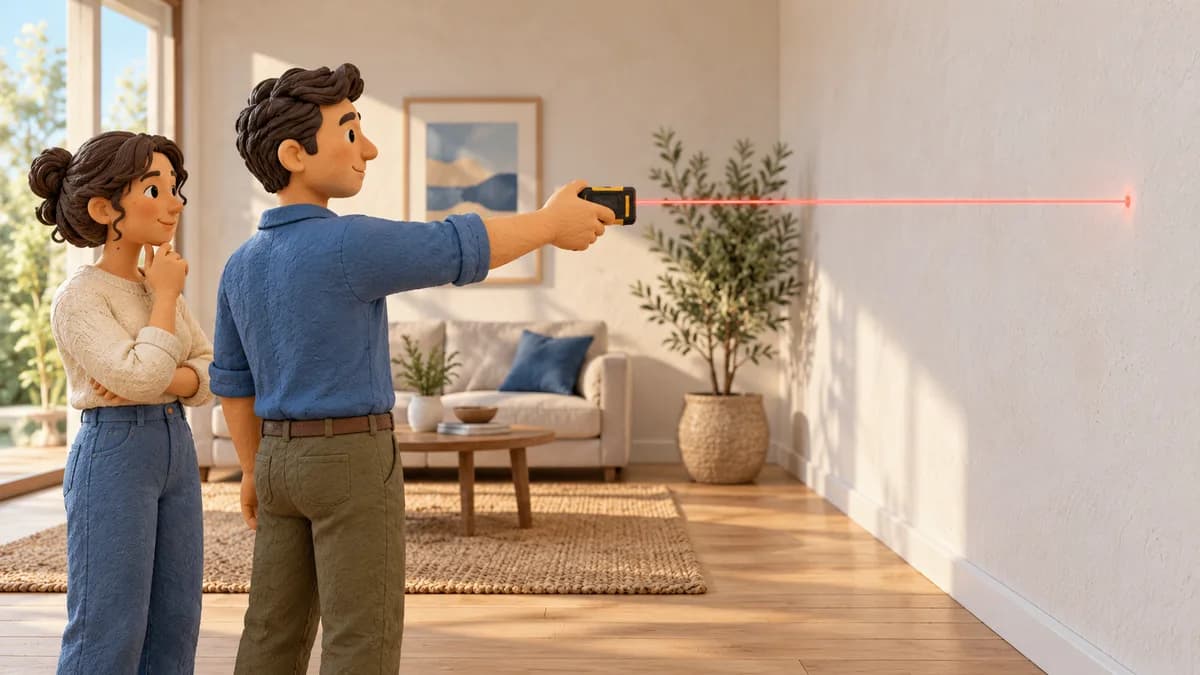
Optical distance systems can analyze travel time or the phase relationship of modulated light. Leica describes phase comparison for its DISTO measurement principle; not every instrument uses an identical method.
The tool converts the measured signal into a distance. This is different from estimating size from a photograph or simply counting how bright the dot appears.
Sources: Fraunhofer IPM: optical distance measurement; Leica: measuring techniques FAQ
The reference setting completes the measurement
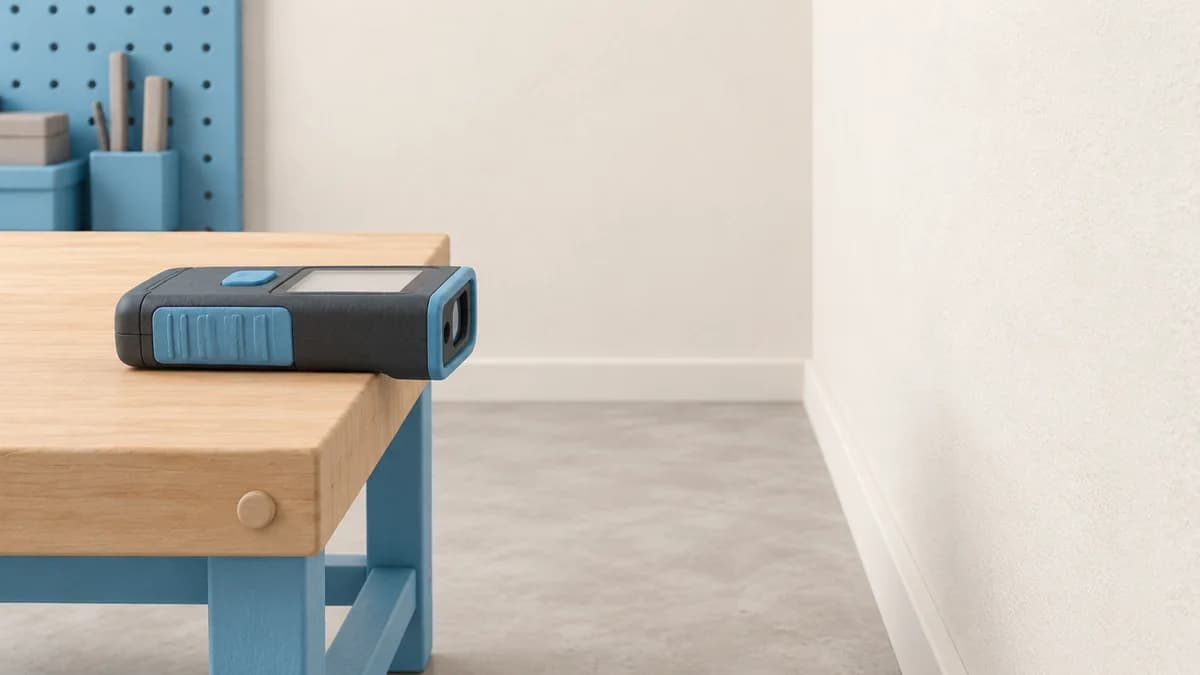
The sensor is inside a physical housing. The chosen reference tells the tool which point on that housing or supported accessory should count as the start.
Check the displayed reference before measuring against a wall, using a tripod or extending an endpiece. Available settings and automatic switching vary by model.
Sources: Leica: measuring techniques FAQ
The target affects the return
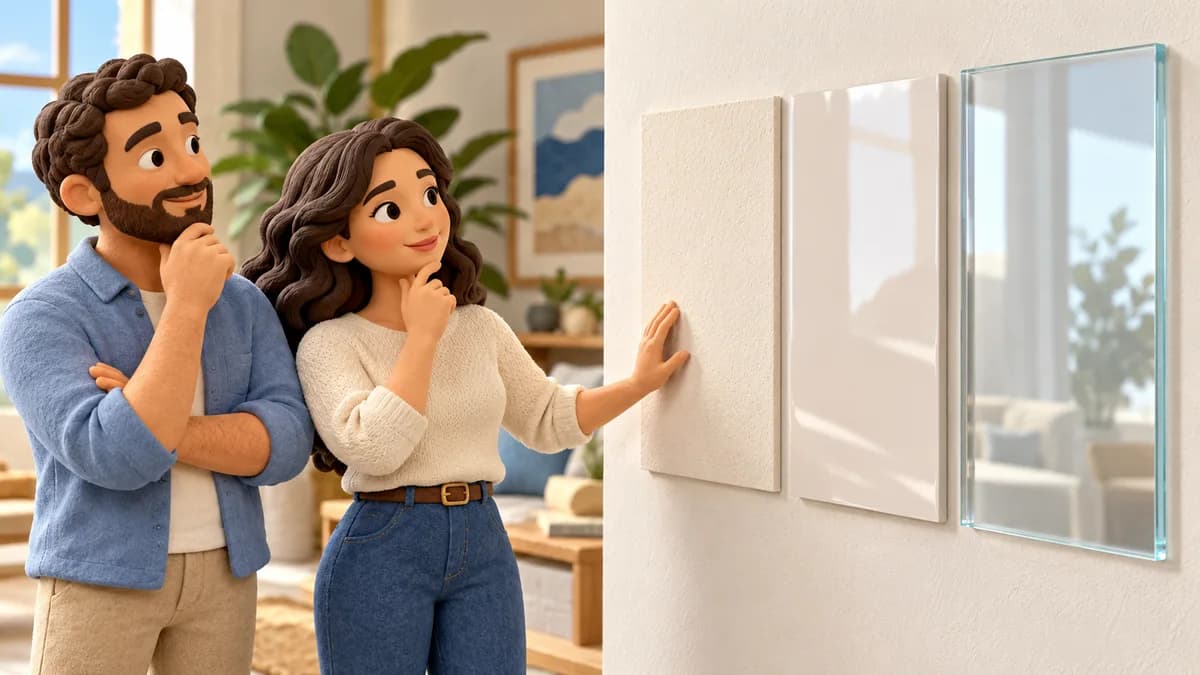
Glass, shiny surfaces and some dark or angled targets can produce difficult or misleading readings. A beam may return from somewhere other than the surface you meant to measure.
Use the target arrangement recommended in the manual and keep the tool steady for a single measurement. Continuous measurement modes behave differently, so check which mode is active.
Extra functions combine measurements
Area and volume functions combine dimensions; indirect functions use geometric relationships and may use an inclination sensor. Their convenience does not remove the need to aim at the correct points.
A small setup mistake can carry into the calculated result. Follow the model-specific sequence and verify important dimensions directly when possible.
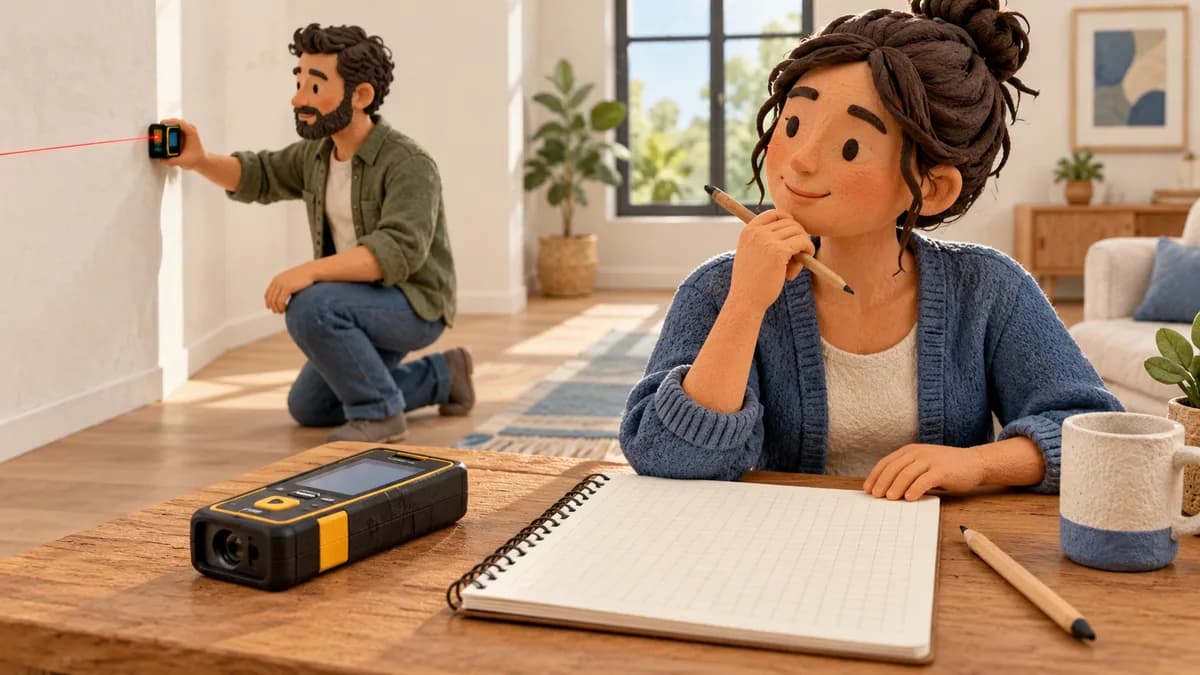
Sources: Leica: measuring techniques FAQ
Use the beam safely
Follow the exact laser classification and manual. Do not look into the beam or aim it at eyes, people, vehicles or aircraft. Reflective surfaces also deserve care.
Keep the tool away from unsupervised children. If it has been damaged or gives unexplained readings, stop relying on it until its condition and accuracy have been checked appropriately.
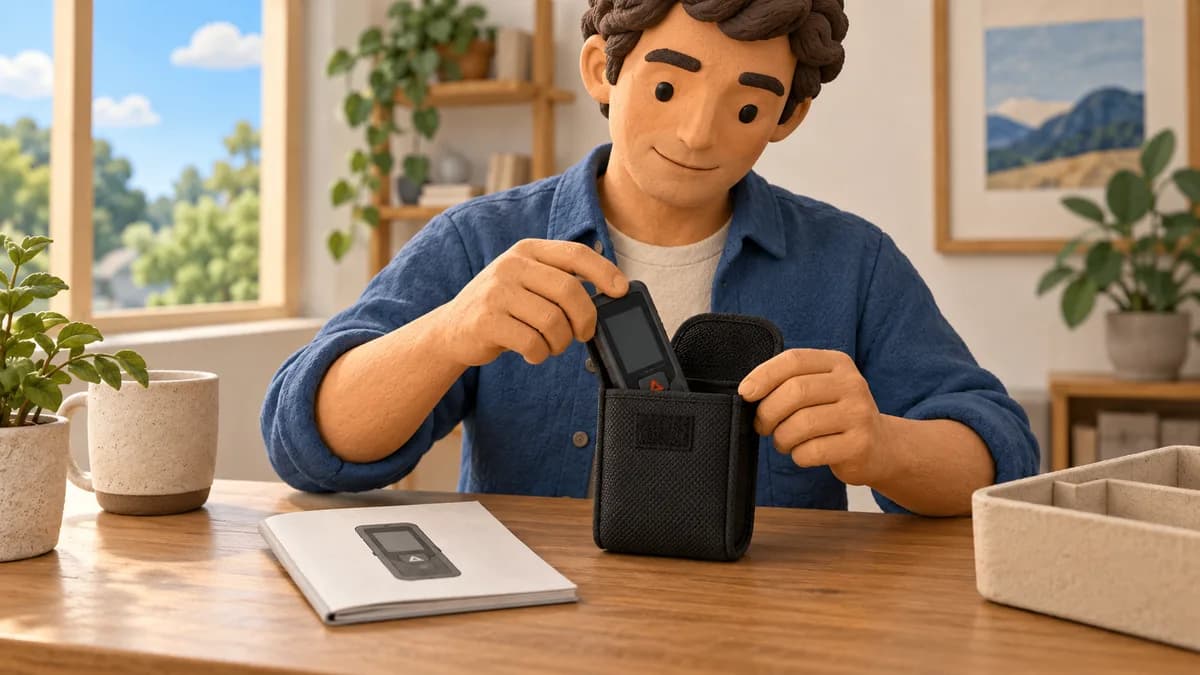
| Check | Why it matters |
|---|---|
| Reference icon | Defines the start point |
| Target surface | Affects the returned signal |
| Measurement mode | Changes how readings are taken |
| Geometry | Controls indirect calculations |
| Laser instructions | Define safe operation |
Common questions
Does every laser measure use time of flight?
No. Optical systems can use travel time or phase-based techniques, among other methods. Check the manufacturer explanation for the instrument.
Why can glass cause problems?
It can transmit or reflect light in ways that make the intended target uncertain.
Does more display precision mean better accuracy?
No. Display resolution and specified measurement accuracy are different.
PUT IT INTO PRACTICE
Compare your options
Compare aiming aids, reference settings and documented accuracy limits.
Laser distance measures comparedSources and editorial approach
ChooseRight researched the sources below to explain the topic and its practical trade-offs. Examples are illustrations, not results from our own product testing. Sources checked October 28, 2026. Artwork is AI-generated for explanation and does not document hands-on testing.