
START HERE
The short answer
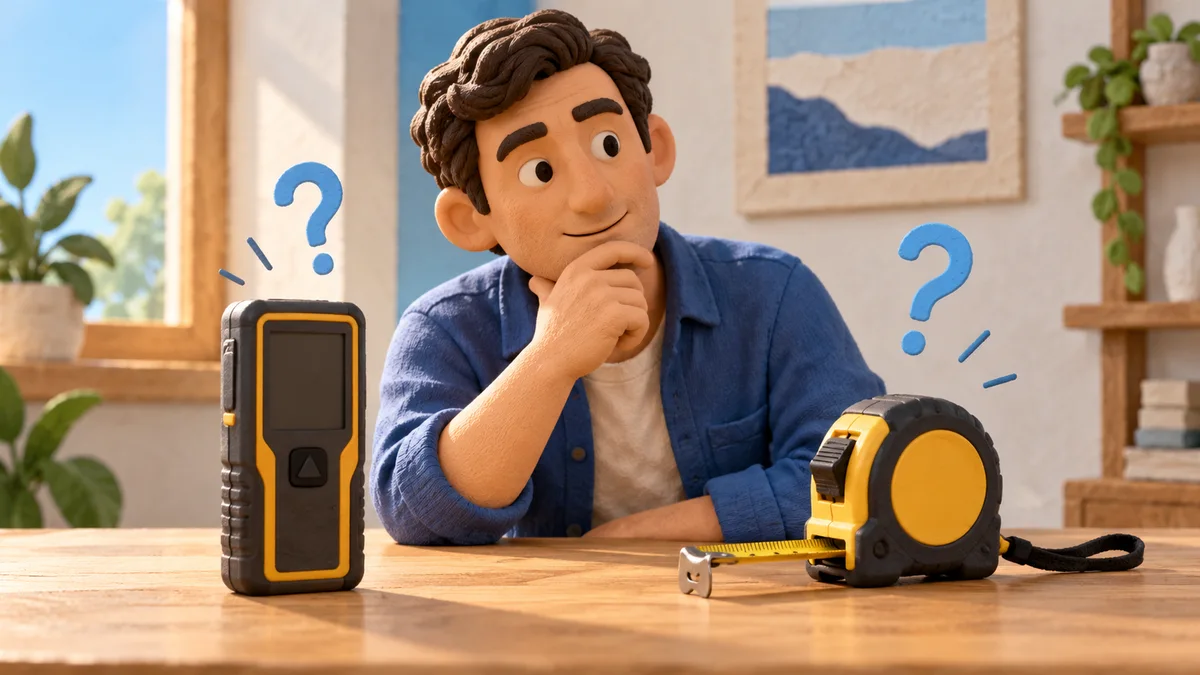
A laser measure is useful for distances to a suitable target; a tape measures directly between accessible points. Most practical toolkits benefit from both.
- Use a suitable target for laser measurements.
- Check the active reference point before recording a distance.
- Display increments are not the same as accuracy.
Match the tool to the endpoints
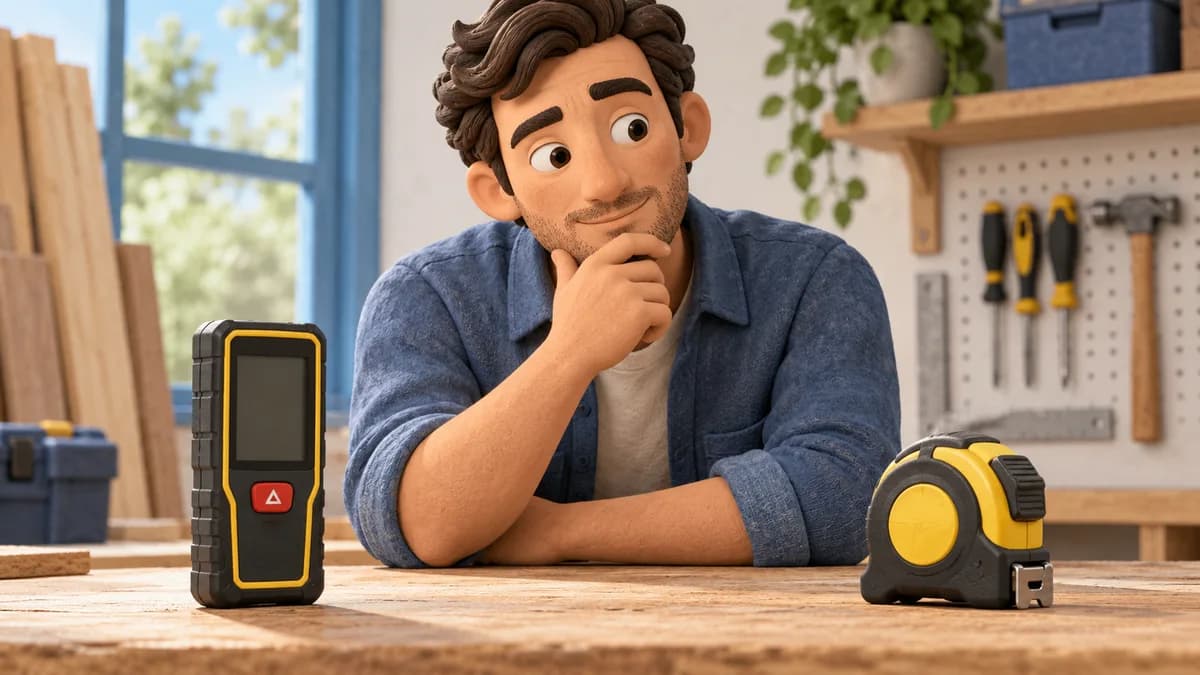
A laser can measure to a wall without stretching a blade across a room. It needs a usable optical target and a clear path to it.
A tape is useful for short accessible edges and direct layout marks. You still need to align its endpoints consistently and avoid bending or sagging the blade.
Sources: Leica: measuring techniques FAQ
Define where each measurement starts
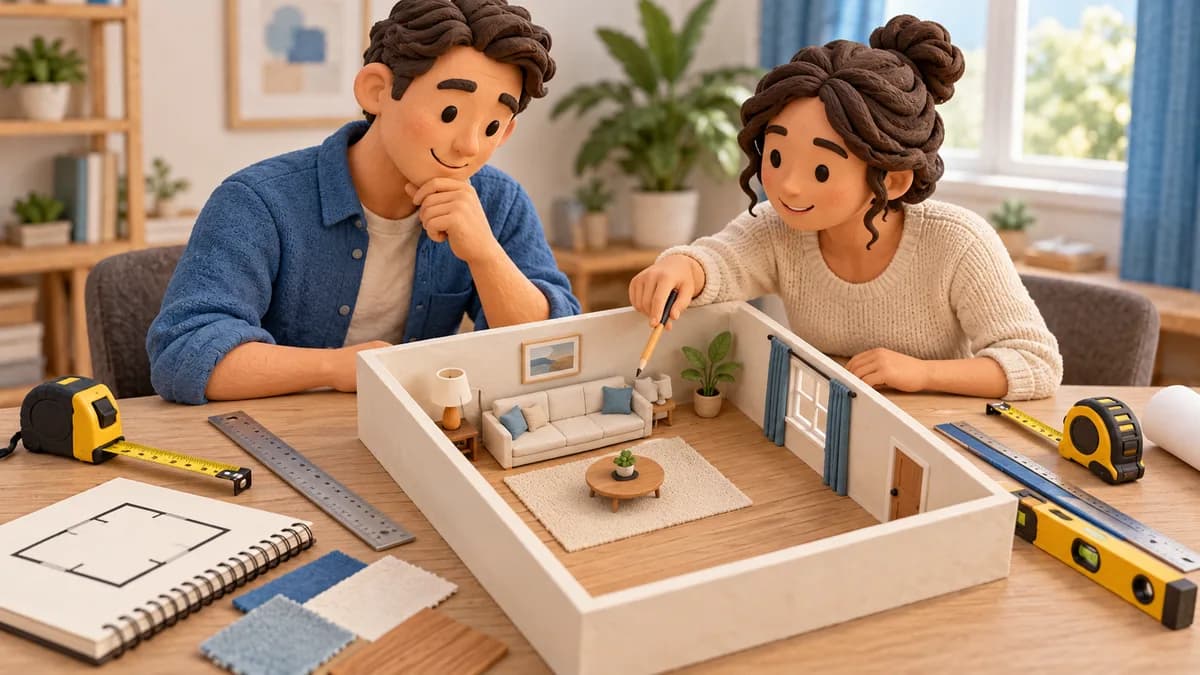
Laser tools can reference the back, front or another model-specific point. A reading taken with the wrong reference can be repeatable and still wrong.
Before a room measurement, confirm where the tool touches the starting surface. With a tape, use the intended hook or starting mark consistently and check any offset required by the task.
Sources: Leica: measuring techniques FAQ
Account for the environment
Bright sunlight can make the aiming dot difficult to see. Dark, shiny, transparent or angled targets can also complicate an optical reading.
A digital viewfinder helps aim some models, but does not eliminate target limitations. Where a reliable optical target is unavailable, use another suitable measuring method.

Read accuracy specifications carefully
The smallest displayed fraction does not prove that level of accuracy. Read the manufacturer tolerance, distance conditions and any separate limits for special functions.
For a consequential cut or installation, repeat the measurement and use an independent check appropriate to the work. A disagreement is a reason to investigate the setup, not average two unexplained numbers.
Sources: Leica: measuring techniques FAQ; Bosch: measurement influences and target surfaces
Keep both tools for complementary work
Choose a laser for a workflow you will actually use, such as recording room dimensions. Choose a tape whose length and handling suit direct layout work.
For specialized or safety-critical tasks, follow the required measurement process and equipment checks. Neither an editorial score nor a customer anecdote certifies a tool for that job.
| Task | Useful starting point |
|---|---|
| Room length to a suitable wall | Laser measure |
| Short accessible edge | Tape measure |
| Bright outdoor target | Suitable laser with aiming aid or another method |
| Critical installation dimension | Required verified method and independent check |
Sources: Leica: measuring techniques FAQ
Common questions
Can a laser replace every tape measurement?
No. Direct edge measurements, difficult optical targets and layout marks often still favor a tape.
Why do repeated laser readings disagree?
Check tool movement, reference setting and target material first, then consult the model manual.
Is a green laser automatically accurate outdoors?
No. Visibility, accuracy and maximum range are separate issues.
PUT IT INTO PRACTICE
Compare your options
Compare aiming aids, reference settings and documented accuracy limits.
Laser distance measures comparedSources and editorial approach
ChooseRight researched the sources below to explain the topic and its practical trade-offs. Examples are illustrations, not results from our own product testing. Sources checked October 28, 2026. Artwork is AI-generated for explanation and does not document hands-on testing.