

START HERE
The short answer
Store commercially prepared popcorn kernels in a tightly sealed food-safe container in a cool cupboard, following the package. Keeping their internal moisture stable matters. Avoid leaving the bag open or assuming more oil will fix old or poorly stored kernels.
- Airtight storage helps prevent moisture loss.
- Keep the package identity and best-by information.
- Poor popping can involve the appliance as well as the kernels.
Why moisture matters inside the kernel
The Popcorn Board explains that moisture inside a kernel turns to steam during heating. Too much moisture loss can reduce popping performance, so the aim is not to dry commercially prepared kernels as thoroughly as possible. They need suitable internal moisture to work as intended.
This is different from keeping the outside of the storage container clean and dry. Do not confuse preserving the kernel's existing moisture with leaving it exposed to damp air or adding water casually. Homegrown ears require their own curing process; the advice here starts with packaged kernels ready for popping.
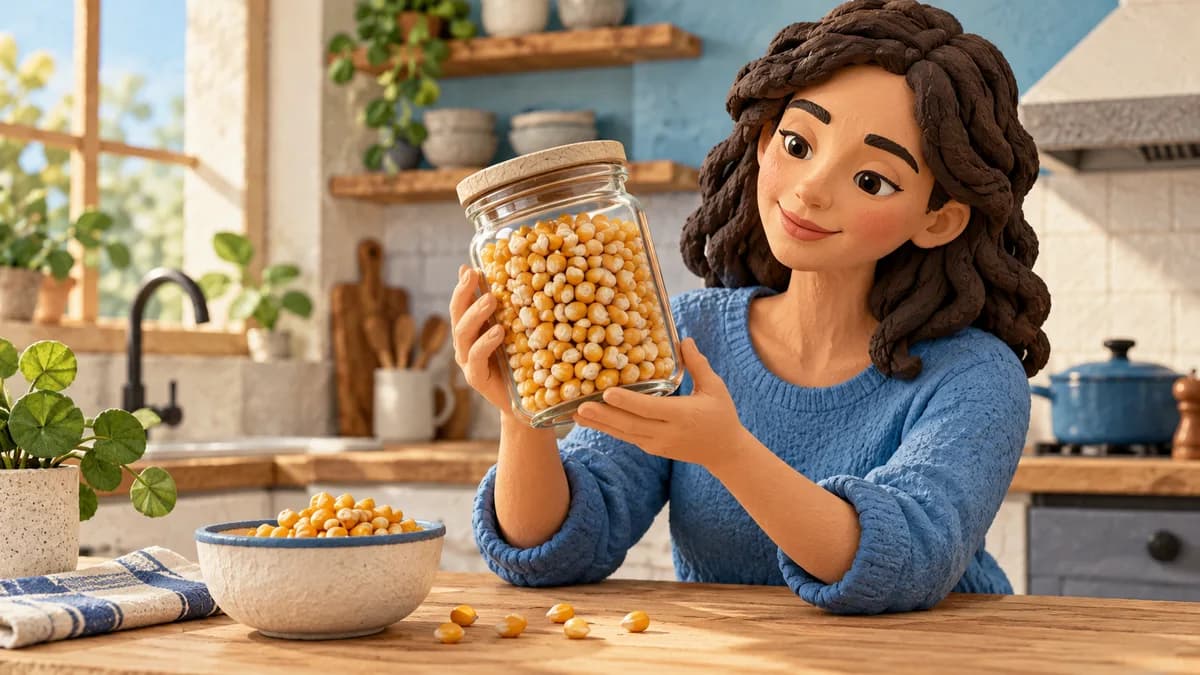
Sources: Popcorn Board preparation and storage; Iowa State Extension popcorn storage guidance
Choose a container that actually seals
A clean, dry, food-safe jar or storage tub with a well-fitting lid is a useful choice. If the original bag reliably reseals, follow its storage instructions; otherwise transfer the kernels without leaving them open on the counter. Container size should fit the amount you buy.
Keep the product name, lot details and best-by date from the package. That makes it easier to rotate stock or identify a batch later. Do not repeatedly top up a half-used container with new kernels, because you lose track of the older material and make comparisons less useful.
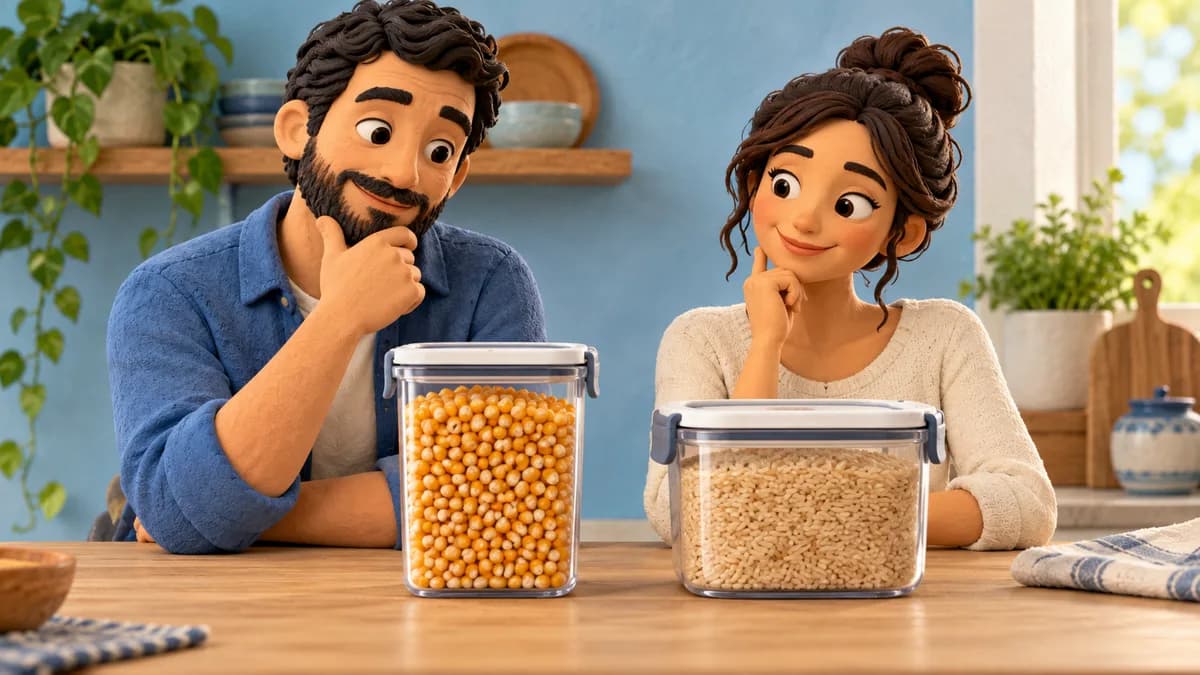
| Storage choice | Practical assessment |
|---|---|
| Tightly sealed food-safe container | Useful for retaining the kernels' existing moisture |
| Open bag or loose clip | Less reliable protection from exposure |
| Container beside a hot stove | Poor location for steady cool storage |
| Unlabeled mixed batches | Makes age and batch tracking difficult |
Sources: Popcorn Board preparation and storage; Iowa State Extension popcorn storage guidance
Use a cool cupboard as the normal starting point
The Popcorn Board recommends an airtight container in a cool place such as a cupboard and advises against refrigerator storage because kernels can dry out. Presto gives similar pantry guidance for popcorn used in its hot-air poppers. Follow any more specific instructions on your package.
Keep the container away from heat and direct sun rather than choosing a convenient spot beside the range. This guidance concerns packaged kernels, not freshly harvested ears being cured. Agricultural storage advice can address different moisture conditions, so do not mix those procedures into an everyday pantry routine.
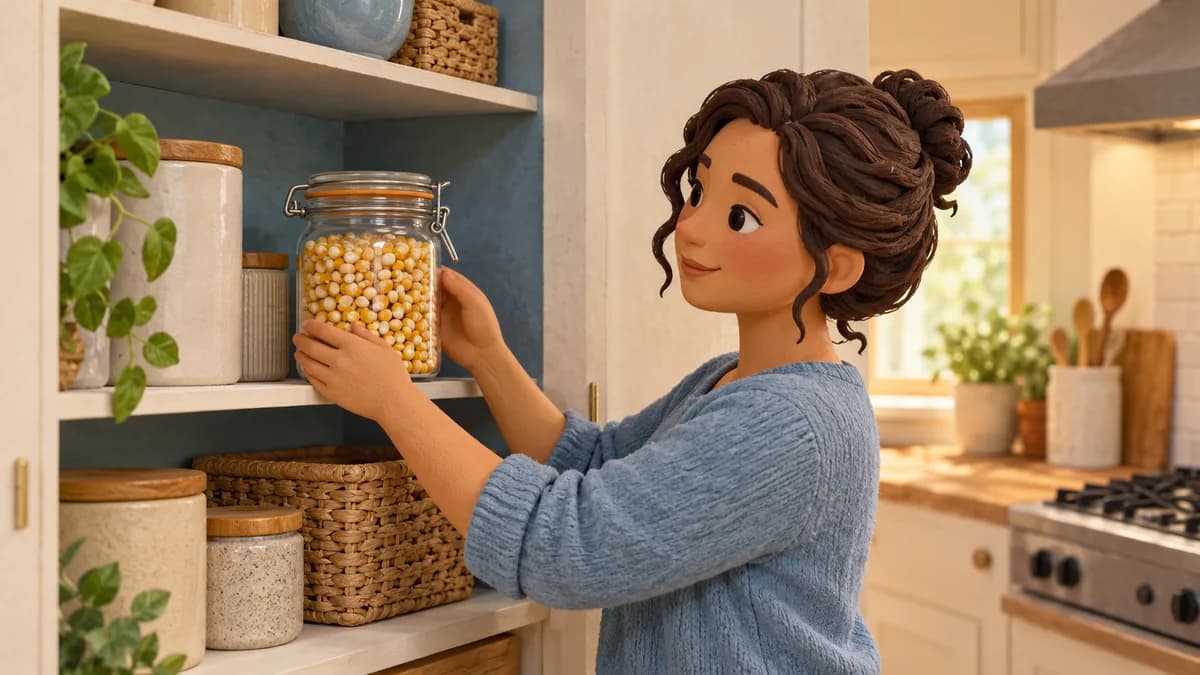
Sources: Popcorn Board preparation and storage; Presto hot-air popper instructions
Track freshness without inventing an expiry rule
Use the package's best-by and storage information rather than assigning every brand the same shelf life. Write the opening date on a transferred container if that helps your routine. Buy a quantity you can realistically use, especially if popcorn is an occasional snack.
Inspect the contents and container before use. Visible mold, insects, water contamination or an unusual odor are reasons to discard suspect food rather than trying to rescue its popping performance. A disappointing batch alone does not identify the cause, and a date alone is not a complete inspection.

Sources: Popcorn Board preparation and storage; Iowa State Extension popcorn storage guidance
Check the method before blaming the oil
If many kernels remain unpopped, compare the next small batch using the manufacturer's recommended amount and procedure. Overfilling a popper, using an unsuitable kernel type or changing heat can also affect results. More oil is not a universal solution, and a hot-air chamber may prohibit oil entirely.
Keep troubleshooting simple: note the kernel batch, amount and appliance settings, then change one factor at a time. Do not keep reheating old kernels indefinitely or add water to a suspect batch as a general rescue method. If the kernels are sound but performance remains poor, check the appliance manual before buying another topping.

- Check that the container seals properly.
- Use the correct batch size and approved kernel type.
- Keep the popping method consistent for a small comparison.
- Discard contaminated food rather than trying to restore it.
Sources: Presto hot-air popper instructions; Popcorn Board preparation and storage
Common questions
Should popcorn kernels go in the refrigerator?
For ordinary packaged kernels, the Popcorn Board and Presto recommend sealed pantry storage and warn that refrigerator conditions can dry them out. Follow your specific package.
Can I store kernels in a glass jar?
Yes, a clean dry food-safe jar with a tight lid is suitable. Keep it in a cool cupboard rather than direct sunlight.
Will extra oil make old kernels pop?
Not reliably. Kernel moisture, condition and the popping method matter. Follow the appliance directions instead of adding oil indiscriminately.
PUT IT INTO PRACTICE
Compare your options
Choose flavor and format after confirming your appliance permits oil.
Compare oils for compatible popcorn methodsSources and editorial approach
ChooseRight researched the sources below to explain the topic and its practical trade-offs. Examples are illustrations, not results from our own product testing. Sources checked October 28, 2026. Artwork is AI-generated for explanation and does not document hands-on testing.