
START HERE
The short answer
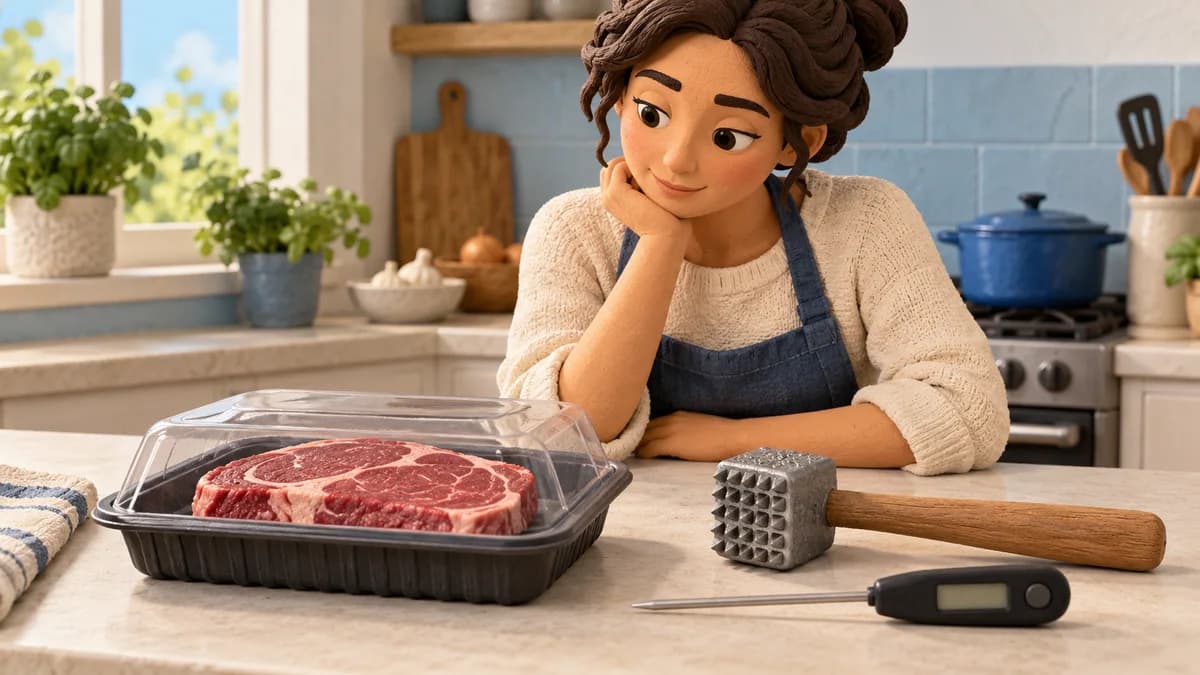
Start with the cut and recipe. Controlled pounding or a suitable marinade may change texture, but neither replaces correct cooking or safe handling. Mechanically tenderized beef needs at least 145 F followed by a three-minute rest.
- Match the method to the cut and recipe.
- Marinade does not make raw meat microbiologically safe.
- Follow safe cooking instructions for mechanically tenderized beef.
Start with the cut and intended dish
A cut with substantial connective tissue may suit a different cooking method from a quick-cooking steak. Tenderizing is not a guarantee that any inexpensive cut will behave like a tenderloin.
Choose a recipe written for your cut. If the recipe needs a thin, even piece, controlled pounding serves a clearer purpose than indiscriminate piercing.

Sources: Clemson Extension: safe handling of beef; OXO: flat and textured meat tenderizer surfaces
Use mechanical methods deliberately
A flat mallet face helps even thickness; textured or piercing designs have different effects. Work on a stable surface and keep raw juices away from ready-to-eat food.
If you mechanically tenderize meat, account for the food-safety implications at cooking time. Clean the tool using its specific instructions, especially around blades, needles or joints.

Sources: OXO: flat and textured meat tenderizer surfaces; USDA FSIS: safe temperature for mechanically tenderized meat
Use marinade for a defined recipe
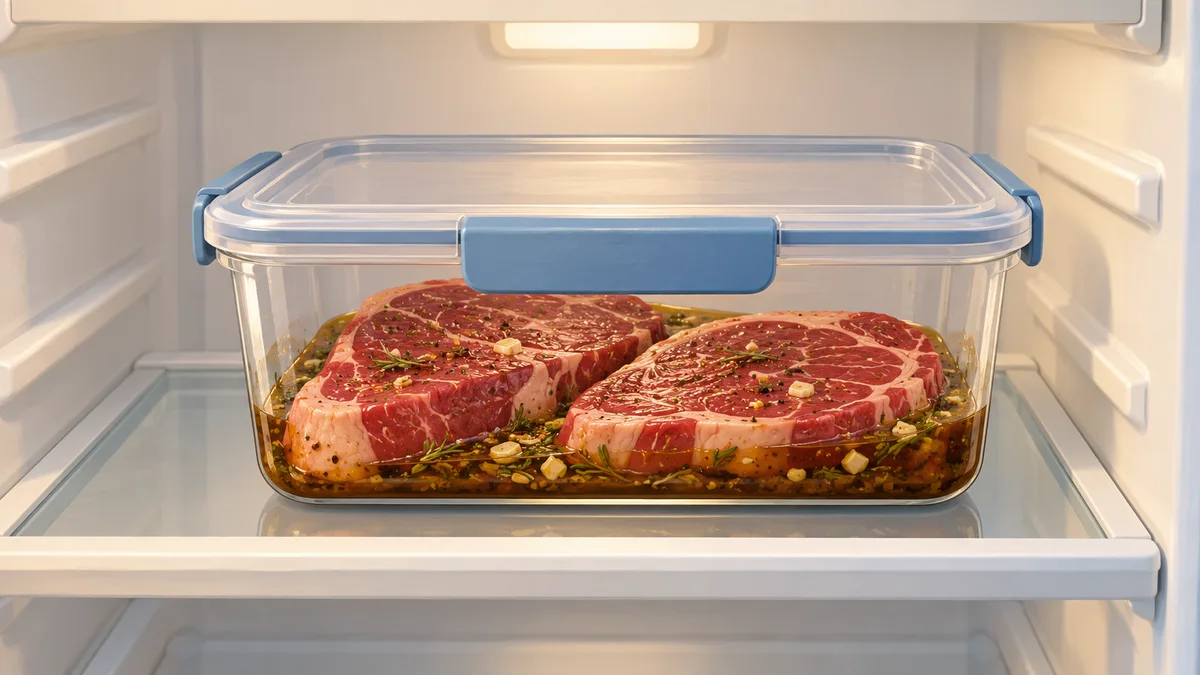
Acidic marinades can change the surface texture, and excessive marinating can make it unpleasantly soft. More time is not automatically more tenderness.
Marinate in the refrigerator. Marinade does not reliably kill harmful bacteria. Reserve sauce before adding raw meat, or follow safe guidance for thoroughly boiling marinade that contacted it before reuse.
Sources: University of Illinois Extension: marinating safety; Clemson Extension: safe handling of beef
Cook safely with a thermometer
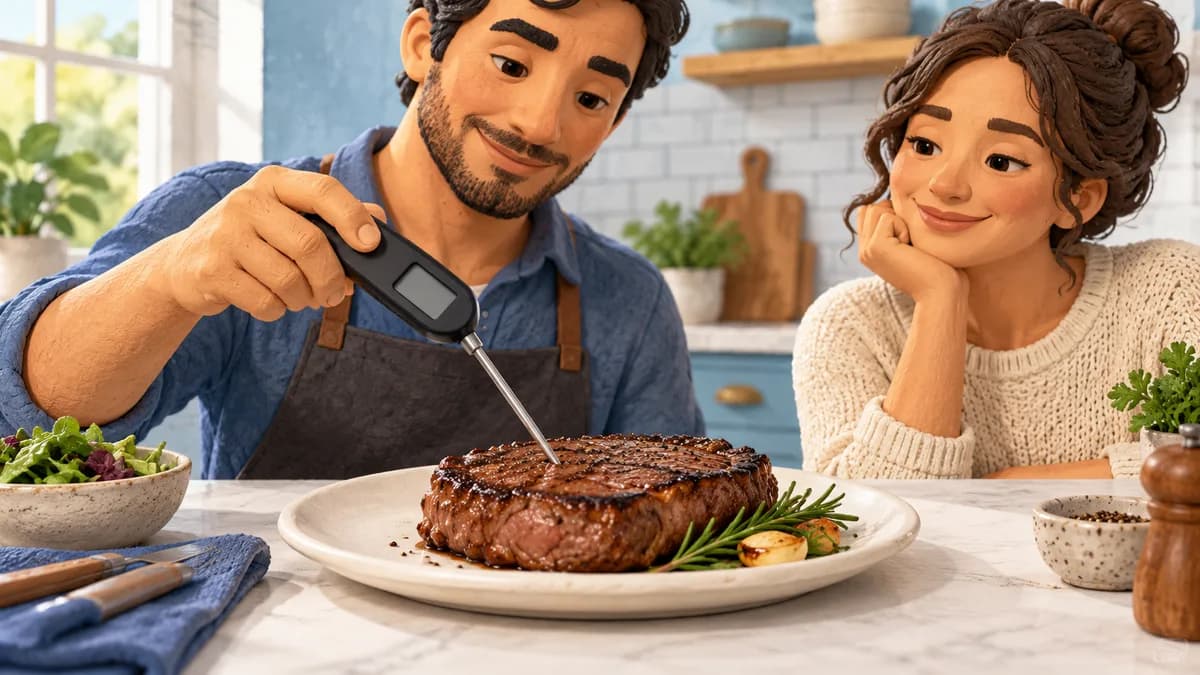
For mechanically tenderized beef steaks, USDA specifies at least 145 F before removing the meat from heat and a rest of at least three minutes. Follow validated package directions where provided.
Check an appropriate thick part with a food thermometer rather than judging safety from browning. Do not partially cook beef, store it and plan to finish it later.
Sources: USDA FSIS: safe temperature for mechanically tenderized meat; Clemson Extension: safe handling of beef
Rest and serve thoughtfully
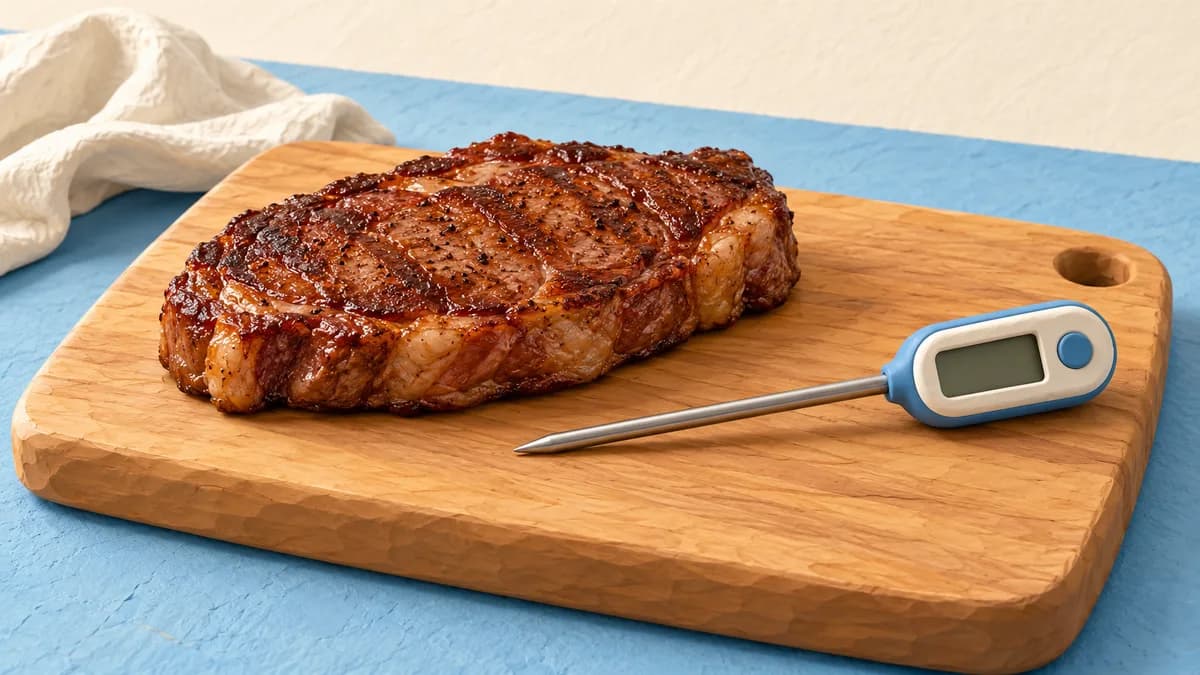
Give mechanically tenderized beef its required rest after reaching the safe temperature. Resting is part of the instruction, not a substitute for reaching that temperature first.
When slicing, follow the recipe and pay attention to the direction of the visible muscle fibers. Thin slices across those fibers can be easier to chew, but slicing cannot rescue unsafe cooking or every overcooked steak.
| Problem or goal | Useful response |
|---|---|
| Uneven thickness | Controlled flat-face pounding |
| Want marinade flavor | Follow a refrigerated recipe |
| Pierced or mechanically tenderized beef | 145 F minimum and at least three-minute rest |
| Uncertain doneness | Use a food thermometer |
| Unclear tool cleaning | Read the exact manufacturer instructions |
Sources: USDA FSIS: safe temperature for mechanically tenderized meat; Beef Checkoff: carving across the grain
Common questions
Does vinegar make raw steak safe?
No. Acidic marinade does not reliably eliminate harmful bacteria; safe handling and cooking still apply.
Should I marinate steak on the counter?
No. Marinate in the refrigerator.
How hot should mechanically tenderized beef steak get?
USDA specifies at least 145 F before removal from heat, followed by a rest of at least three minutes. Follow package cooking directions too.
PUT IT INTO PRACTICE
Compare your options
Compare pounding tools and piercing designs, including cleaning considerations.
Meat tenderizers comparedSources and editorial approach
ChooseRight researched the sources below to explain the topic and its practical trade-offs. Examples are illustrations, not results from our own product testing. Sources checked October 28, 2026. Artwork is AI-generated for explanation and does not document hands-on testing.