

START HERE
The short answer
A mallet is a type of meat tenderizer, but the terms can describe different tools. A flat face mainly evens thickness; textured faces and piercing designs work differently and need appropriate handling.
- Flat and textured faces serve different purposes.
- Piercing is different from flattening.
- Mechanically tenderized meat needs safe internal cooking.
Identify the working surface
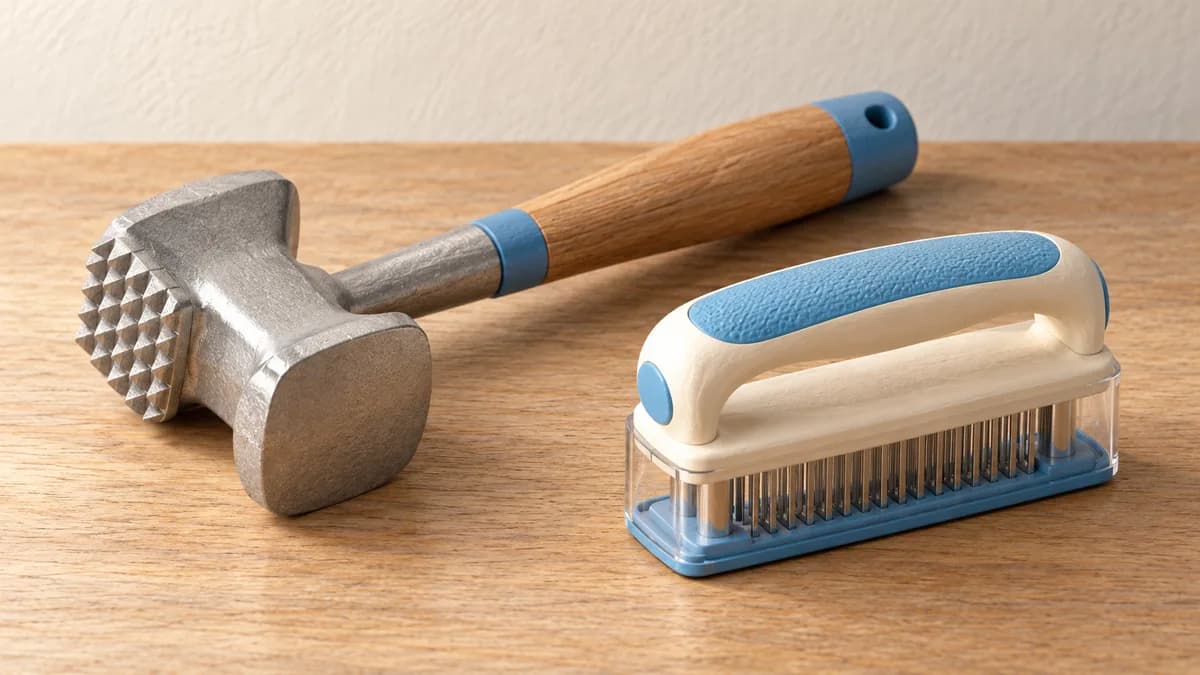
OXO distinguishes its flat pounding face from its textured tenderizing face. A blade or needle tool instead pierces meat with multiple narrow points.
Do not assume every product called a tenderizer works the same way. Inspect the design, guard and cleaning instructions before deciding whether it fits your recipe.

Use a flat face for even thickness
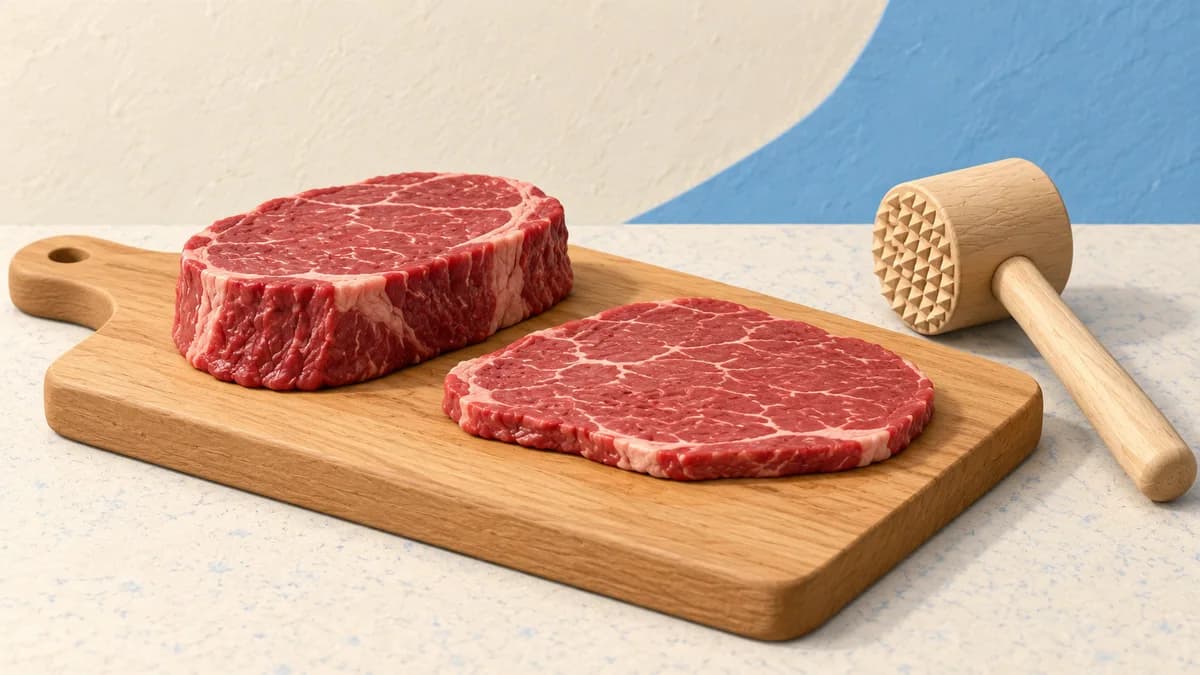
A flat face can help turn an uneven piece into a more consistent thickness. Work on a stable board with a suitable food-safe cover to limit splashing.
Use controlled strokes rather than trying to finish with one heavy blow. Stop at the thickness the recipe needs; pounding very thin changes cooking time and the final texture.
Consider the texture you actually want
A textured face leaves a different surface from a flat one. Piercing tools make channels rather than spreading the meat into an even sheet.
Neither action makes every cut interchangeable. Choose a method that suits the cut and recipe, and avoid promising that a tool will turn connective tissue into the texture of a naturally tender steak.

Plan cleaning and cooking before piercing
Mechanical tenderization can move surface contamination inward. USDA specifies at least 145 F for mechanically tenderized beef steaks, measured before removal from heat, followed by a rest of at least three minutes.
Follow package cooking directions and clean food-contact parts according to the exact tool instructions. Do not infer that all metal mallets or blade assemblies are dishwasher-safe.

Sources: USDA FSIS: safe temperature for mechanically tenderized meat; OXO: flat and textured meat tenderizer surfaces
Choose the simplest tool that fits
For flattening, start with a controllable flat face. If choosing a piercing tool, prioritize clear handling and cleaning instructions as well as the working pattern.
The right choice also depends on storage and who will use it. Exposed points need careful handling; a complicated mechanism is not automatically a better kitchen tool.
| Goal | Tool feature to consider |
|---|---|
| Even thickness | Flat face |
| Textured pounding | Textured face |
| Piercing action | Blade or needle design with clear instructions |
| Simple cleanup | Accessible surfaces and stated cleaning method |
Sources: OXO: flat and textured meat tenderizer surfaces; USDA FSIS: safe temperature for mechanically tenderized meat
Common questions
Is a mallet also a tenderizer?
It can be. The name is broad, so distinguish flat pounding, textured faces and piercing designs.
Can I wash every meat mallet in a dishwasher?
No. Follow the exact material and model instructions.
Can mechanically tenderized steak be treated like an intact steak?
Piercing can move contamination inward. Follow USDA safe-temperature guidance and any validated package instructions.
PUT IT INTO PRACTICE
Compare your options
Compare pounding tools and piercing designs, including cleaning considerations.
Meat tenderizers comparedSources and editorial approach
ChooseRight researched the sources below to explain the topic and its practical trade-offs. Examples are illustrations, not results from our own product testing. Sources checked October 28, 2026. Artwork is AI-generated for explanation and does not document hands-on testing.