

START HERE
The short answer
Lotions are generally lighter and more fluid; creams are typically richer. For very dry skin, dermatologists often recommend a cream or ointment. Check fragrance, intended application area and your response rather than assuming either format is always best.
- There is no single water-to-oil percentage that defines every product.
- Fragrance-free and unscented are not interchangeable labels.
- The best texture is one that meets your needs and fits regular use.
Understand the usual texture difference
CeraVe describes lotions as generally containing more water and having a thinner consistency than creams. That is a useful shopping distinction, not an ingredient-percentage formula that applies to every brand. Both formats can contain several kinds of moisturizing ingredients.
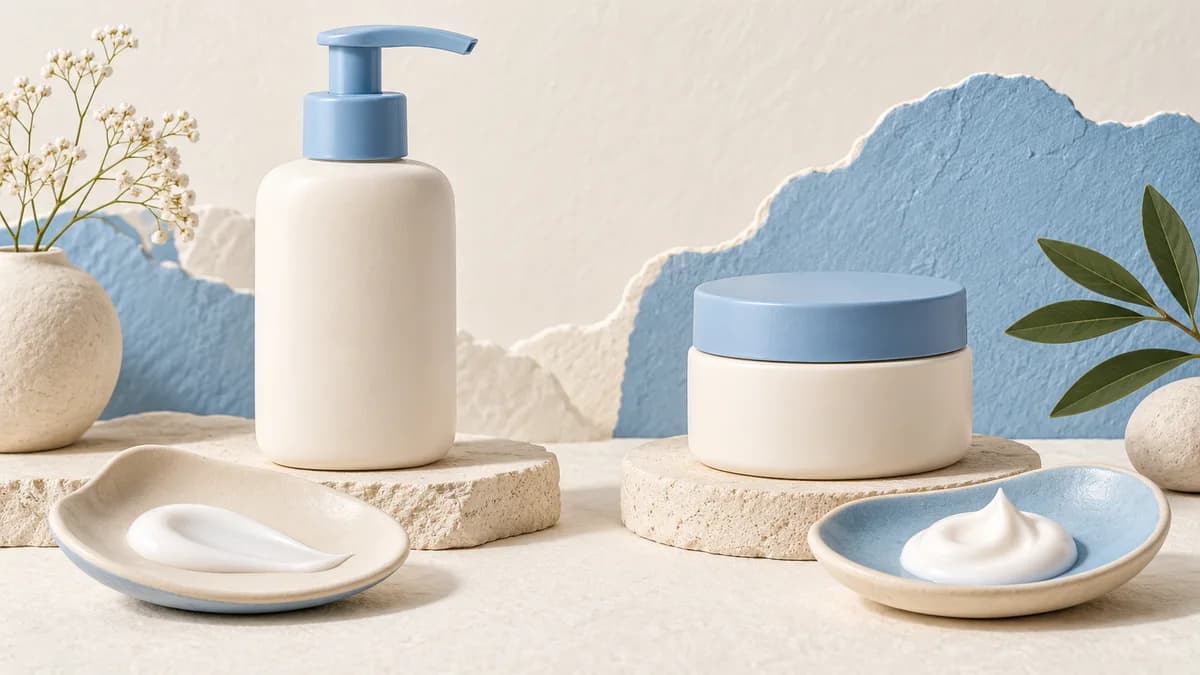
Words such as gel-cream or rich lotion can blur the boundary further. Read the product description and, where possible, try a small amount. A pump bottle does not prove the contents are light, just as a tub does not prove a formula is unusually intensive.
Start with what your skin needs now
AAD advises that very dry skin may benefit more from a cream or ointment than a lotion. A lighter lotion may feel more convenient when your skin does not need such a rich product. Seasons and daily routines can change what feels comfortable.
Look separately at fragrance and ingredients you already know you do not tolerate. If dryness is persistent, painful or accompanied by a troublesome rash, ask a dermatologist. Repeatedly switching textures cannot tell you what is causing it.

Sources: American Academy of Dermatology: Choosing a moisturizer; American Academy of Dermatology: Relieving dry skin
Check where the product is meant to go
Body and face products may have different intended uses and finishes. Use the label to confirm the application area, especially for products with exfoliating ingredients or fragrance. Do not assume that a familiar body lotion belongs near the eyes.
For acne-prone facial skin, AAD recommends looking for noncomedogenic labeling when choosing a moisturizer. That label is a useful selection cue, not a promise that no individual will react or develop a breakout. A body moisturizer comparison does not replace a face-specific choice.

Sources: American Academy of Dermatology: Choosing a moisturizer
Make timing and consistency practical
Apply moisturizer after washing while the skin is still damp, as AAD recommends. Choose a texture you can spread comfortably and use according to its directions. You do not need to keep adding layers simply because the product is called lotion.
Consider the packaging as part of the routine. A pump may be convenient after a shower; a richer product may suit smaller dry areas. Keep the product and dispensing area clean, and stop using a formula that irritates your skin.

Sources: American Academy of Dermatology: Relieving dry skin
Compare the details that change the decision
If your current lotion leaves your skin comfortable, there is no requirement to move to a cream. If it is not enough, a richer fragrance-free product may be worth discussing or trying within the directions. More expensive packaging is not evidence of a better match.
Our body-lotion guide helps compare exact formulas, fragrance choices and bottles. Keep the broader choice open: a guide to lotions does not mean lotion is the right format for every reader.

| Question | What to check |
|---|---|
| How dry is my skin? | Consider richer cream or ointment options for very dry skin. |
| Where will I use it? | Check body, face and eye-area directions. |
| Do I want fragrance? | Choose fragrance-free when avoiding fragrance. |
| Will I keep using it? | Compare finish, spreadability and packaging. |
Sources: American Academy of Dermatology: Relieving dry skin; American Academy of Dermatology: Choosing a moisturizer
Common questions
Is cream always better than lotion?
No. Cream is often a useful choice for very dry skin, but the right formula and comfortable regular use matter more than the format alone.
Can I use a body lotion on my face?
Check the directions and your facial skin needs. Do not assume every body formula is suitable for the face or eye area.
Should I change moisturizer in winter?
You may prefer a richer texture when skin becomes drier, but there is no universal seasonal schedule. Adjust to your skin and seek advice if dryness remains troublesome.
PUT IT INTO PRACTICE
Compare your options
Compare fragrance, texture and practical packaging rather than choosing by the word men alone.
Compare five body lotions for menSources and editorial approach
ChooseRight researched the sources below to explain the topic and its practical trade-offs. Examples are illustrations, not results from our own product testing. Sources checked October 28, 2026. Artwork is AI-generated for explanation and does not document hands-on testing.