
START HERE
The short answer
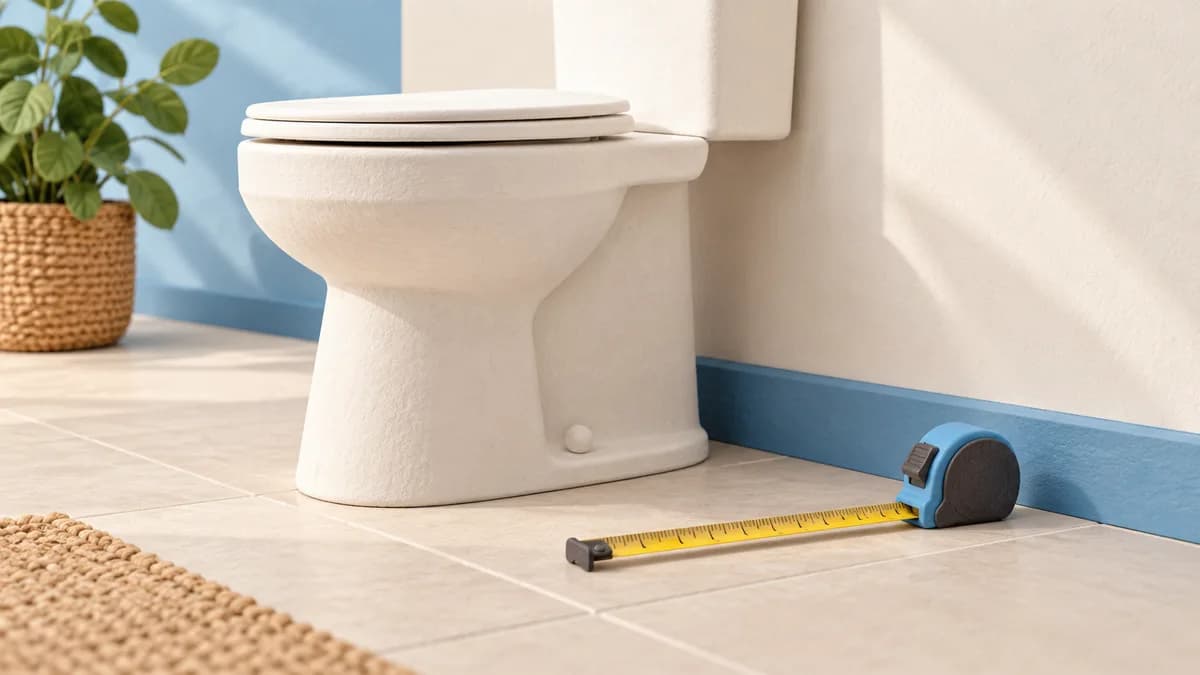
For a conventional floor-mounted toilet, rough-in is the distance from the finished wall behind it to the center of the waste outlet, commonly estimated from the floor-bolt centerline. Measure from the wall, not the projecting baseboard, and verify the exact installation drawing.
- Rough-in is not the distance to the front of the bowl.
- Common sizes include 10, 12 and 14 inches, but measure yours.
- Supply valves, trim and the complete base still need clearance.
Find the drain centerline reference
On a conventional floor-mounted toilet with visible side bolts, their centerline usually provides the practical reference for the waste outlet. Measure horizontally from the finished wall behind the toilet to that line. Keep the tape square to the wall rather than measuring diagonally to the nearest bolt.
Concealed fixings, unusual bases and installations with several fasteners require more care. Do not assume every visible screw marks the drain center. Find the existing model diagram or ask an installer to identify the correct reference before ordering a replacement.
Sources: KOHLER toilet buying guide
Account for the finished wall and projecting trim
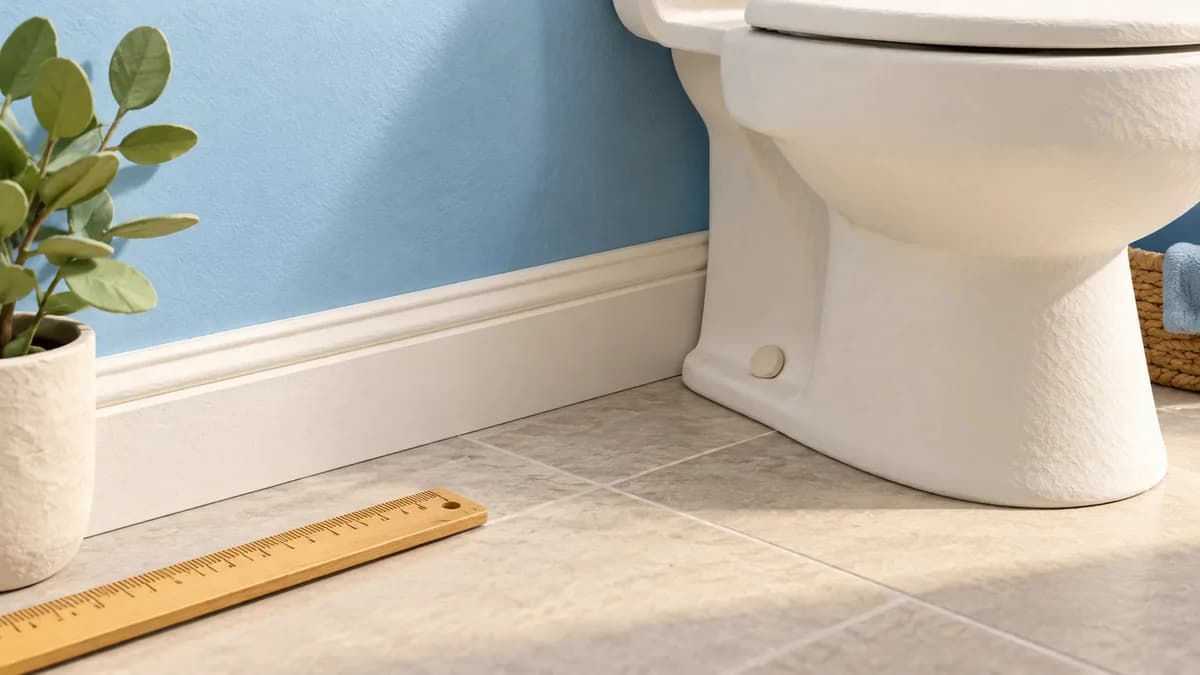
A baseboard projects into the room, so measuring from its face can understate the wall-to-drain distance. Use the finished wall plane as the basic reference, then separately note trim thickness and height. If tile or wallboard will be added, the finished surface may move closer to the drain.
The installation drawing still takes priority for the specific toilet. A manufacturer may identify additional clearance around a baseboard or tank. Do not remove trim, cut into a wall or assume the tank can touch it simply to make a nominal measurement appear to fit.
Sources: KOHLER toilet buying guide; KOHLER Strela installation drawing with supply-clearance example
The water valve and base need room too
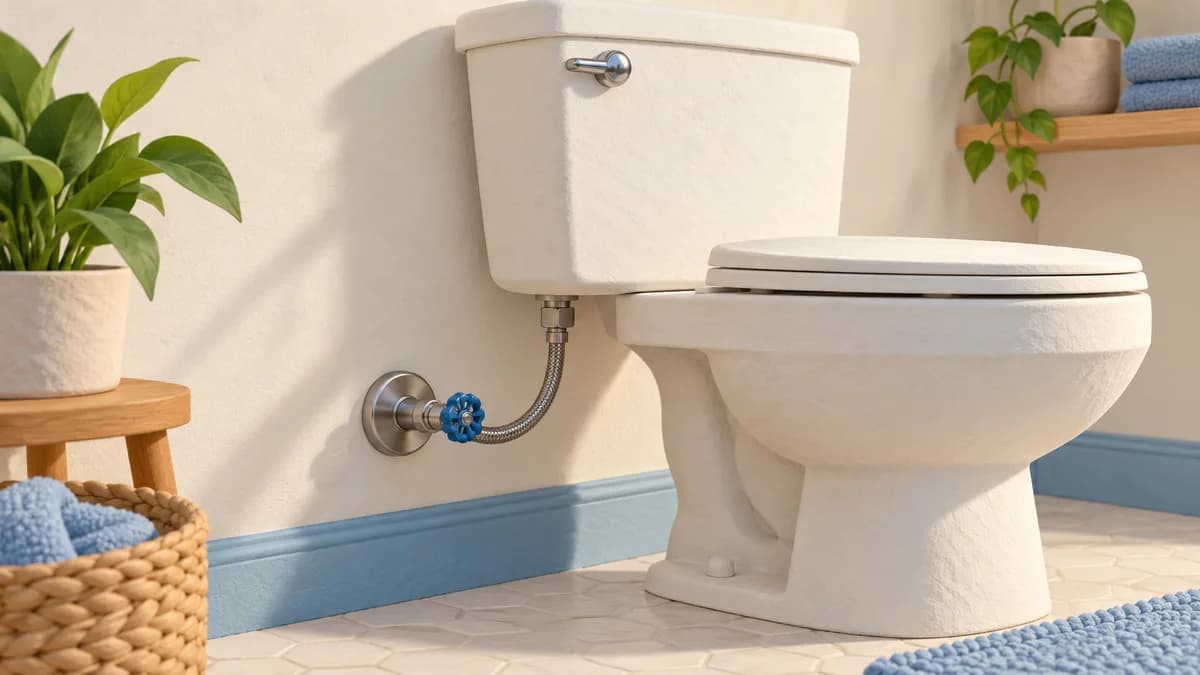
A correctly located drain does not guarantee that the toilet will clear the water supply valve. A broad or skirted base can occupy space that was open beside the old toilet. Check where the shutoff valve, connector and fittings sit relative to the manufacturer outline.
KOHLER installation drawings can specify supply locations and advise checking an existing stop for interference. Those dimensions are model-specific, not universal plumbing instructions. If the supply needs moving, plan that work before delivery and use a qualified professional where appropriate.
Sources: KOHLER Strela installation drawing with supply-clearance example
Match the model drawing, not a family name
Ten-, twelve- and fourteen-inch rough-ins are common shopping categories. They are not a reason to round an uncertain measurement to the nearest convenient label. Record what you measured, note any obstruction and compare the manufacturer tolerances or installation guidance.
Some product families use different bowls or specific adapter arrangements for different rough-ins. Do not assume an adapter is included or that it works across a brand. Confirm the exact model, required kit and complete installed projection; solving the drain connection does not automatically solve room clearance.
| Measurement or detail | Record before ordering |
|---|---|
| Wall to drain centerline | Actual measured distance and reference point |
| Wall finish and trim | Planned changes and projecting obstacles |
| Water supply position | Clearance from the new base |
| Exact toilet model | Specified rough-in and required components |
Sources: KOHLER toilet buying guide
Keep a measurement record for the purchase
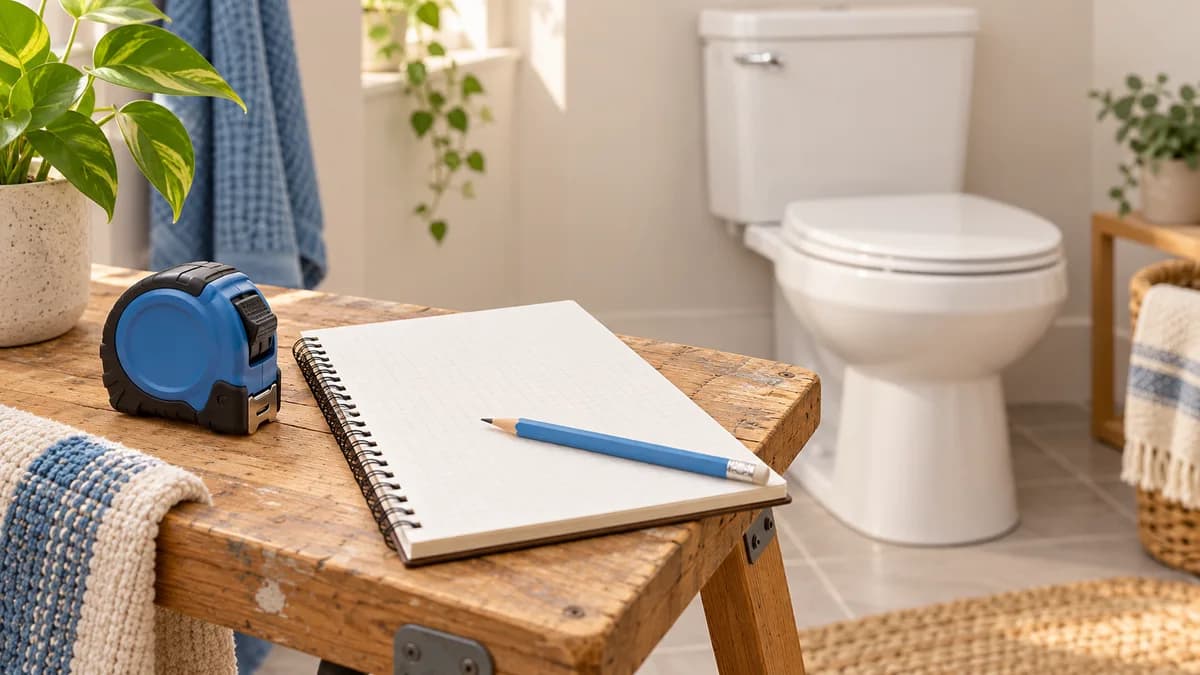
Take a photograph showing the wall, bolts and water valve, then write the measurements separately so they remain readable. Keep the manufacturer drawing alongside that record. This is more useful to a supplier or installer than a statement that the bathroom has a standard toilet. For a planned floor replacement, also tell the installer the new floor height. Rough-in alone does not describe the flange condition or its relationship to the finished floor, and those details can affect the installation plan.
If the figures do not line up, pause the purchase and resolve the mismatch. A different toilet may be simpler than changing the plumbing, but that depends on the room. Wall-hung and rear-outlet toilets use different planning references and should not be selected from this floor-mounted measurement alone.
- Measure from the finished wall plane.
- Confirm the drain center reference.
- Check valve, trim and tank clearance.
- Verify the exact model and any required kit.
- Resolve uncertain measurements before ordering.
Sources: KOHLER toilet buying guide; KOHLER Strela installation drawing with supply-clearance example
Common questions
Is every toilet a 12-inch rough-in?
No. It is common, but other rough-ins exist. Measure the installation and check the exact product specification.
Should I measure from the baseboard?
Use the finished wall as the basic reference, then account separately for projecting trim and the model installation requirements.
Can I use this method for a wall-hung toilet?
No. Wall-hung toilets involve a carrier, wall construction and different connection dimensions. Use the complete system installation instructions.
PUT IT INTO PRACTICE
Compare your options
Compare exact bowl shapes, rough-ins, flush systems and package contents.
Compare five Kohler toiletsSources and editorial approach
ChooseRight researched the sources below to explain the topic and its practical trade-offs. Examples are illustrations, not results from our own product testing. Sources checked October 28, 2026. Artwork is AI-generated for explanation and does not document hands-on testing.