
START HERE
The short answer
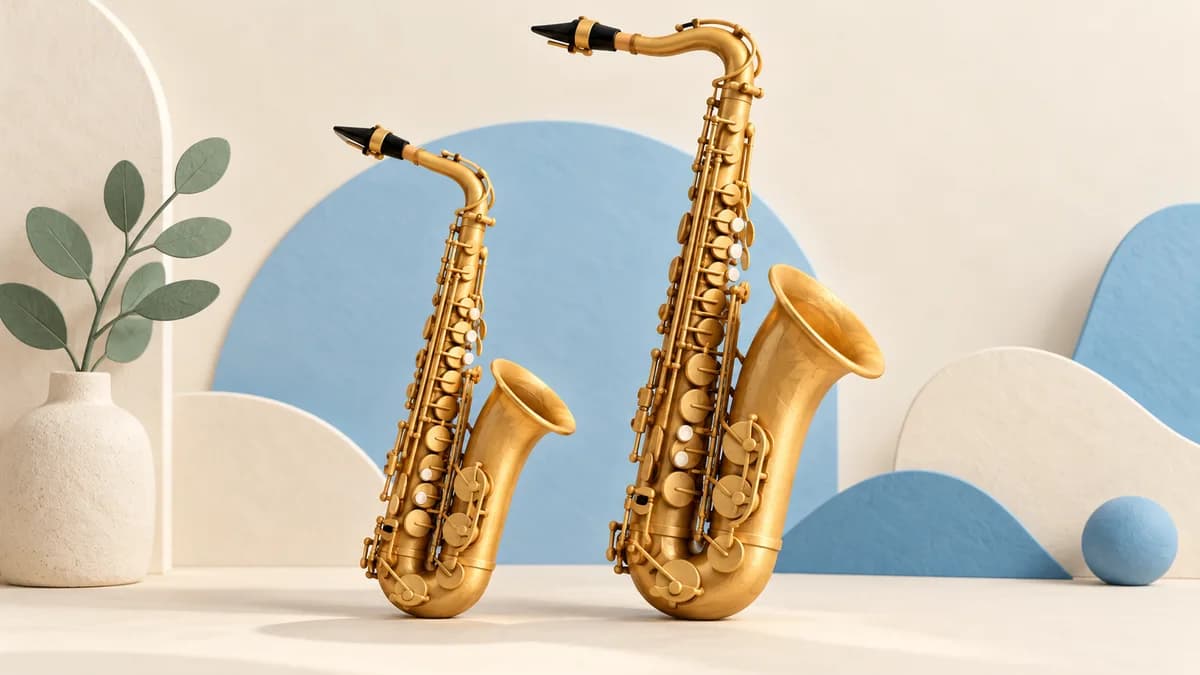
Alto is smaller and normally pitched in E-flat; tenor is larger and normally pitched in B-flat. Their basic fingerings transfer, but written notes sound at different pitches and they use different mouthpieces and reeds. Choose with comfort, musical role and teacher guidance in mind.
- Tenor is larger and uses a larger mouthpiece and reed.
- The same written note does not produce the same concert pitch.
- Both can be a first instrument when the setup and fit are appropriate.
Compare the physical instruments
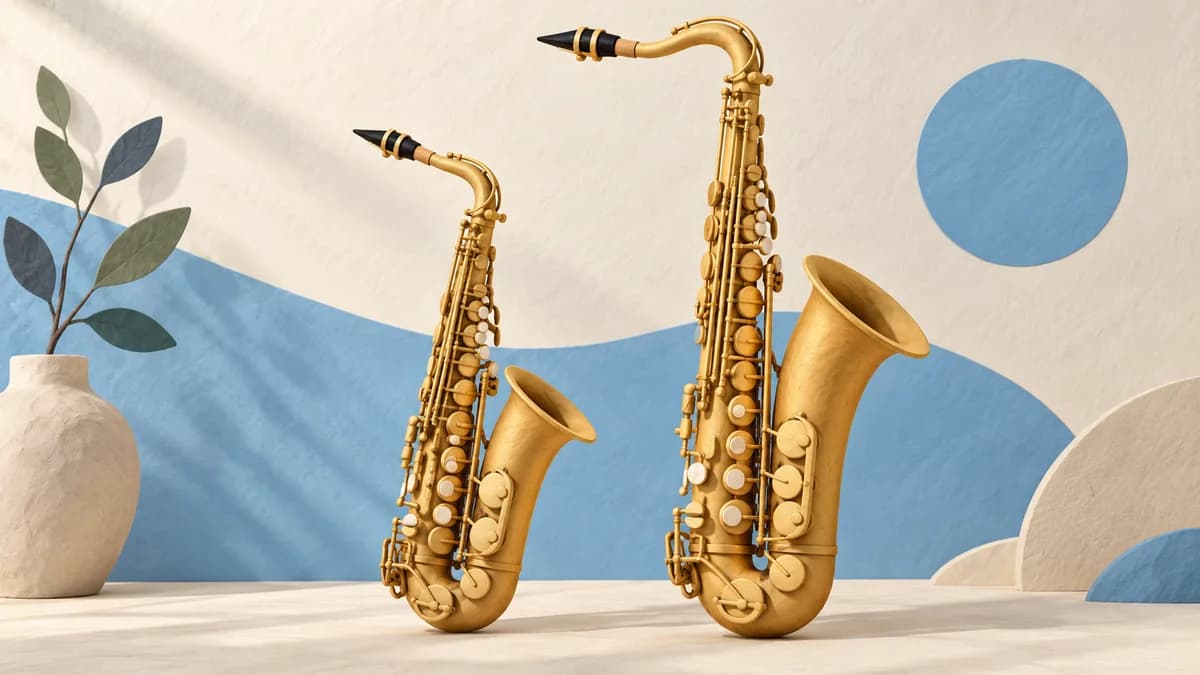
The alto is the smaller of the two, with a more compact body and neck arrangement. A tenor takes up more room in its case and changes the reach and balance of the instrument in your hands. Compare complete instruments rather than relying on photographs at different scales.
Try the saxophone with the support you intend to use and in your normal seated or standing position. Check that you can reach the main keys comfortably without twisting your wrists. A lighter-looking instrument is not proof of a comfortable fit for a particular player.
Sources: Yamaha: soprano, alto, tenor and baritone saxophones
Understand what E-flat and B-flat mean
Alto and tenor are transposing instruments. Yamaha explains that a written C on alto corresponds to E-flat in concert pitch, while a written C on tenor corresponds to B-flat. These names describe the relationship between written and sounding pitch, not a restriction to playing in one musical key.
The basic fingering patterns transfer between saxophones, but the music must be arranged or transposed appropriately when playing together. Ask for the correct alto or tenor part rather than assuming the same printed line will match a piano or another instrument.
| Feature | Alto | Tenor |
|---|---|---|
| Usual transposition | E-flat | B-flat |
| Relative size | Smaller | Larger |
| Mouthpiece and reed | Alto-specific | Tenor-specific |
| Basic fingering system | Largely shared | Largely shared |
Check comfort before committing
A teacher can help assess reach, support height, mouthpiece position and the effort needed for a stable note. These are practical fit checks, not a contest to use the largest instrument. Avoid selecting a saxophone for a child solely by age or height.
The mouthpiece and reed combination also changes how an instrument responds. If one trial feels difficult, ask whether the setup suits a beginner before concluding that the entire saxophone type is wrong. Do not compare a well-adjusted alto against a tenor with leaking pads.
Sources: Yamaha: soprano, alto, tenor and baritone saxophones; Yamaha: the saxophone as a transposing instrument
Choose for the music you want to join
Listen to both types in the music you enjoy and ask a band director or teacher which part is needed. Both appear in jazz and other ensembles; the instrument name alone does not determine style. A school or community group may have a specific opening or loan instrument.
If you mainly want to imitate a particular performer, identify the saxophone they actually use on the recording. Then balance that preference against fit and instruction. Buying a tenor because it is associated with jazz will not automatically produce a favorite player's sound.

Sources: Yamaha: soprano, alto, tenor and baritone saxophones
Build a complete first-instrument plan
Include the correct mouthpiece, reeds, support, cleaning tools and case in the plan. Alto and tenor accessories are not universally interchangeable. Ask about setup checks, repair access and a realistic return or rental policy before ordering.
A supported rental can be useful while you decide which type you want to learn. If you are buying, compare exact models within your chosen type rather than treating a brand name as the whole decision. Our saxophone guide uses representative instruments to make those distinctions clearer.

Sources: Yamaha: soprano, alto, tenor and baritone saxophones; Yamaha: the saxophone as a transposing instrument
Common questions
Is tenor harder than alto?
Not automatically. Size, support, mouthpiece, reed and instrument condition affect the experience; try both with a teacher when possible.
Can an alto player switch to tenor?
The basic fingerings transfer, but the mouthpiece feel, support and written-to-concert pitch relationship differ.
Can I use alto reeds on tenor?
Use reeds intended for the instrument and mouthpiece. Alto and tenor reeds are different sizes.
PUT IT INTO PRACTICE
Compare your options
Compare instruments with attention to setup, accessories, support and sampled owner feedback.
Saxophone brands and representative modelsSources and editorial approach
ChooseRight researched the sources below to explain the topic and its practical trade-offs. Examples are illustrations, not results from our own product testing. Sources checked October 28, 2026. Artwork is AI-generated for explanation and does not document hands-on testing.