
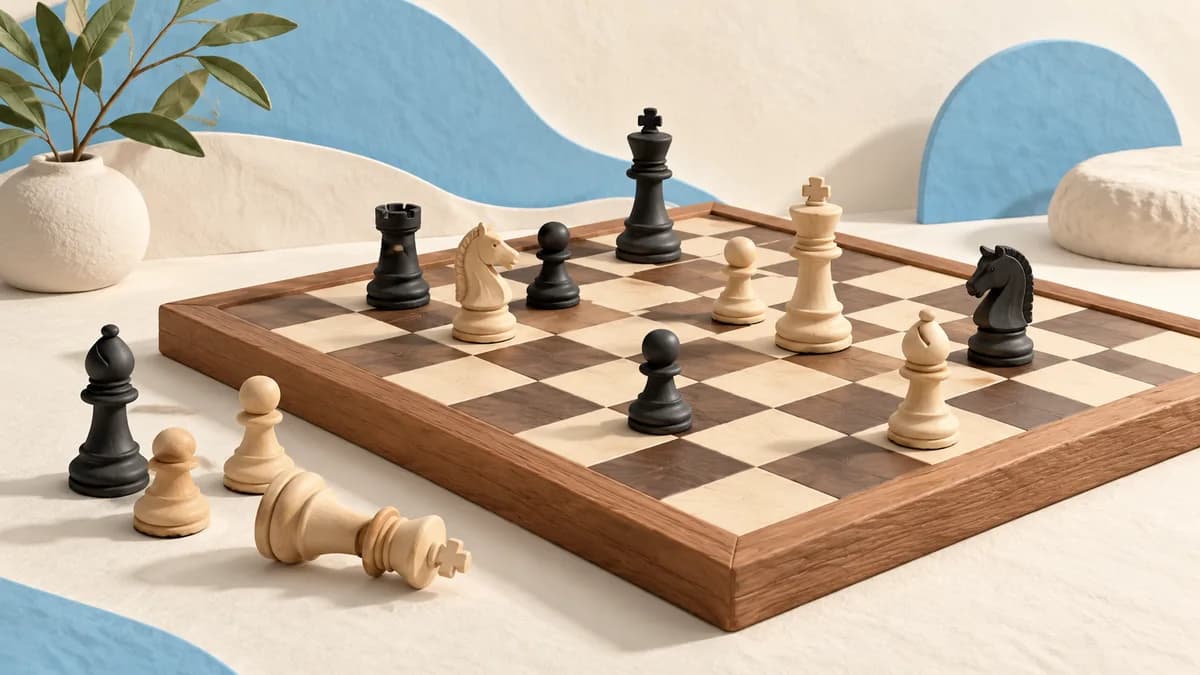
START HERE
The short answer
Put a light square in each player's near-right corner. Place rooks, knights and bishops inward from both corners, then the queen on her own color and the king beside her. Fill the next row with eight pawns. White moves first.
- Check the board orientation before placing any pieces.
- White queen starts on d1; Black queen starts on d8.
- Each side begins with sixteen pieces, including eight pawns.
Start with a light square on your right
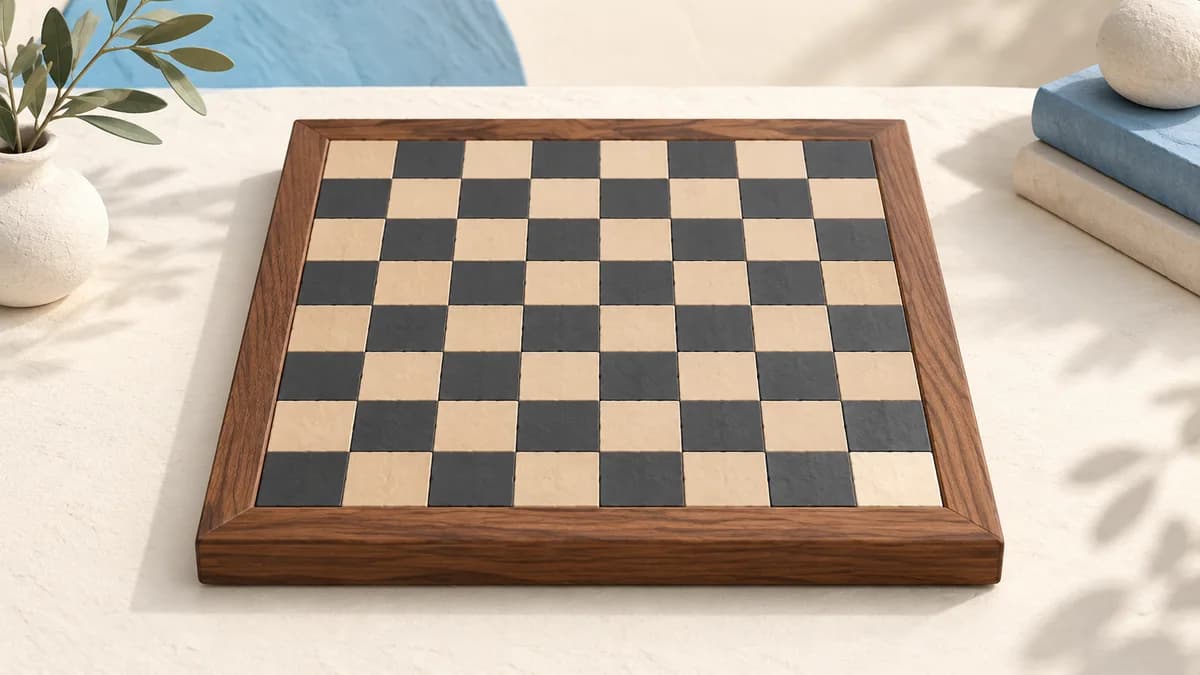
Sit across from your opponent and rotate the empty board until the corner nearest your right hand is light. Both players will have a light square at that corner. On a coordinate board, White has a1 at the near-left corner and h1 at the near-right corner.
Check this before arranging the army. If the board is turned ninety degrees, the usual queen-color reminder can appear to work while the entire position is wrong. A folding hinge does not determine the direction of play.
Sources: FIDE Laws of Chess: board orientation and starting position
Build the back row from the corners
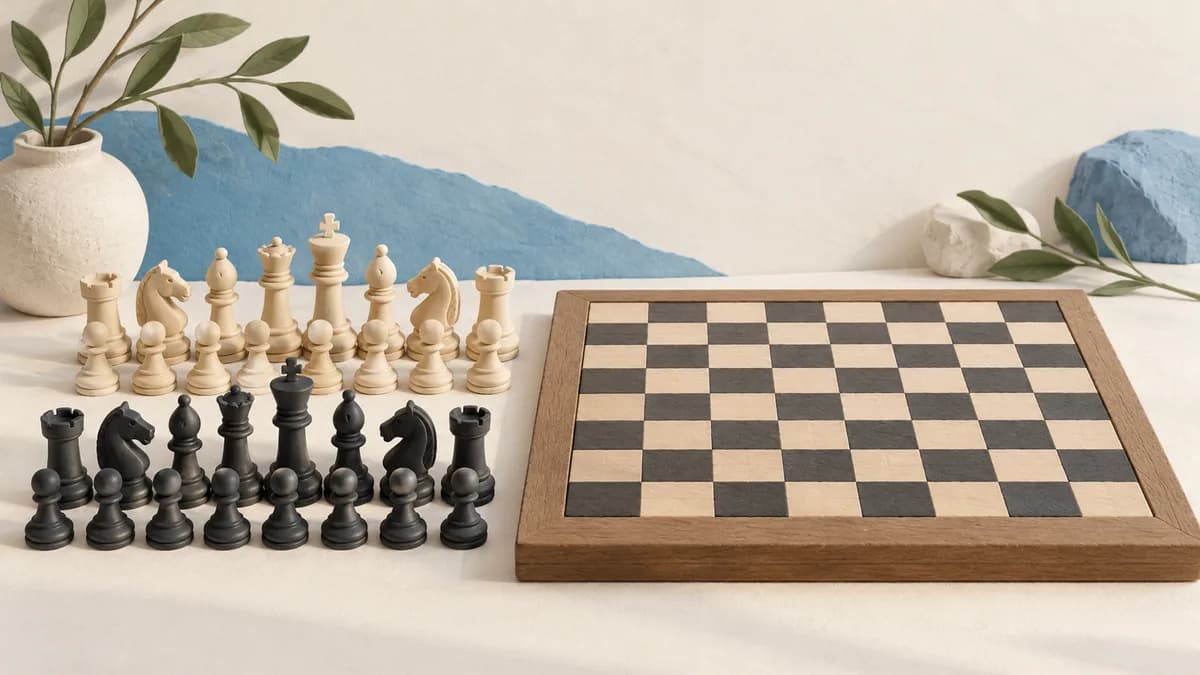
Place a rook in each corner of your back row. Put a knight beside each rook, then a bishop beside each knight. This leaves the two central squares for the queen and king. Repeat the arrangement at the opposite end with the other color.
For White, the outer pieces occupy a1 and h1 for rooks, b1 and g1 for knights, and c1 and f1 for bishops. Black uses the same files on rank 8. On a themed set, identify the pieces before arranging them; a tall sculpture is not necessarily the king.
Sources: FIDE Laws of Chess: board orientation and starting position
Put the queen on her own color
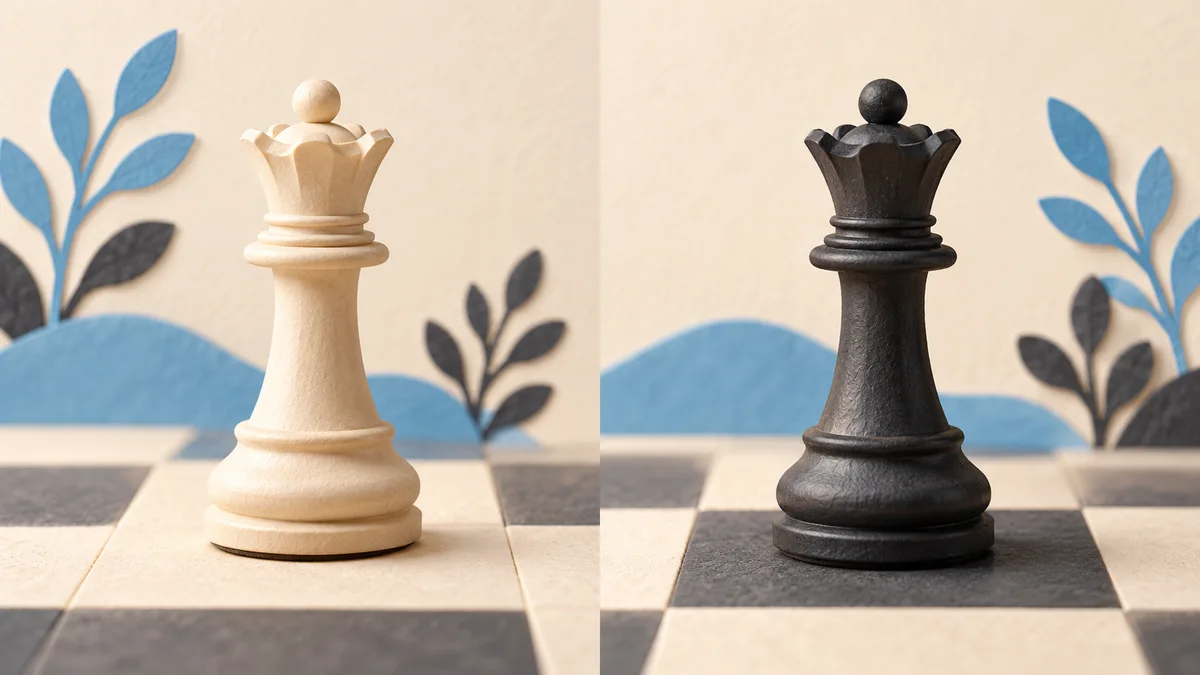
The White queen belongs on the light central square, d1. The Black queen belongs on the dark central square, d8. Put the kings on the remaining central squares: e1 and e8. The two queens face each other along the same file, as do the kings.
Do not use “queen on the left” as a universal rule. That only works from White's viewpoint. Matching the queen to the square color, after checking board orientation, works from either seat and without printed coordinates.
| Piece | White starting squares | Black starting squares |
|---|---|---|
| Rooks | a1, h1 | a8, h8 |
| Knights | b1, g1 | b8, g8 |
| Bishops | c1, f1 | c8, f8 |
| Queen | d1 | d8 |
| King | e1 | e8 |
Sources: FIDE Laws of Chess: board orientation and starting position
Fill the second row and count
Place eight White pawns across rank 2 and eight Black pawns across rank 7. Each pawn stands immediately in front of a back-row piece. The four ranks between the armies are empty at the start.
Count sixteen pieces per side: one king, one queen, two rooks, two bishops, two knights and eight pawns. Some sets include extra queens for promotion. Keep those off the board initially rather than trying to fit them into the starting arrangement.
Sources: FIDE Laws of Chess: board orientation and starting position
Do a final check before the first move
Check the light near-right corner, queens on matching colors, kings facing each other and complete pawn rows. Then decide who plays White. In standard chess, White makes the first move; owning or setting up the board does not determine the color.
Keep unused promotion pieces and the storage lid clear of the playing area. For a decorative set, confirm that both players can distinguish every piece easily. FIDE tournament equipment rules specifically require recognizable pieces and distinct king and queen tops; that is a useful practical check at home too. Our complete-set comparison covers visibility alongside materials, board size and storage.

Sources: FIDE Laws of Chess: board orientation and starting position; FIDE 2026 equipment rules: recognizable pieces and contrasting colors
Common questions
Does the queen always go on the left?
No. White's queen is to White's left of the king; Black sees the arrangement from the opposite side. Use d1/d8 or queen on her own color.
Where do extra queens go?
Off the board until needed for a promotion. Ordinary chess starts with one queen per side.
Does White or Black move first?
White makes the first move in standard chess.
PUT IT INTO PRACTICE
Compare your options
Compare playing space, materials, storage and ownership trade-offs across five complete sets.
High-end chess sets comparedSources and editorial approach
ChooseRight researched the sources below to explain the topic and its practical trade-offs. Examples are illustrations, not results from our own product testing. Sources checked October 28, 2026. Artwork is AI-generated for explanation and does not document hands-on testing.