
START HERE
The short answer
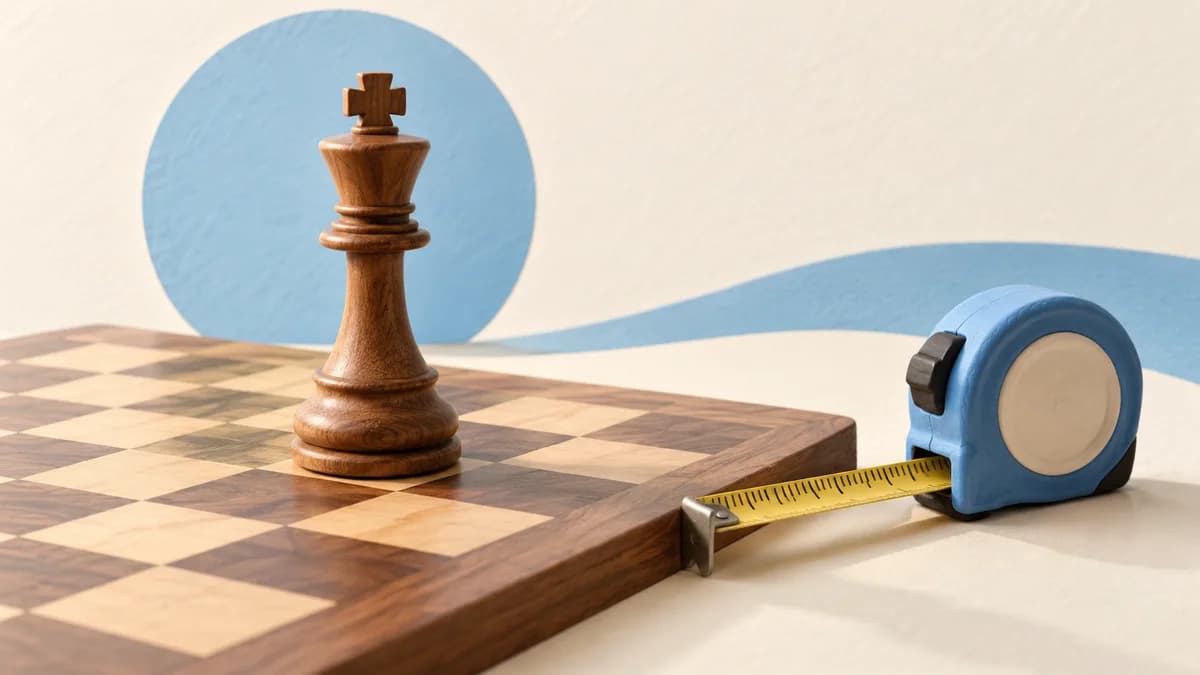
Compare the king's base with the square width, then check the board's full outside dimensions against your table. Leave usable space for hands, captured pieces and a clock if you use one. Square size and overall board size are different measurements.
- A board has eight squares across, plus any border.
- King height does not tell you the width of its base.
- Competition dimensions are not a universal requirement for home play.
Measure the whole playing area
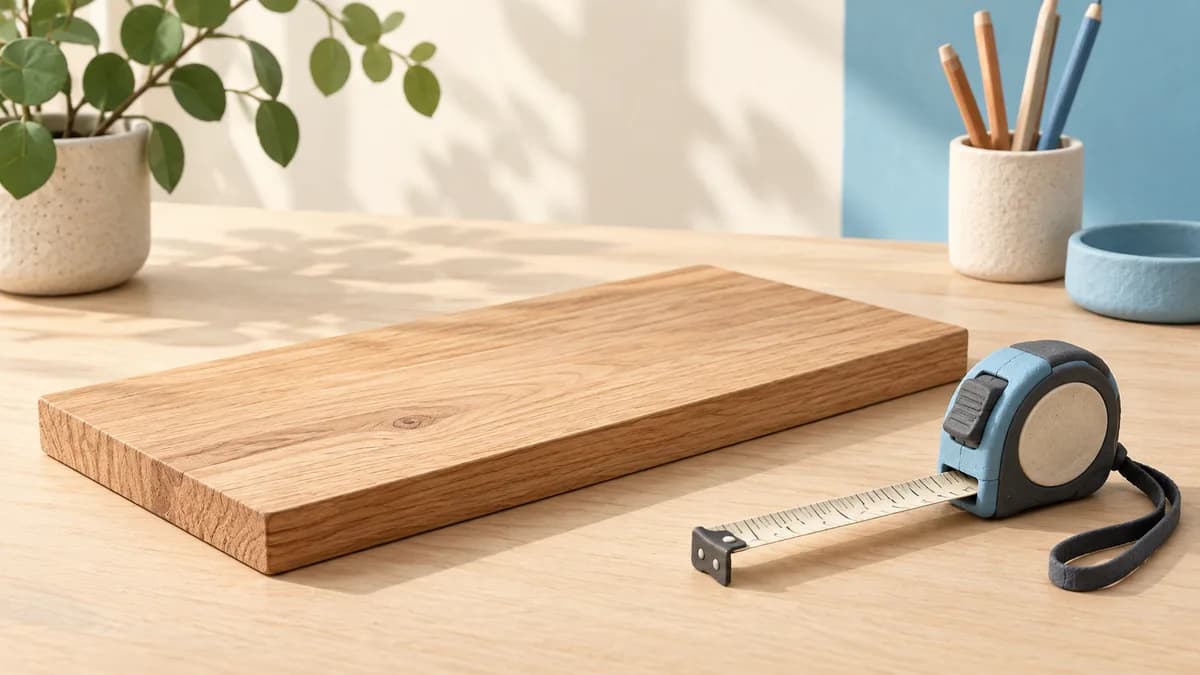
Measure the table surface before choosing a large set. The board needs to sit fully supported and stable, with enough space left for both players to reach pieces without bumping cups or other objects. Include the storage case if it stays under or beside the board.
As an arithmetic example, eight 2-inch squares make a 16-inch playing field. A 1-inch border on each side brings the overall board to 18 inches. A listing that says 18 inches therefore does not necessarily mean 2.25-inch squares.
Match the base, not just the king height
Find the king-base diameter and the square size in the specifications. A tall piece can have a narrow base, while a short decorative piece can occupy much of its square. Make a paper square at the advertised size and place an existing piece on it if you are combining separate purchases. For its properly proportioned Staunton pieces, House of Staunton recommends dividing the king-base diameter by 0.78 to find a minimum square width. Treat that as the maker's matching guideline, not a universal rule for sculptural sets.
The current FIDE equipment rules specify 5 to 6 cm squares for the relevant competition equipment and require four pawns to fit comfortably on one square. These are competition standards, not a claim that every smaller home set is unsuitable. Prioritize clear separation and easy handling for your use.

Sources: FIDE chess equipment rules effective March 2026; House of Staunton FAQ: matching king-base diameter to square size
Choose a format that suits storage
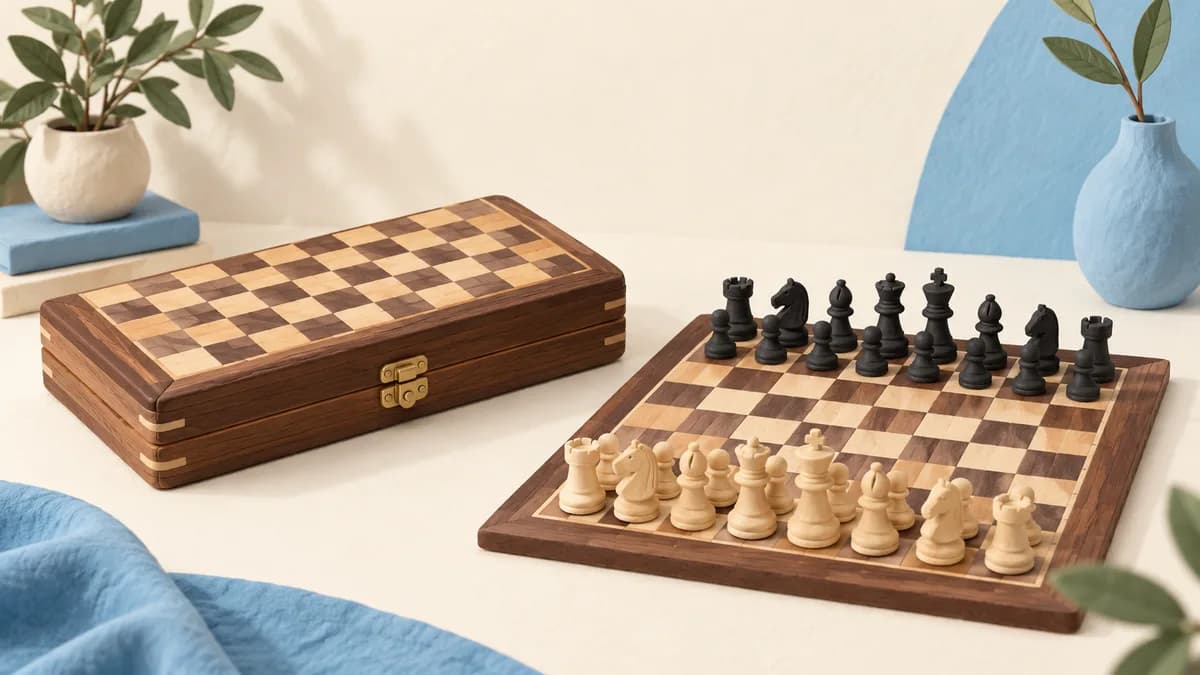
A flat wooden board needs storage for both the board and its loose pieces. A folding board may hold pieces inside, but the open footprint still matters and the center seam should lie flat. A board mounted on a storage box also raises the playing surface.
Check whether the listing includes the board, pieces and case or only one component. Product photography often shows a complete arrangement even when the sale is for pieces alone. For a gift, confirm the package contents before choosing a matching size.
Leave room to move pieces comfortably
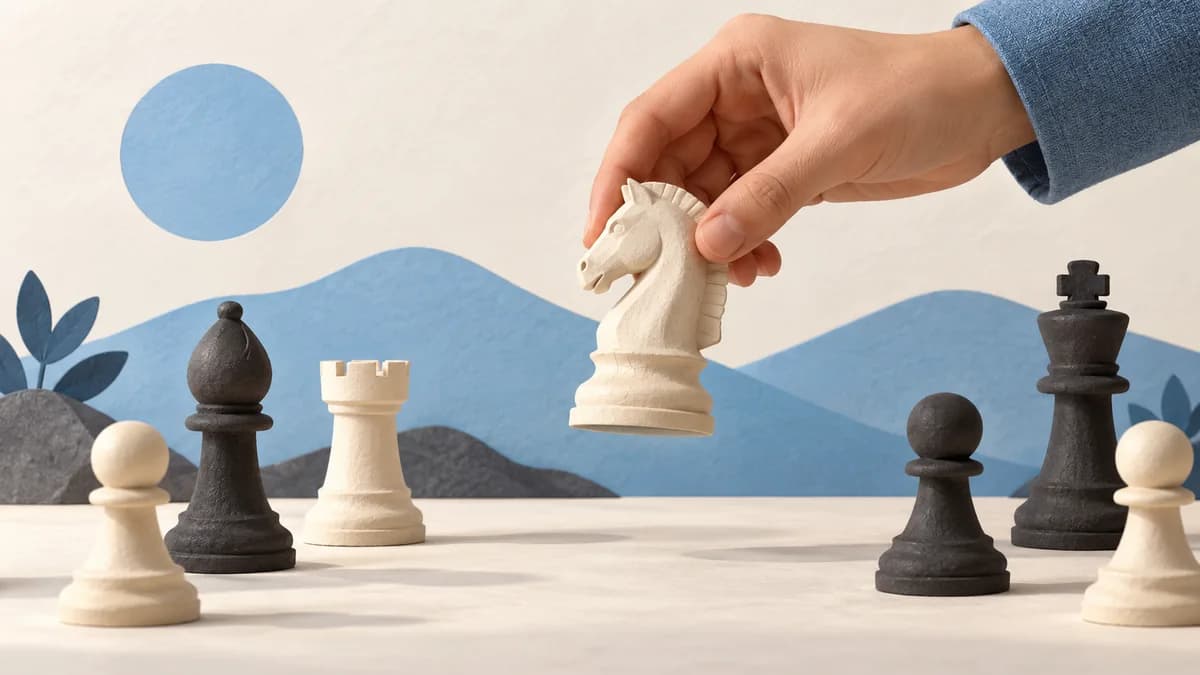
Closely packed pieces can make a set frustrating even when every base technically fits within a square. Look at the starting position, where neighboring pieces occupy every square across two ranks. Consider the widest carved knights and protruding decorative details as well as the king.
Try lifting a central piece without touching its neighbors. Players with larger hands or limited dexterity may prefer a roomier arrangement. A clock and captured pieces also need somewhere accessible; they should not be balanced on the edge of a crowded table.
Use a five-measurement buying check
Before ordering, record square width, full board width, full board depth, king-base diameter and storage dimensions. If the seller gives only king height, ask for the base measurement. If inches and centimeters disagree, resolve that discrepancy rather than choosing whichever number fits your table.
For organized play, check the event requirements directly. For home use, consider visibility, surface glare, stability and storage together. Our high-end chess-set guide compares complete packages so a handsome board does not arrive with an impractical footprint.
| Measurement | What it tells you |
|---|---|
| Square width | Space for each piece |
| King-base diameter | How much of a square the widest piece occupies |
| Overall board dimensions | Table footprint including borders |
| Open and closed dimensions | Storage and folding-board needs |
Common questions
Is a 20-inch board always a tournament board?
No. Overall size alone does not establish square size, piece suitability or compliance with an event's requirements.
Can I use smaller pieces on a large board?
Yes for home play, though the arrangement may look sparse. Check visibility and comfort rather than relying on a single ratio.
Should I measure the border?
Yes for table fit. Exclude it when measuring the playing square itself.
PUT IT INTO PRACTICE
Compare your options
Compare playing space, materials, storage and ownership trade-offs across five complete sets.
High-end chess sets comparedSources and editorial approach
ChooseRight researched the sources below to explain the topic and its practical trade-offs. Examples are illustrations, not results from our own product testing. Sources checked October 28, 2026. Artwork is AI-generated for explanation and does not document hands-on testing.