
START HERE
The short answer
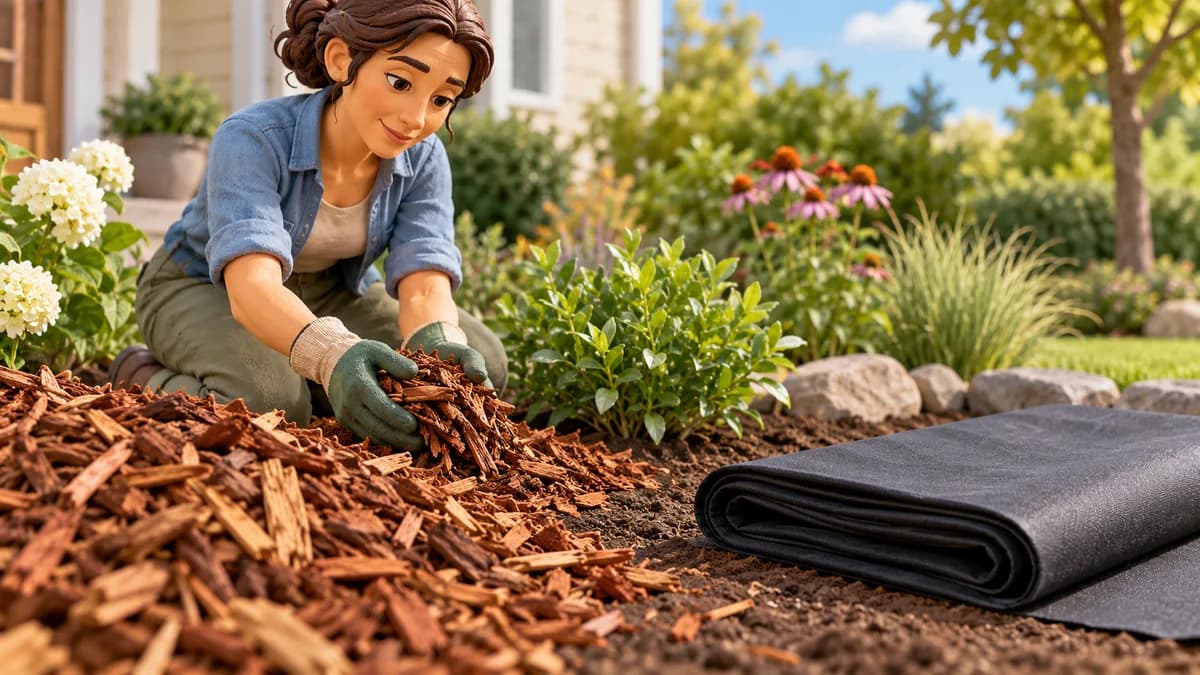
Organic mulch over landscape fabric can still grow weeds and cannot readily improve the soil beneath the sheet. Fabric may serve a defined separation role beneath stone, but it is not a maintenance-free solution.
- Organic and stone mulch serve different purposes.
- Debris above fabric can support new weeds.
- Plan removal around existing roots and irrigation.
Distinguish wood mulch from stone
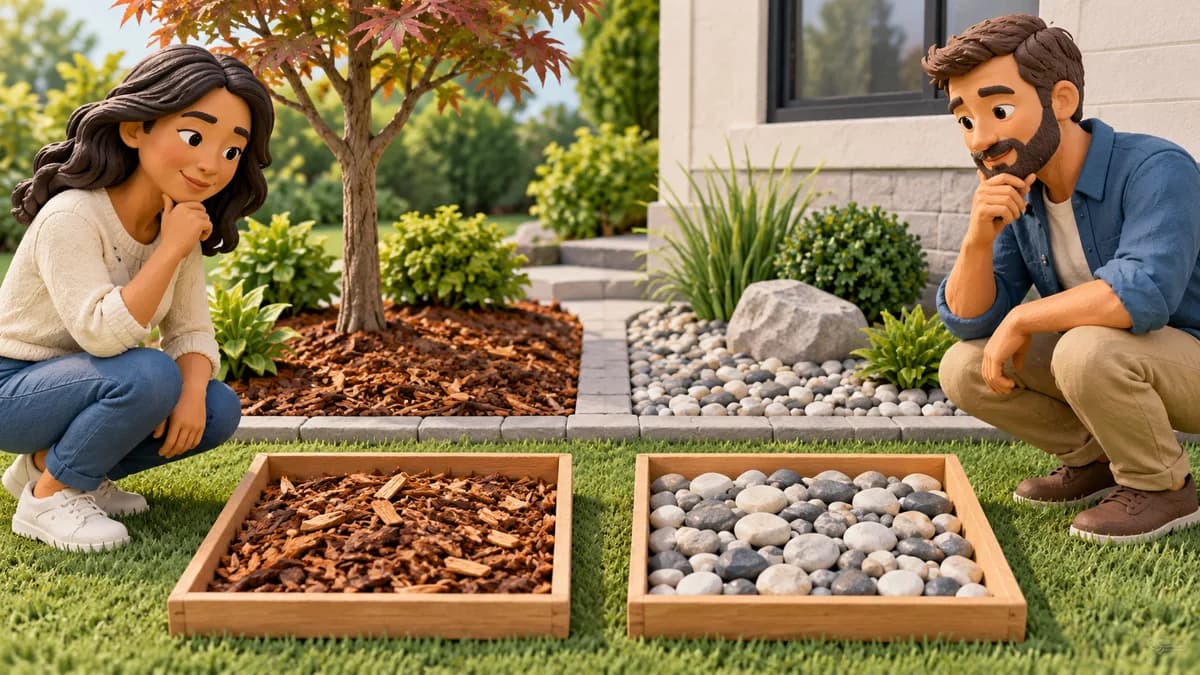
Wood chips and other organic mulches break down over time. Stone remains as a separate covering, so the reason for placing a layer underneath it is different.
Iowa State notes that sheets beneath inorganic mulch can help keep it from mixing with soil. That is a separation function, not proof that every fabric is appropriate for every gravel project.
Consider the soil interface
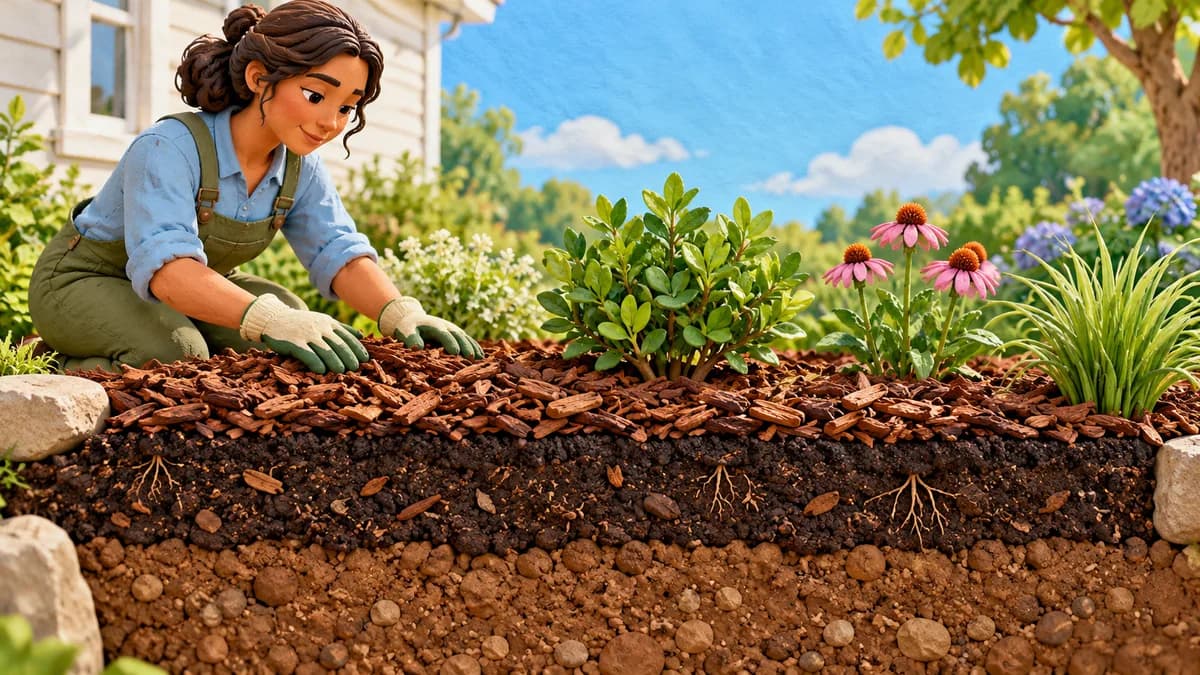
A sheet beneath wood mulch separates decomposing material from the soil. It also creates another layer to cut through when planting or adding amendments.
For a bed you expect to improve and rearrange regularly, that can be an avoidable obstacle. Compare the work of maintaining this layered system with a simpler organic-mulch routine.
Expect weeds above the sheet
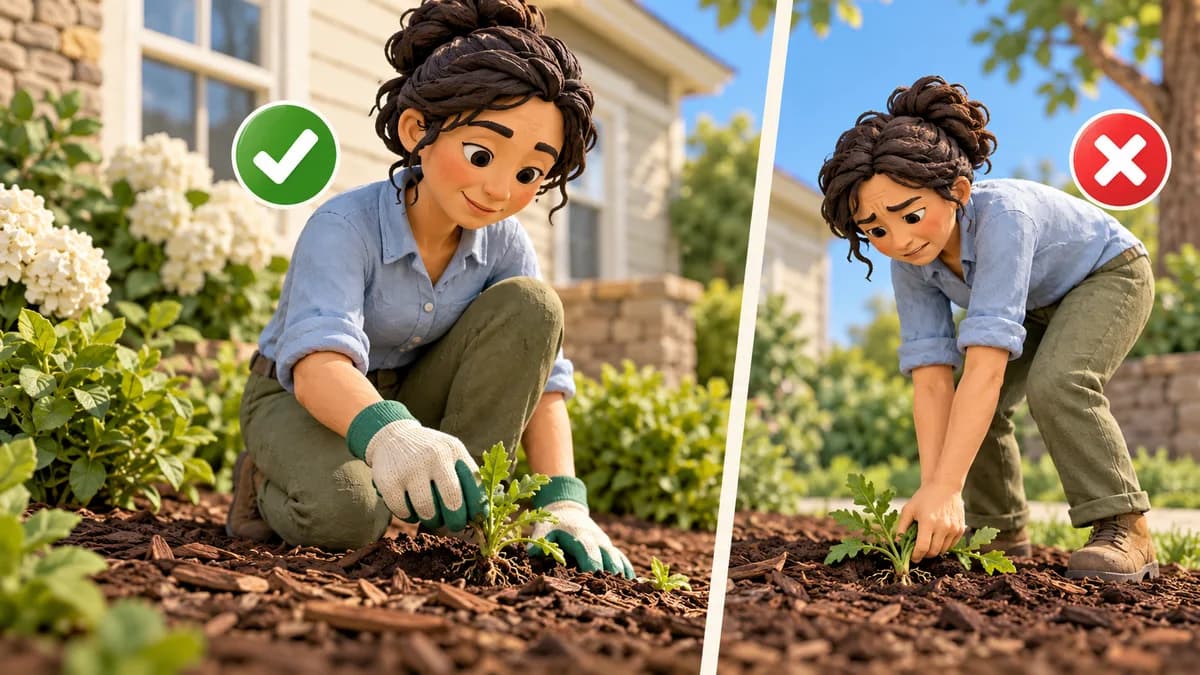
Windblown soil and organic debris can accumulate above fabric. Seeds can germinate there even if the original layer below remains intact.
DeWitt acknowledges this mechanism in its own FAQ. When you see seedlings above an installed sheet, determine where they are rooted before concluding that the fabric has torn.
Sources: DeWitt FAQ: fabric construction and weeds above fabric
Maintain an existing installation carefully
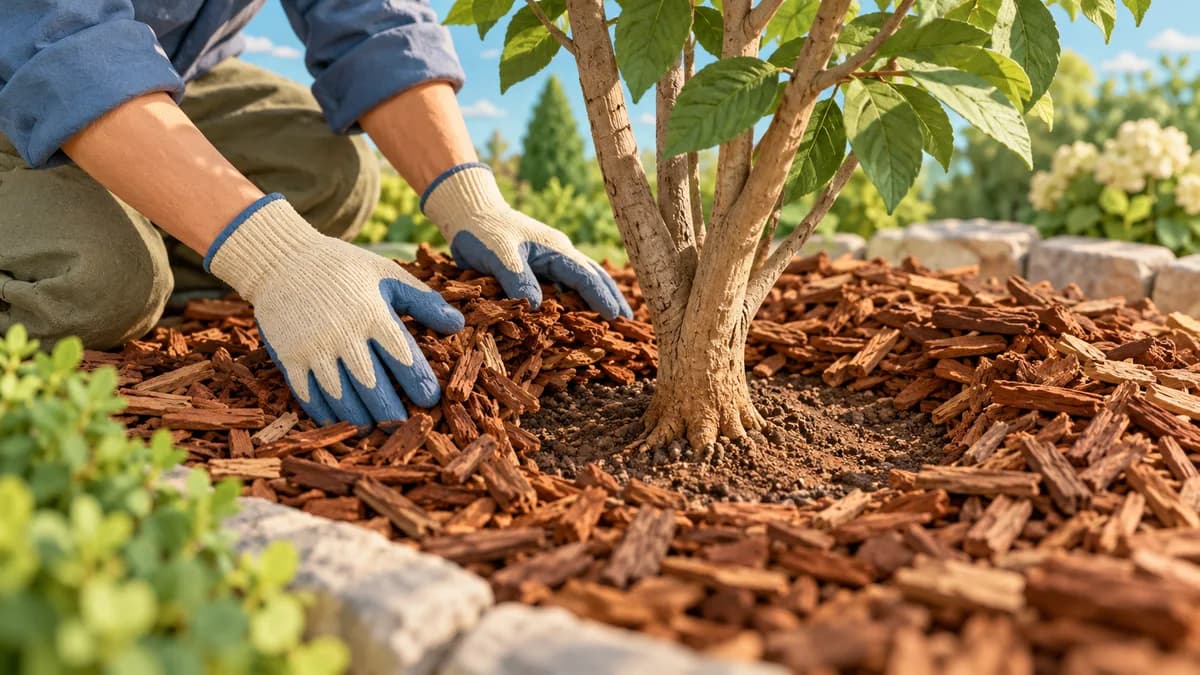
Inspect seams, exposed edges and planting openings. Remove small weeds promptly and keep mulch away from plant crowns and tree trunks.
If roots have become interwoven with the sheet, work in manageable sections and seek horticultural help where pulling could damage established plants. Do not burn weeds or fabric near combustible mulch.
Sources: Cornell: mulch preparation, maintenance and fire caution; Iowa State Extension: using mulch in the garden
Consider a simpler alternative
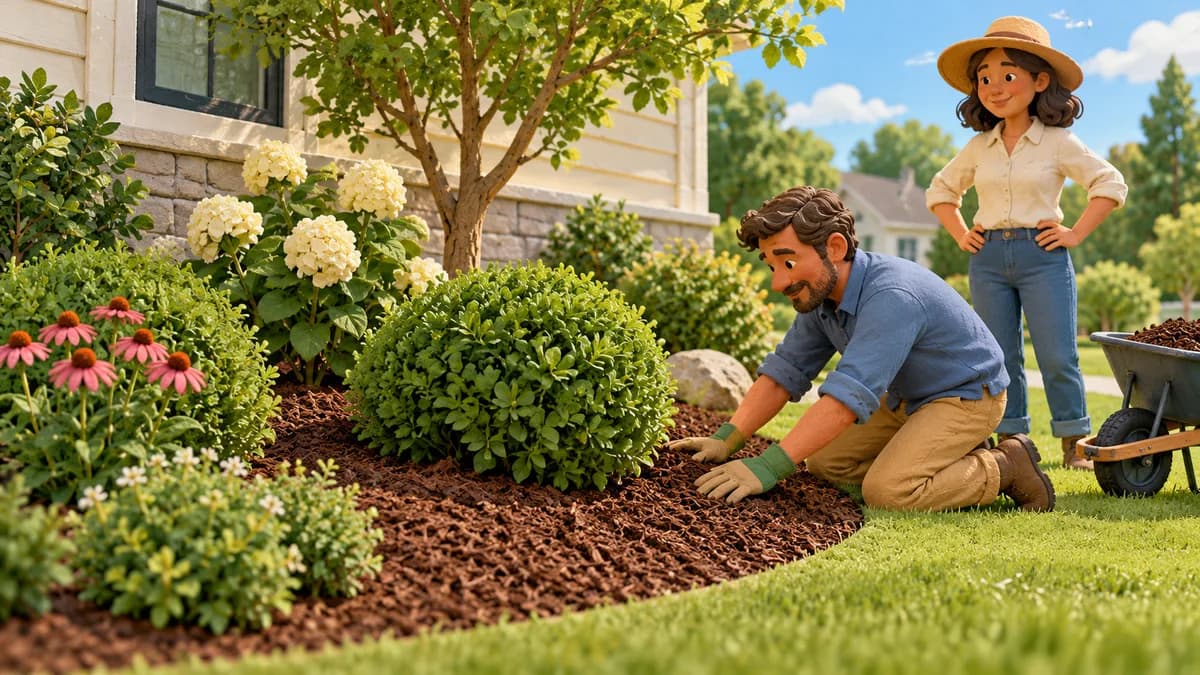
For many planting beds, a suitable organic mulch directly on prepared soil is easier to renew and plant through. Existing persistent weeds still need an appropriate control plan.
Where stone separation is the goal, verify the required material and layout before buying. The best result may be using fabric selectively rather than covering every bed.
| Situation | Consider |
|---|---|
| Frequently replanted bed | Organic mulch without a buried sheet |
| Stone separation | A material specified for that job |
| Weeds above intact fabric | Remove seedlings and accumulated debris |
| Roots tangled in old fabric | Careful staged removal and advice |
Sources: Iowa State Extension: using mulch in the garden; Cornell: mulch preparation, maintenance and fire caution
Common questions
Will mulch make fabric permanently weed-free?
No. Soil and organic matter can collect above it and support new weeds.
Should I immediately remove old fabric?
Assess roots, irrigation and fabric condition first. Removal can disturb an established planting.
Can I flame-weed on top of mulch?
No. Cornell warns that mulch can pose a fire hazard; use an appropriate non-flame maintenance method.
PUT IT INTO PRACTICE
Compare your options
Compare exact constructions and roll sizes when fabric suits the project.
Landscape fabrics comparedSources and editorial approach
ChooseRight researched the sources below to explain the topic and its practical trade-offs. Examples are illustrations, not results from our own product testing. Sources checked October 28, 2026. Artwork is AI-generated for explanation and does not document hands-on testing.