
START HERE
The short answer
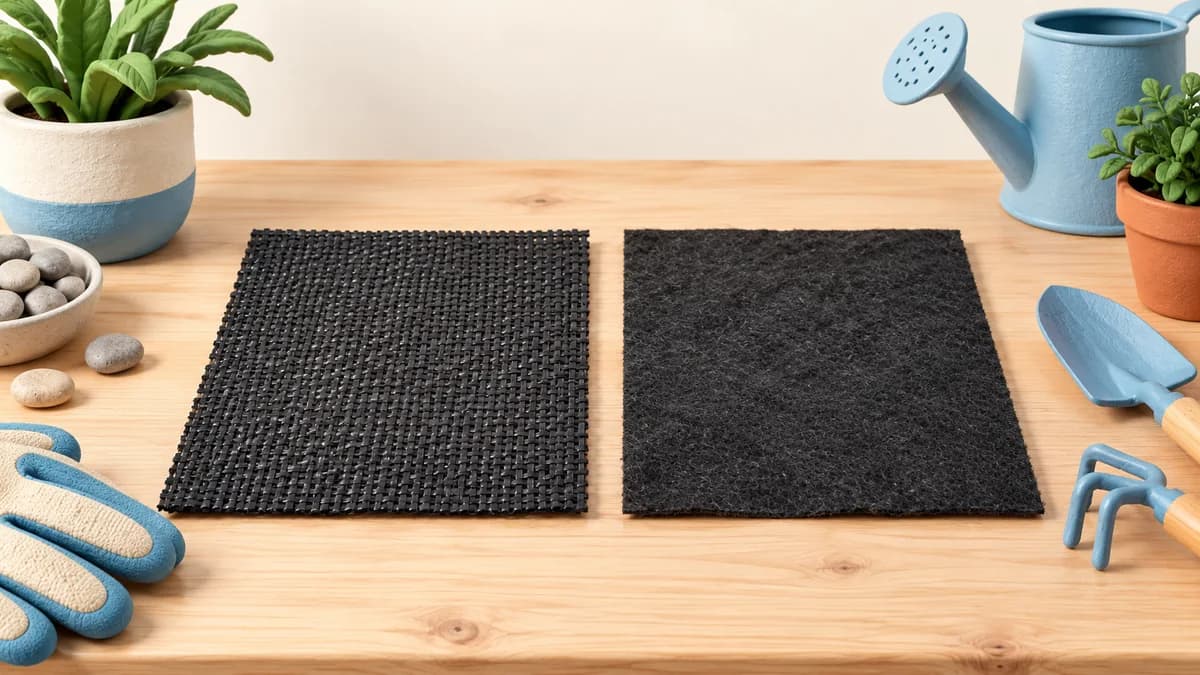
Woven fabric uses interlaced strands; nonwoven material bonds or entangles fibers without that weave. Some products combine both. Construction alone does not establish drainage performance or suitability for a French drain.
- Some fabrics combine woven and needle-punched layers.
- Compare application-specific data, not only ounce weight.
- Weed cloth and engineered filter fabric are different buying decisions.
Identify the actual construction
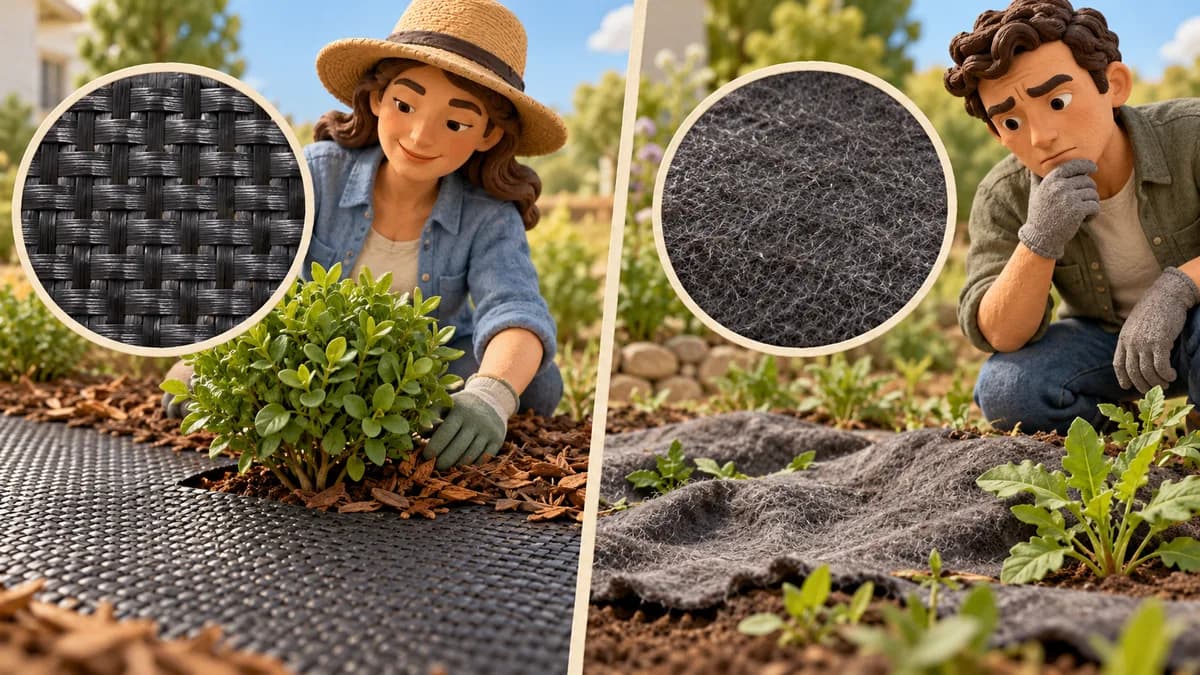
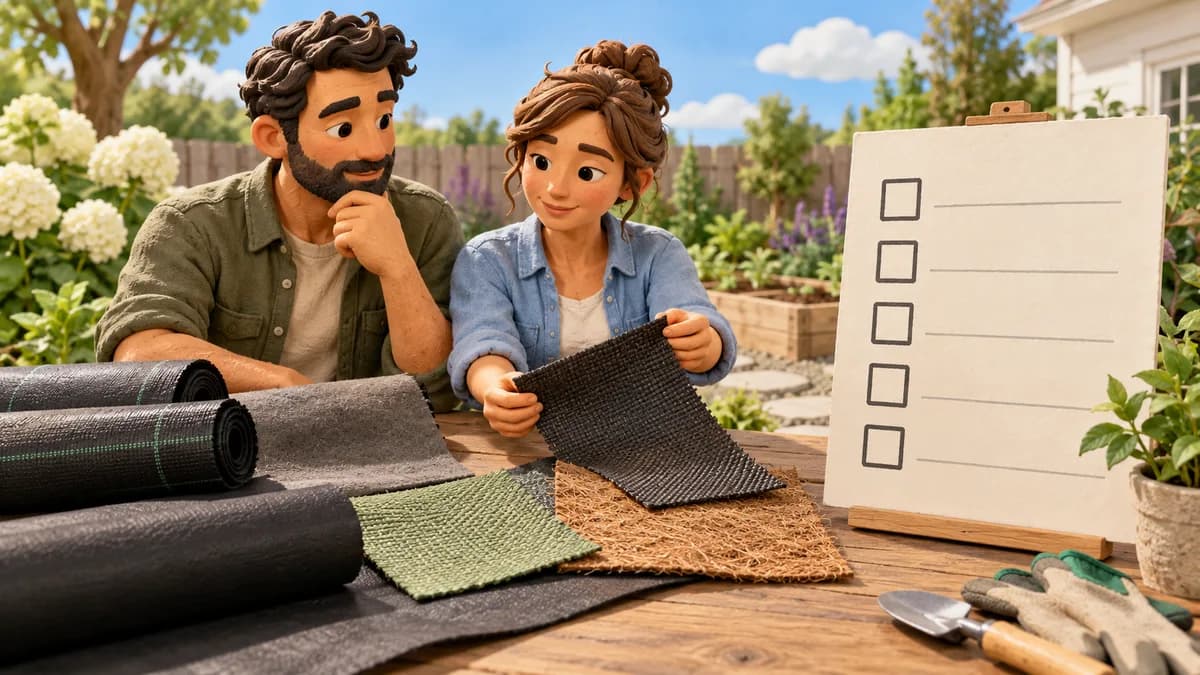
Woven material has interlaced strands. Nonwoven fabric can use bonded or needle-entangled fibers; the manufacturing method varies. ECOgardener, for example, describes a combined woven and nonwoven needle-punched product.
Look for a cross-section description or data sheet rather than guessing from the top surface. A fuzzy backing is not by itself proof of damage or a different delivered weight.
Sources: ECOgardener: two-layer fabric construction; DeWitt: specific four-ounce nonwoven filter-fabric data
Check the water-flow specification
Water movement depends on the actual material, soil and installation. Do not assume every nonwoven is a free-draining filter or every woven sheet blocks water.
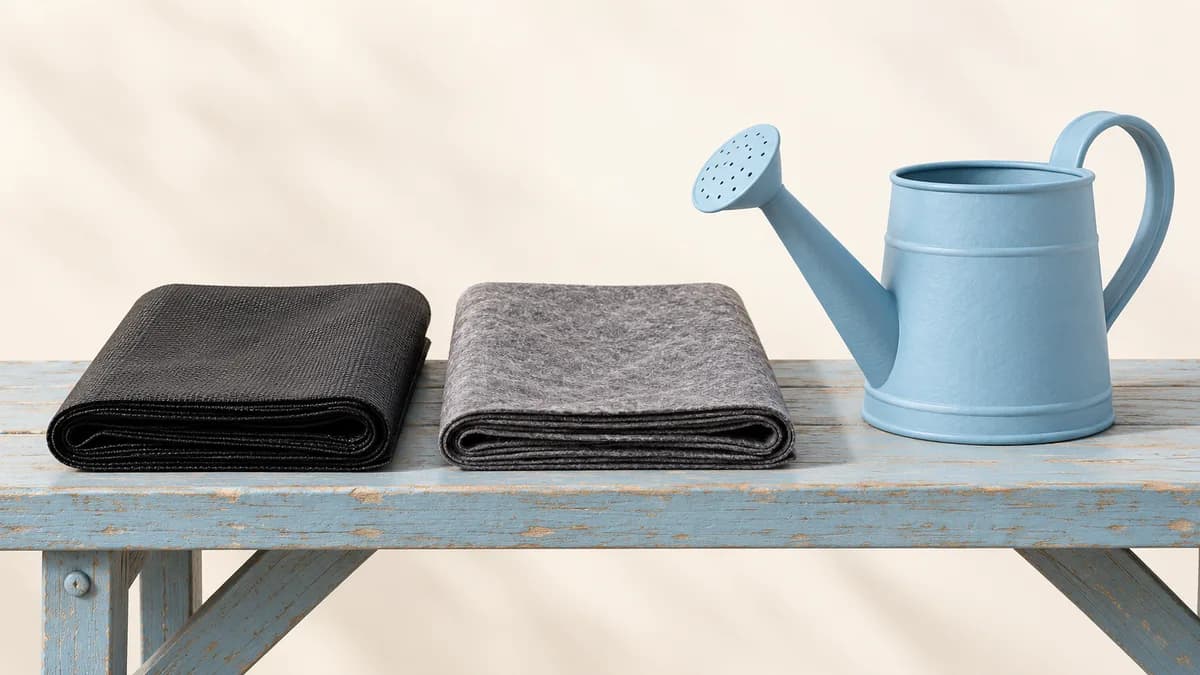
DeWitt publishes water-flow and opening-size data for its specific four-ounce nonwoven filter fabric. Those figures belong to that model; they cannot be transferred to another brand or weed-barrier roll.
Sources: DeWitt: specific four-ounce nonwoven filter-fabric data
Plan seams, cuts and anchoring
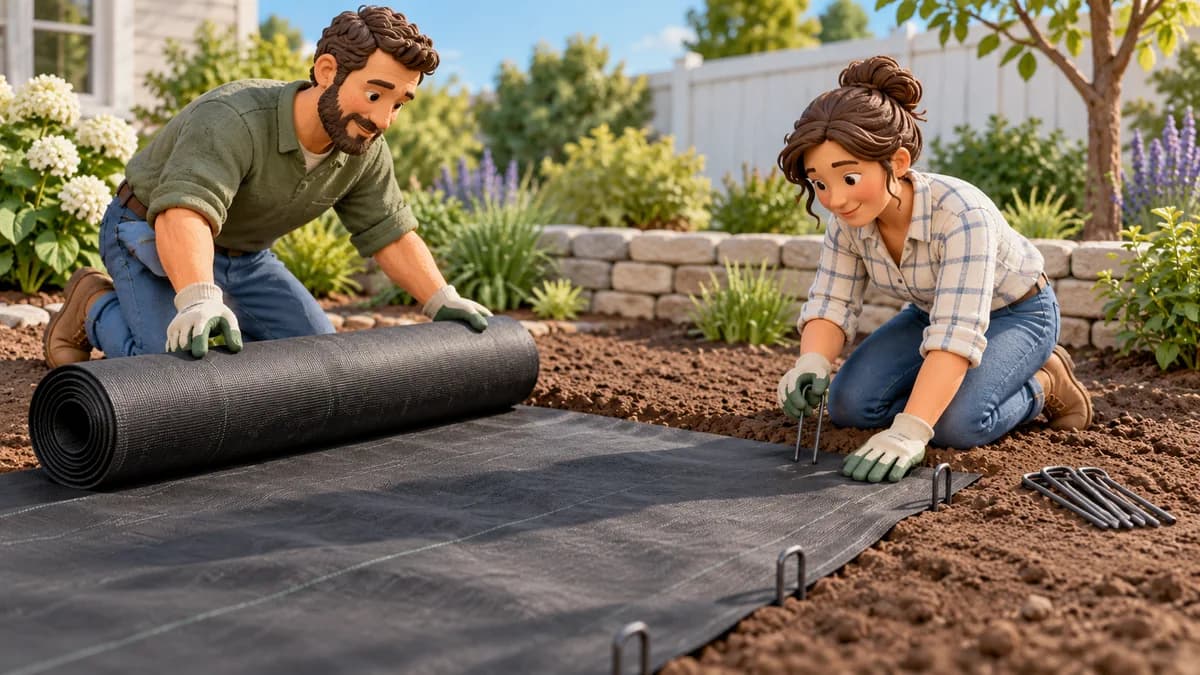
Measure the intended layout before ordering. Include overlaps and edge treatment required by the maker, and check whether the roll arrives folded.
Practice a small cut before making every planting opening. Keep offcuts contained and inspect cut edges during maintenance rather than treating a no-fray marketing phrase as an installation guarantee.
Sources: ECOgardener: two-layer fabric construction; DeWitt FAQ: fabric construction and weeds above fabric
Keep the surface maintained
Soil, leaves and decomposing mulch can collect above either construction and support weeds. The barrier below does not make those new growing conditions disappear.
Remove young weeds before their roots become entangled. When a planting plan changes, inspect whether the fabric can be removed cleanly rather than repeatedly adding new layers.
Sources: DeWitt FAQ: fabric construction and weeds above fabric
Choose by the specification and use
For a nursery aisle or a defined landscape separation job, compare products expressly documented for that use. For drainage or structural work, obtain the required geotextile specification.
If a listing gives only a generic material name and roll size, ask for the missing application information. Guessing from thickness is a poor substitute for matching the intended job.
| Check | Why it matters |
|---|---|
| Exact construction | Combined layers are common |
| Application and data sheet | Separates weed control from filtration |
| Roll format | Folded width differs from open width |
| Maintenance access | Weeds can establish above either type |
Sources: DeWitt: specific four-ounce nonwoven filter-fabric data; ECOgardener: two-layer fabric construction
Common questions
Is needle-punched the same as woven?
No. Needle-punching entangles fibers; a product can combine a woven layer with a needle-punched layer.
Does heavier mean better drainage?
No. Weight alone does not establish water-flow or filtration properties.
Can weed fabric line a French drain?
Only if its documented filtration properties meet the drainage design. Do not substitute a generic weed barrier by appearance.
PUT IT INTO PRACTICE
Compare your options
Compare exact constructions and roll sizes when fabric suits the project.
Landscape fabrics comparedSources and editorial approach
ChooseRight researched the sources below to explain the topic and its practical trade-offs. Examples are illustrations, not results from our own product testing. Sources checked October 28, 2026. Artwork is AI-generated for explanation and does not document hands-on testing.