
START HERE
The short answer
Identify the exact model and comb material first. Wipe the outside with an appropriate soft cloth and let the harmonica dry before storage. Do not soak wooden-comb or valved instruments, and follow model-specific instructions before rinsing or disassembling any harmonica.
- Water permission depends on the complete instrument, not just a plastic comb.
- Low-tuned harmonicas can need different moisture-removal handling.
- Cleaning does not establish that an instrument is disinfected or safe to share.
Identify the comb and the type of harmonica
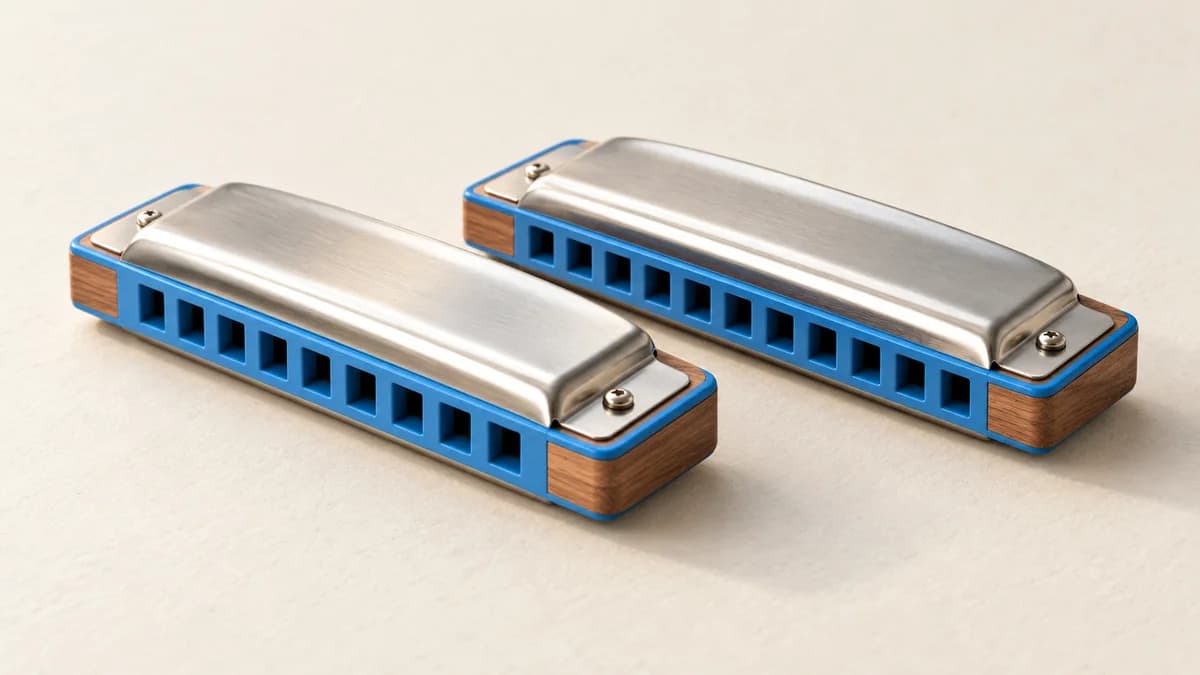
Find the model name on the instrument or packaging, then locate its manufacturer’s care instructions. A diatonic, chromatic or other harmonica may have different internal construction even when the outer covers look similar.
Wooden combs can swell or warp with soaking. Valves introduce another concern because moisture can affect their function or adhesive. Do not infer that an assembled instrument can go under a tap simply because one part is plastic. If the manual is unclear, asking the manufacturer is less costly than experimenting with the reeds.
Sources: HOHNER: Harmonica care and troubleshooting FAQs; SEYDEL: Care instructions
Keep the routine after playing gentle
Wipe the exterior with a soft cloth suitable for the finish. HOHNER describes gently tapping moisture from many models into the palm, but specifically excludes some low-tuned instruments because their long reeds can be displaced. For those, use the manufacturer’s drying guidance instead.
Keep a clean cloth with the case so this takes little effort. Rinsing your mouth before playing and avoiding food or sugary-drink residue reduces what reaches the instrument. A routine that prevents buildup is easier to maintain than repeated deep cleaning after residue has dried inside.
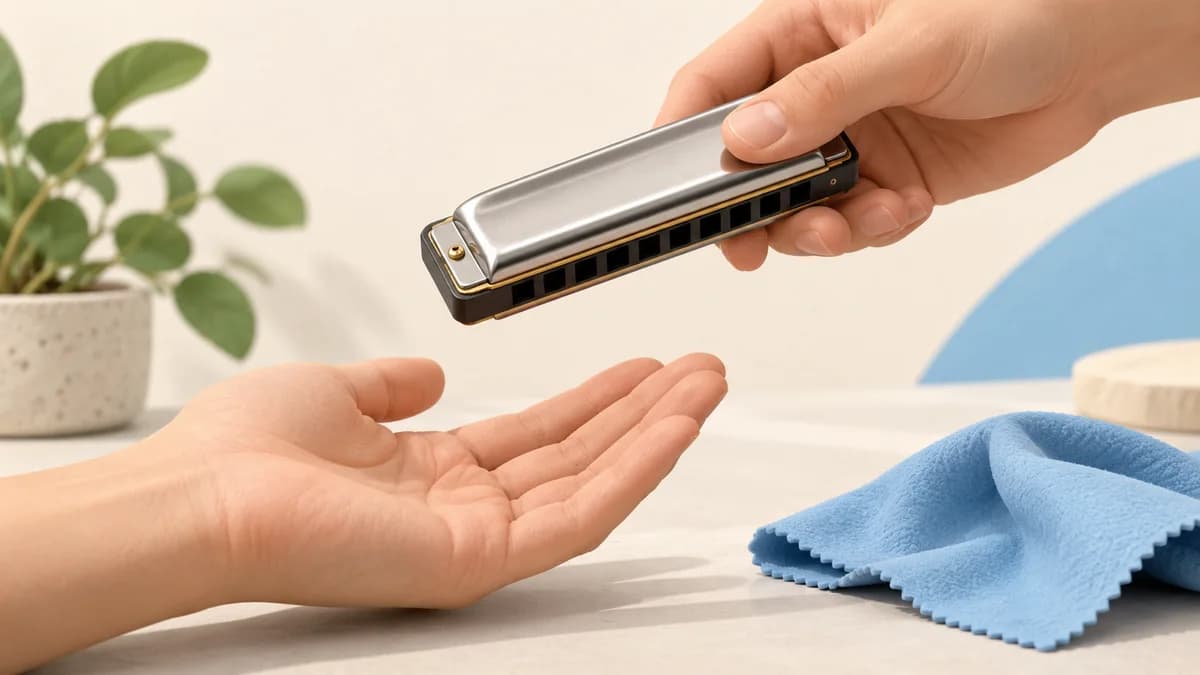
- Check whether your model permits gentle moisture tapping.
- Wipe external surfaces without pushing the cloth into reed openings.
- Allow drying time before closing the case.
Do not turn a rinse into a universal instruction
Some manufacturers permit water cleaning for particular diatonic models. That permission does not extend to every harmonica they sell, let alone another brand’s construction. SEYDEL distinguishes models and warns about valved instruments; HOHNER also identifies designs that should not be soaked.
Use only the method and conditions stated for your exact model. Avoid improvised hot-water baths, harsh cleaning chemicals or a dishwasher. When instructions require disassembly, a quick rinse of the assembled instrument is not an equivalent shortcut. Stop if you cannot establish what the maker permits.
| What you know | The next decision |
|---|---|
| Wooden comb | Avoid soaking; consult the model instructions. |
| Valves or chromatic construction | Check moisture restrictions before any water cleaning. |
| Plastic comb only | Confirm the entire model is approved for the proposed method. |
| Construction unknown | Identify the model before proceeding. |
Sources: SEYDEL: Care instructions; HOHNER: Harmonica care and troubleshooting FAQs
Know when a deeper clean belongs with a technician
A persistent problem may involve residue, reed alignment, wear or playing technique. It is not possible to diagnose every weak note by looking through the mouthpiece. Avoid bending or scraping a reed in an attempt to prove that dirt is the cause.
Before removing screws, consider whether you have the model instructions, suitable tools and a way to preserve part orientation. If not, use the maker’s repair or service route. Ask about cleaning, diagnosis and any required disinfection separately; an ordinary cleaning routine does not demonstrate that a used instrument is hygienically ready for another player.
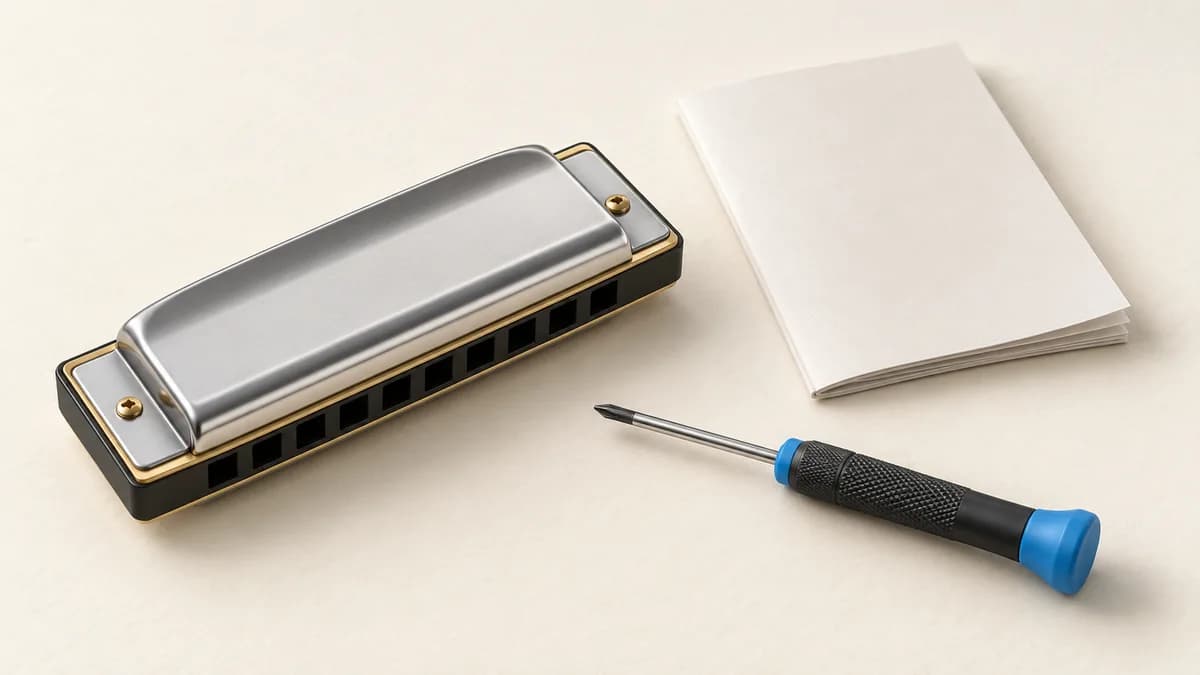
Sources: HOHNER: Harmonica care and troubleshooting FAQs; SEYDEL: Repair service
Let it dry before closing the case
Store the instrument only after it has dried, following the maker’s guidance. Keep it away from excessive heat and moisture. A case protects a dry harmonica during transport, but closing a damp instrument inside it works against that drying routine.
Build a simple order into practice: finish playing, perform the permitted moisture care, leave time to dry in a clean place, then pack it. If you own several models, keep their care instructions with your accessories. That prevents a water-safe routine for one instrument from becoming an accidental rule for all of them.
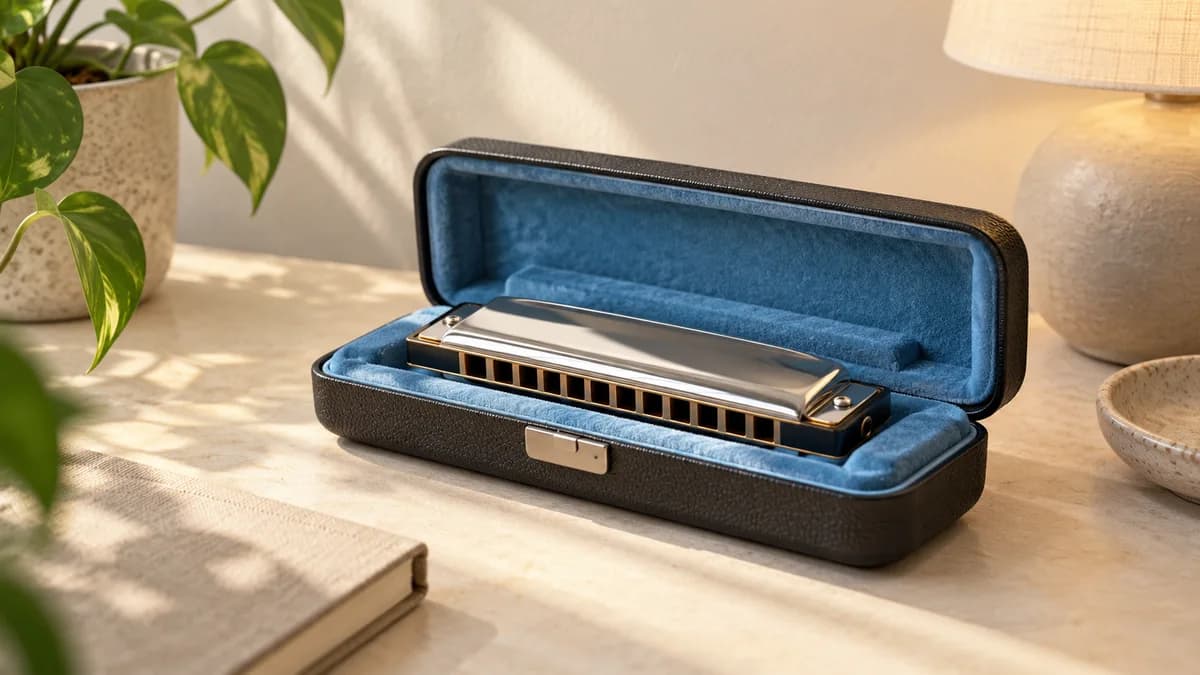
Sources: SEYDEL: Service FAQs; HOHNER: Harmonica care and troubleshooting FAQs
Common questions
Can I soak a wooden harmonica?
No. Wooden combs can swell or warp. Use the manufacturer’s instructions for the exact model rather than a soaking method intended for another construction.
Can I rinse any plastic-comb harmonica?
No. The complete design matters, including valves and other components. Confirm that the manufacturer permits water cleaning for that model and follow its method.
Does cleaning make a used harmonica safe to share?
Routine cleaning is not proof of disinfection. Ask the manufacturer about an appropriate process for the specific instrument or seek professional service.
PUT IT INTO PRACTICE
Compare your options
Compare models with their construction and maintenance needs in mind.
Compare beginner harmonicasSources and editorial approach
ChooseRight researched the sources below to explain the topic and its practical trade-offs. Examples are illustrations, not results from our own product testing. Sources checked October 23, 2026. Artwork is AI-generated for explanation and does not document hands-on testing.