
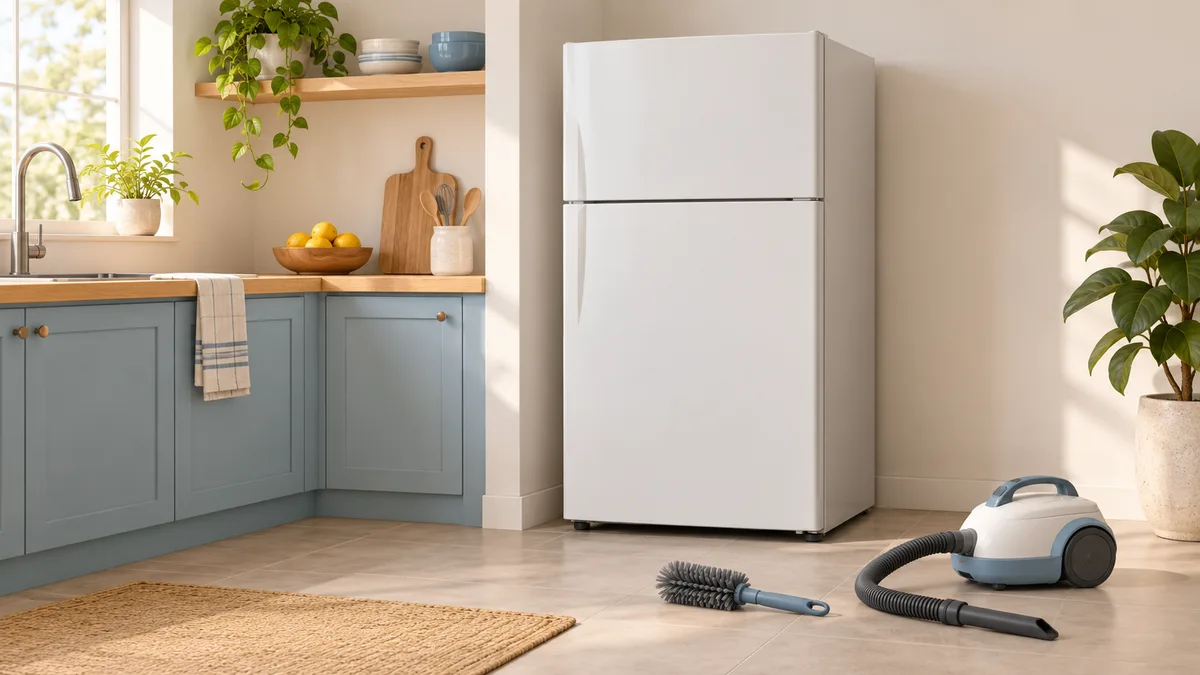
START HERE
The short answer
Check the manual first. If the condenser is owner-accessible, disconnect power and use the specified soft brush or vacuum method to remove dust without damaging tubing or fins. Refit the grille before restoring power. Some designs need no routine coil cleaning or require a technician.
- Not every refrigerator condenser is owner-accessible.
- Disconnect power before cleaning and protect water lines when moving the appliance.
- Use the model care schedule rather than a universal six-month rule.
Locate the right instructions and condenser
Condenser placement varies. GE describes designs with coils below, behind or above the refrigerator and notes that many of its models use a NeverClean condenser that does not require cleaning. Whirlpool similarly distinguishes owner-cleanable models from designs needing no routine cleaning or technician access. These are meaningful differences, not interchangeable marketing labels.
Look up the full model identifier rather than a refrigerator style such as French door. Read which grille, if any, the owner can remove and what tool is required. If the manual does not describe owner access, ask the manufacturer before undoing screws. Do not mistake permission to vacuum a vent for permission to open a service compartment.

Sources: GE Appliances: cleaning condenser coils; Whirlpool: how and when to clean condenser coils
Prepare the area and disconnect power
Gather the soft brush or vacuum attachment recommended for your model. Clear enough floor space to work comfortably, then disconnect the refrigerator from its power supply as directed. If reaching the condenser requires moving the appliance, check the manual for handling instructions and protect the floor. A connected water supply may limit how far it can move.
Keep the doors closed during this short maintenance task and plan ahead if the appliance will be disconnected longer. Do not pull against the cord or a water line, work around moving fans, or spray cleaner into the machinery. If safely reaching the area requires more handling or access than you can manage, arrange service instead.
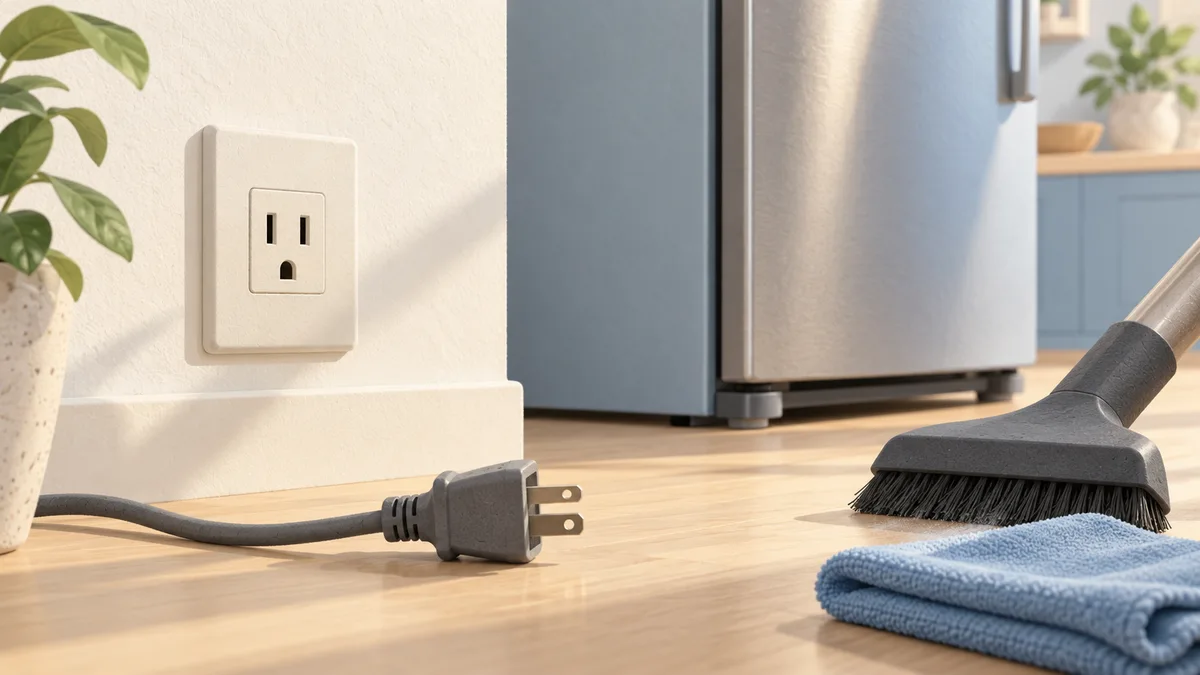
Sources: Whirlpool: how and when to clean condenser coils; GE Appliances: cleaning condenser coils
Remove loose debris gently
For an owner-cleanable base-grille design, Whirlpool describes vacuuming the grille, accessible areas behind it and the front surface of the condenser with a soft brush attachment. Follow the sequence for your refrigerator. Work gently on the accessible surface, collecting dust rather than pushing a rigid nozzle between closely spaced parts.
This is a dry dust-removal task, not a reason to wash the appliance machinery. Avoid bending fins, disturbing tubing or reaching deeper to pursue every visible speck. If grease, inaccessible debris or damaged components prevent the documented method from working, stop and ask for service guidance. Aggressive cleaning can create a new problem instead of solving the original one.
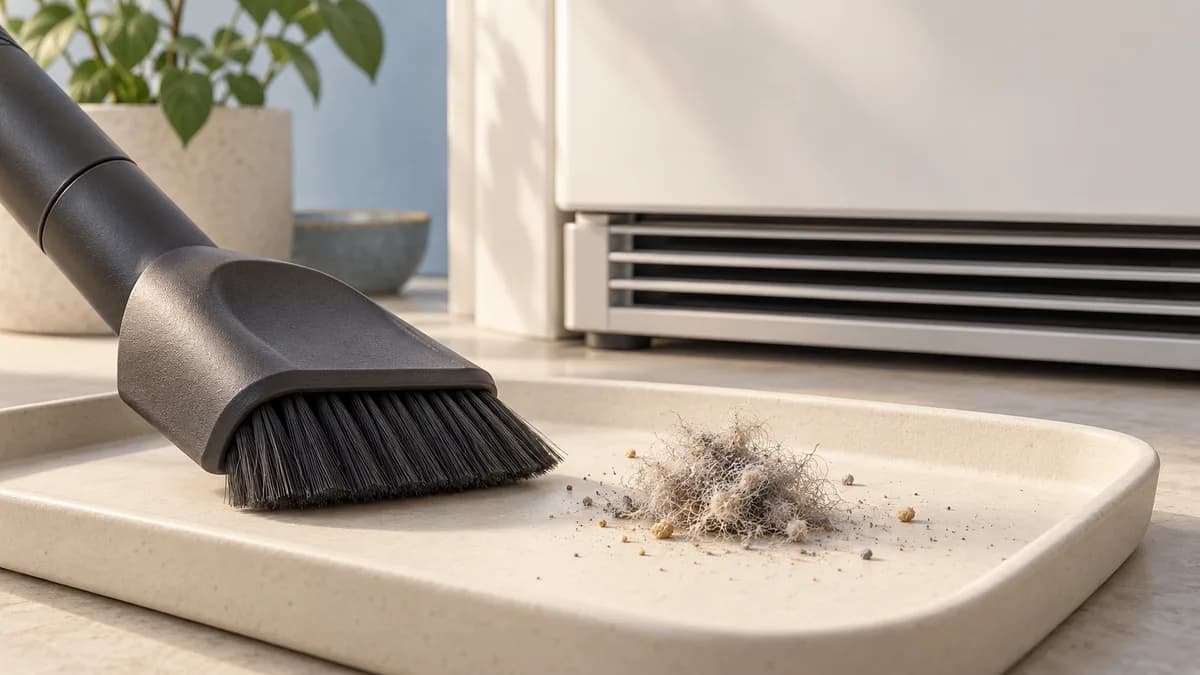
Sources: Whirlpool: condenser cleaning procedure for specified models; Whirlpool: how and when to clean condenser coils
Reassemble before restoring power
Refit the grille and any owner-removable cover exactly as instructed. Check that the vacuum attachment, brush and cleaning cloth are out of the appliance area. When moving the refrigerator back, preserve the specified clearances and keep its cord and any water line from being trapped or strained. Restore power only after the area is secure.
If the reason for cleaning was poor cooling, verify the temperature after the appliance has had the recovery time described in its manual. Dirt is only one possible cause of a cooling complaint. Continued warm temperatures, unusual noise or a water leak needs further troubleshooting rather than repeated coil cleaning.

Sources: Whirlpool: how and when to clean condenser coils; GE Appliances: refrigerator not cooling enough
Set a schedule that matches the model and room
A refrigerator in a dusty room or a home with shedding pets may collect debris differently from one in a cleaner environment. GE identifies pets and dust as reasons cleaning may be needed more often. Whirlpool gives environment-dependent guidance while stressing that some designs do not need routine condenser cleaning at all.
Record the model instructions and what you found during an inspection. That is more useful than adding an automatic deep-clean reminder that may not apply to your appliance. You can also keep the surrounding floor and permitted vent area free of loose debris without removing panels each time. Cleaning is maintenance, not a guaranteed energy saving or repair.
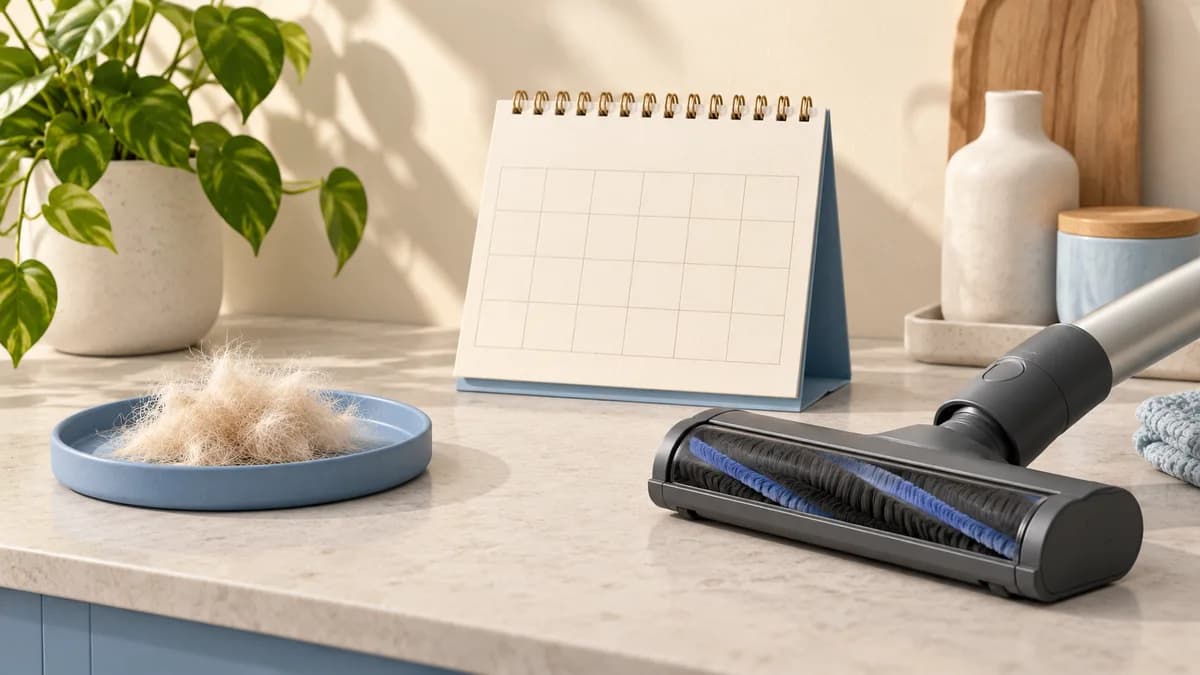
| Manual says | Practical response |
|---|---|
| No routine condenser cleaning | Do not dismantle the appliance to chase hidden coils |
| Owner-accessible condenser | Use the stated access method and tools |
| Technician-only access | Arrange qualified service |
| Persistent poor cooling | Follow troubleshooting guidance and seek service if needed |
Sources: GE Appliances: cleaning condenser coils; Whirlpool: how and when to clean condenser coils
Common questions
Should I clean refrigerator coils every six months?
There is no schedule that fits every model. Check the manual and consider dust and pets where owner cleaning is allowed.
Can I use a water spray?
Do not spray water into the machinery. Follow the documented cleaning method, commonly a soft brush or vacuum for accessible dust.
Will clean coils fix a warm refrigerator?
Not necessarily. Dirty accessible coils are one possible issue, while door sealing, airflow, controls or mechanical faults may need separate attention.
Sources and editorial approach
ChooseRight researched the sources below to explain the topic and its practical trade-offs. Examples are illustrations, not results from our own product testing. Sources checked October 30, 2026. Artwork is AI-generated for explanation and does not document hands-on testing.