
START HERE
The short answer
Kosher salt usually has larger crystals than table salt, and different brands pack differently into a spoon. Use the recipe's specified salt or weight; do not assume equal volumes are interchangeable.
- Weight and volume answer different questions.
- Two kosher salts can require different volume conversions.
- A salt's texture does not establish a health advantage.
Understand what the spoon measures
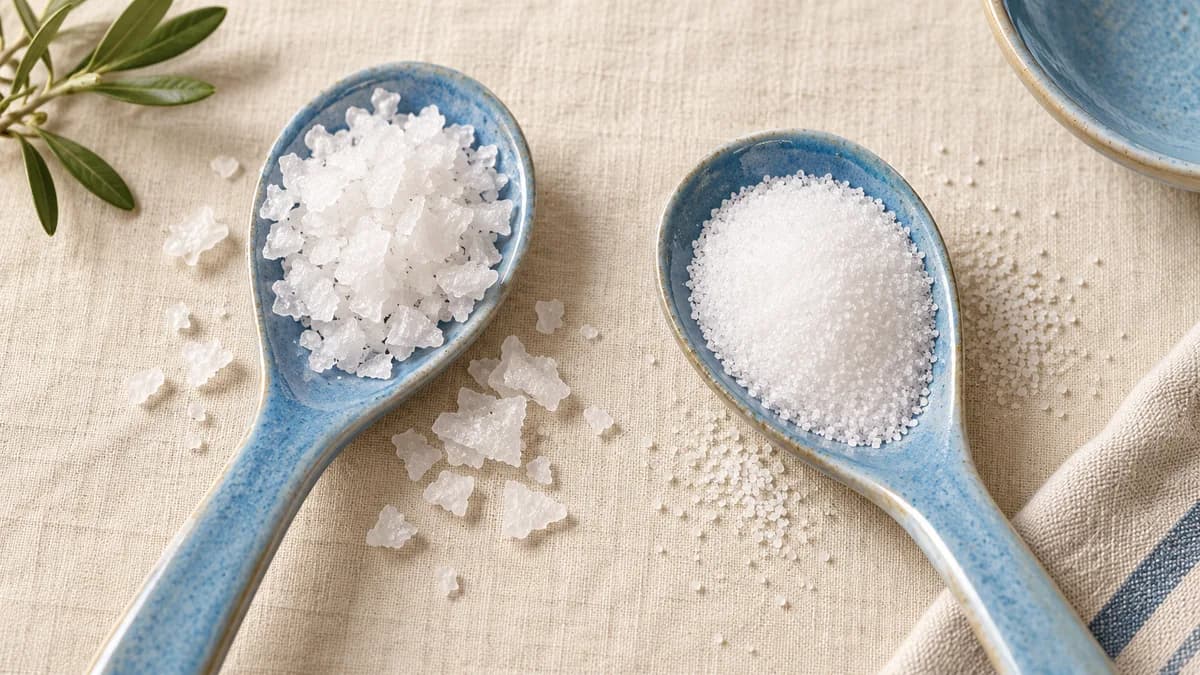
A teaspoon measures volume, including the space between crystals. Fine, dense grains and larger flakes do not necessarily place the same mass of salt in that space. That explains why an equal spoonful can change the saltiness of a recipe.
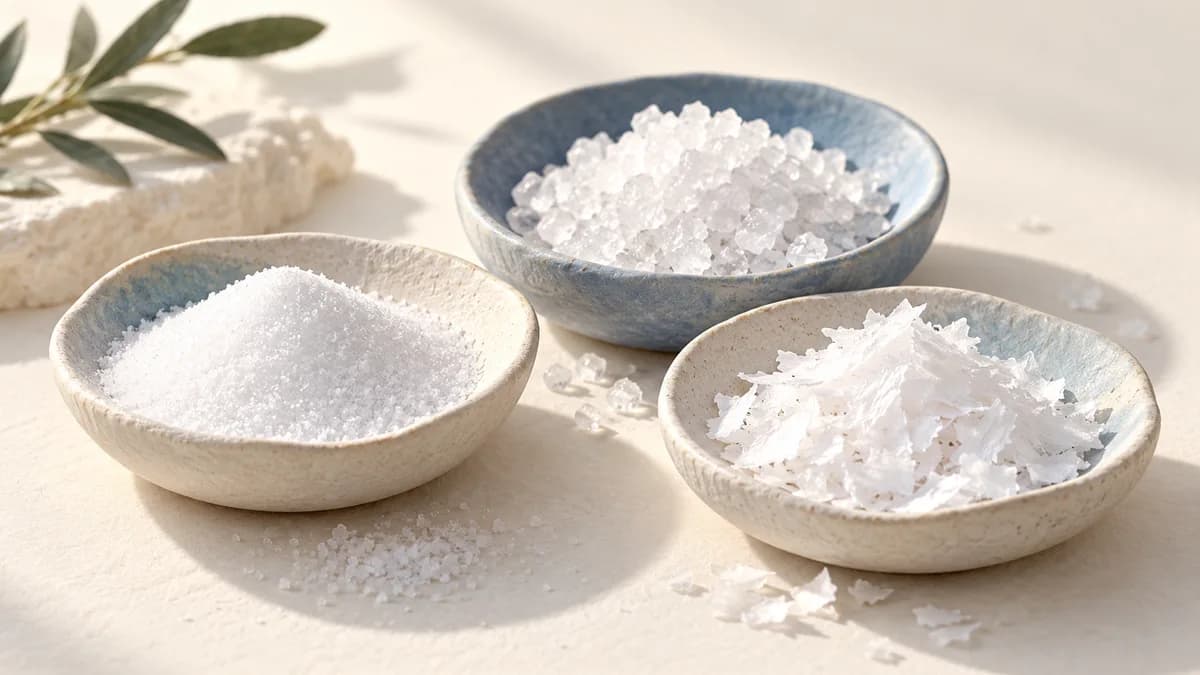
Look at the actual salt, not only the category on its box. The difference is particularly noticeable when changing between kosher brands with different crystal structures. Measuring a generous pinch adds another variable because hands and pinching habits differ.
Use the recipe weight when it is supplied
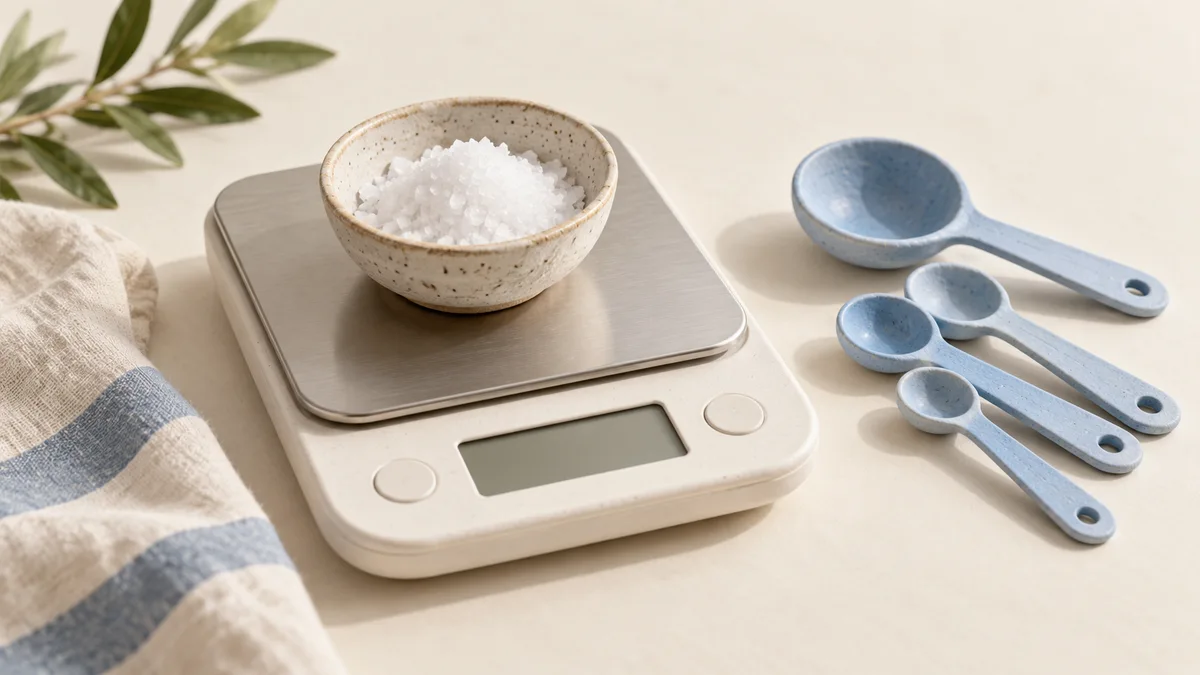
King Arthur recommends following the weight specified in its recipe rather than substituting a generic chart value. Its ingredient chart also lists separate entries for different kosher brands. The practical lesson is to keep the recipe's measurement system intact.
For example, if a recipe gives grams of ordinary culinary salt, measure that amount on a suitably precise scale instead of translating it into a guessed teaspoon. For tiny amounts that your scale cannot register reliably, use the recipe's named salt and measuring spoon.
Sources: King Arthur Baking: ingredient weight chart; King Arthur Baking: salt choices and measurement
Avoid a single conversion for every kosher salt
Morton publishes a conversion table for its salts. That is a manufacturer-specific reference, not a promise that all kosher salts match Morton. Recipe publishers may also use rounded measurements or different reference products, so tables need their context.
Read the recipe notes, then the manufacturer or publisher's conversion guidance. If the recipe does not identify a kosher brand, ask the author or choose a version with a weight. A precise-looking internet ratio does not remove the uncertainty in an unspecified starting ingredient.
| Recipe instruction | Useful approach |
|---|---|
| Specific salt and volume | Use that salt and measure as directed |
| Salt weight in grams | Use a scale suited to that amount |
| Unspecified kosher salt | Check recipe notes before converting |
| Season to taste | Add gradually to food safe to taste |
Sources: Morton: salt conversion chart; King Arthur Baking: salt choices and measurement
Choose texture for the job
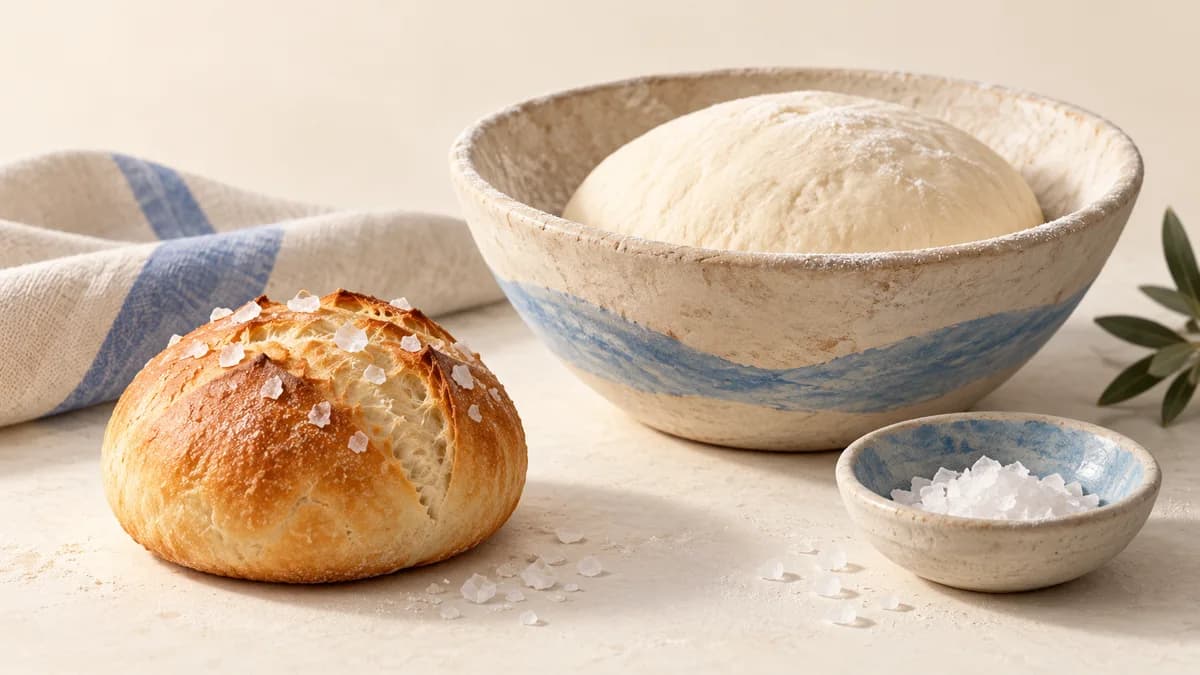
In a dough or liquid, the goal is usually an evenly distributed amount of salt. On the outside of a baked item, a coarse crystal may be an intentional part of the texture. A topping and an ingredient mixed throughout the recipe are different jobs.
Keep those roles separate when adapting a recipe. Changing the salt inside a dough requires attention to quantity; changing a finishing salt also changes the bite and appearance. Try a small portion before salting an entire tray if you are learning a new crystal size.
Sources: King Arthur Baking: salt choices and measurement; Morton: food salt FAQs
Read more than the word kosher
Some table salts contain added iodine and anti-caking ingredients; the exact package identifies them. Do not infer the ingredient list from the color of the salt or from the word natural. Choosing salt for nutrition or a medical diet involves more than crystal size.
Food preservation is a separate case. For canning or curing, follow a tested recipe and the specified salt rather than importing casual cooking substitutions. Morton notes that additives in some salts can matter in canning, and curing products are not ordinary table salt.
Sources: Morton: food salt FAQs
Common questions
Is kosher salt less salty than table salt?
An equal spoonful can contain a different amount of salt because of crystal size and packing. That does not make the category inherently low in sodium.
Can I use table salt in baking?
Yes, many recipes are written for table salt. Use the type and quantity specified by the recipe rather than replacing another salt by eye.
Does kosher salt mean the same thing as sea salt?
No. Do not treat those names as interchangeable measurement instructions. Check crystal size, brand and recipe guidance.
Sources and editorial approach
ChooseRight researched the sources below to explain the topic and its practical trade-offs. Examples are illustrations, not results from our own product testing. Sources checked October 30, 2026. Artwork is AI-generated for explanation and does not document hands-on testing.