
START HERE
The short answer
A carrier-locked phone restricts use with other carriers. An unlocked phone removes that restriction, but the receiving carrier must still accept the exact device. Verify both unlock status and compatibility before buying or transferring service.
- Unlocked is a carrier-lock status, not a promise of universal compatibility.
- Only the relevant carrier can approve a carrier unlock; a screen passcode is a different issue.
- Use the destination carrier's official checker and examine return terms before committing.
What locked and unlocked actually mean
A carrier lock is a software restriction associated with mobile service. Removing it can let the phone use another carrier, provided that carrier supports the device. It does not turn the handset into a different model or establish that your preferred service will activate it.
Keep three questions separate: Can I use the phone itself? Is it restricted to a carrier? Will my chosen carrier accept it? A seller answering one of these has not necessarily answered the other two.
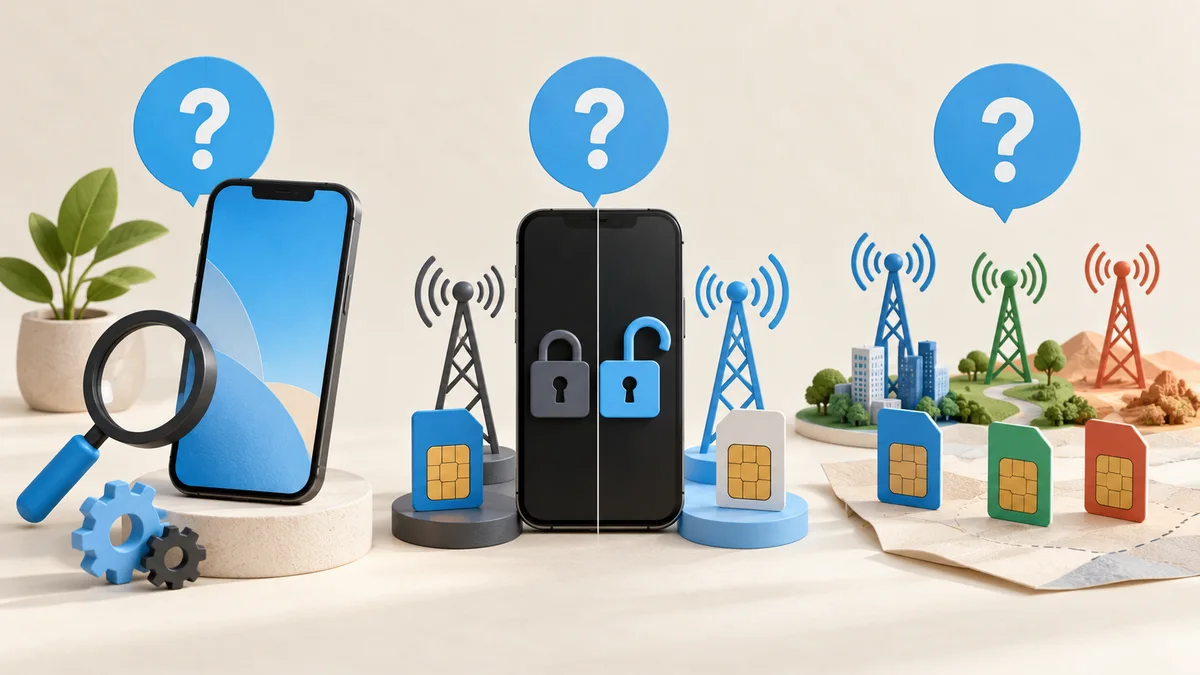
| Question | What to verify |
|---|---|
| Can I access this phone? | Screen access and, on a used iPhone, no previous-owner Activation Lock. |
| Can it leave its original carrier? | Carrier unlock status and any outstanding eligibility conditions. |
| Can it join my new carrier? | The exact device in the receiving carrier's compatibility checker. |
Sources: Verizon: device locking FAQs; Apple: unlock an iPhone for another carrier; Straight Talk: bring your own phone
Check the device, not just the listing
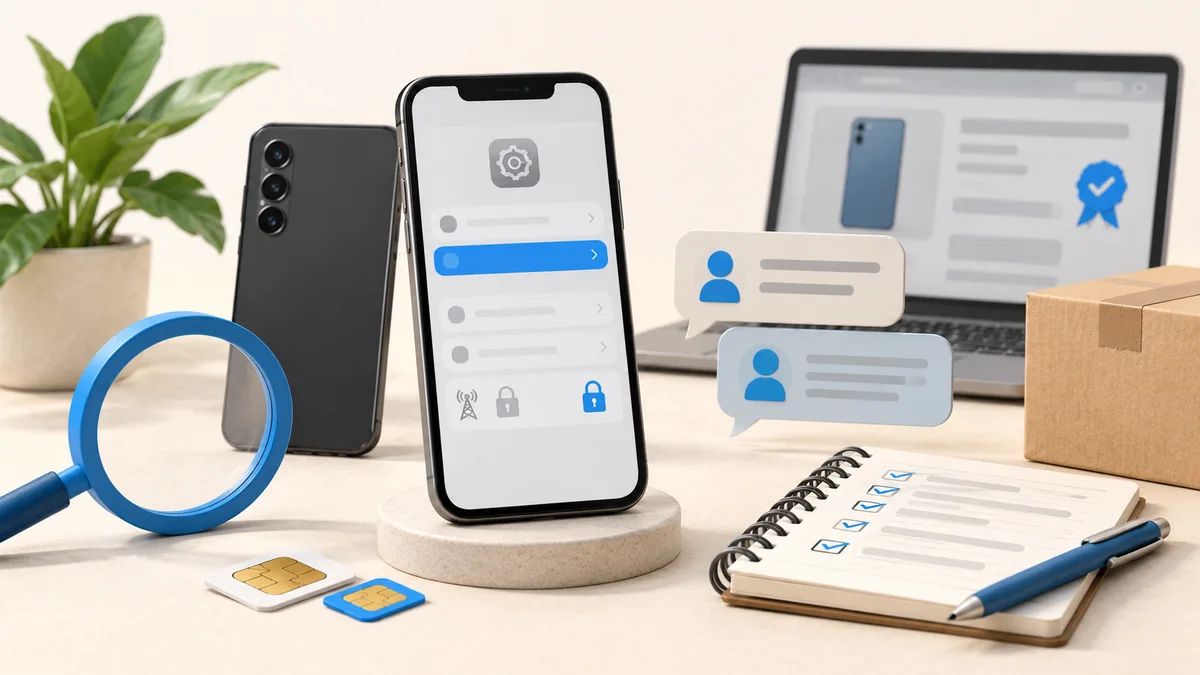
On an iPhone, open Settings, General, then About and look at Carrier Lock. Apple says the wording "No SIM restrictions" identifies an unlocked iPhone. If you need an unlock, contact the carrier; Apple cannot perform the carrier unlock for you.
For another handset, use the manufacturer's instructions and ask the original carrier to confirm status. Avoid treating a generic listing badge as your only evidence. When buying remotely, ask whether the description applies to the specific unit being shipped and save the seller's answer with your order.
Sources: Apple: unlock an iPhone for another carrier; T-Mobile: SIM unlock policy
Unlocking rules depend on the carrier and purchase
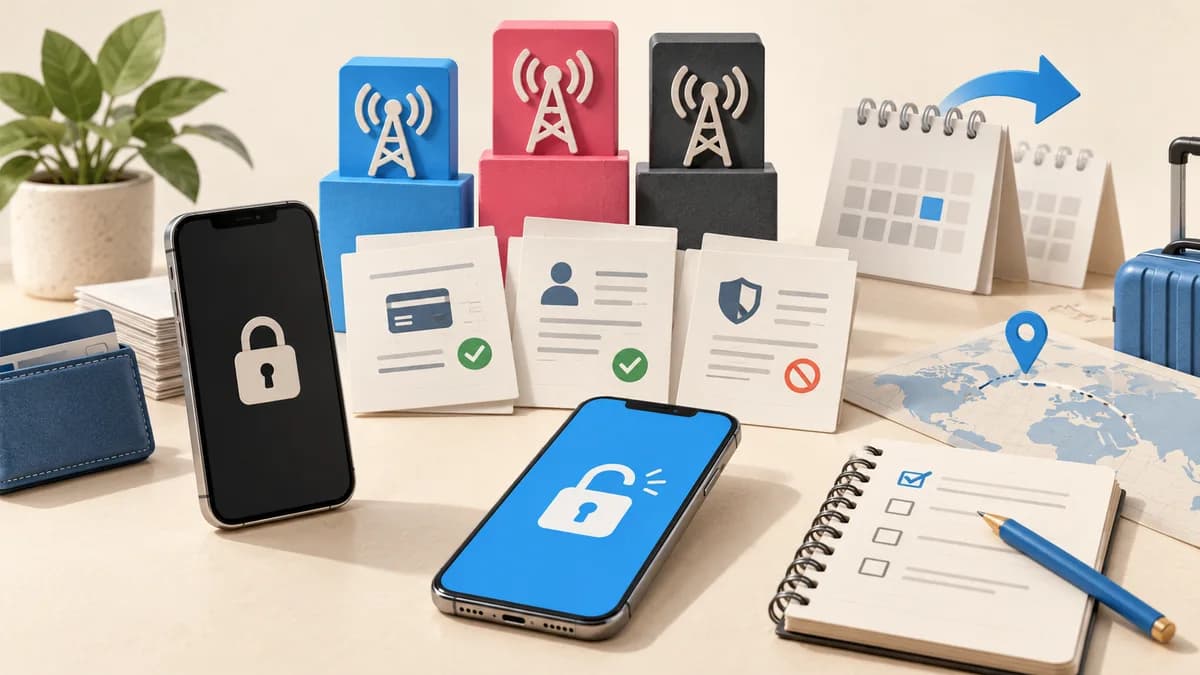
Payment status, account history and lost-or-stolen restrictions can affect eligibility. AT&T and T-Mobile publish their own requirements, so check the policy for the carrier that supplied the phone rather than assuming another network's rule applies.
Policies also change. Verizon's current guidance distinguishes purchases before and after January 27, 2026, and treats monthly and prepaid service differently. These carrier sources were checked on October 21, 2026. Recheck them before a purchase that depends on a future unlock.
For planning purposes, a phone that might qualify later should be treated differently from one confirmed unlocked today. If you need to move immediately, ask for the unlock to be completed and verified before relying on the purchase.
Sources: AT&T: device unlock eligibility; T-Mobile: SIM unlock policy; Verizon: device locking FAQs
Which option makes sense for your situation?
An unlocked handset is worth considering when you want the option to change carriers or are shopping independently of a service offer. A carrier-locked handset may fit someone who intends to stay with that carrier and understands its unlock conditions. Neither label tells you whether the camera, battery or storage suits you.
Before comparing features, make a short purchase checklist. This is our decision aid, not a carrier approval process. Leave a box unresolved if you cannot verify it; do not replace a missing answer with an assumption.
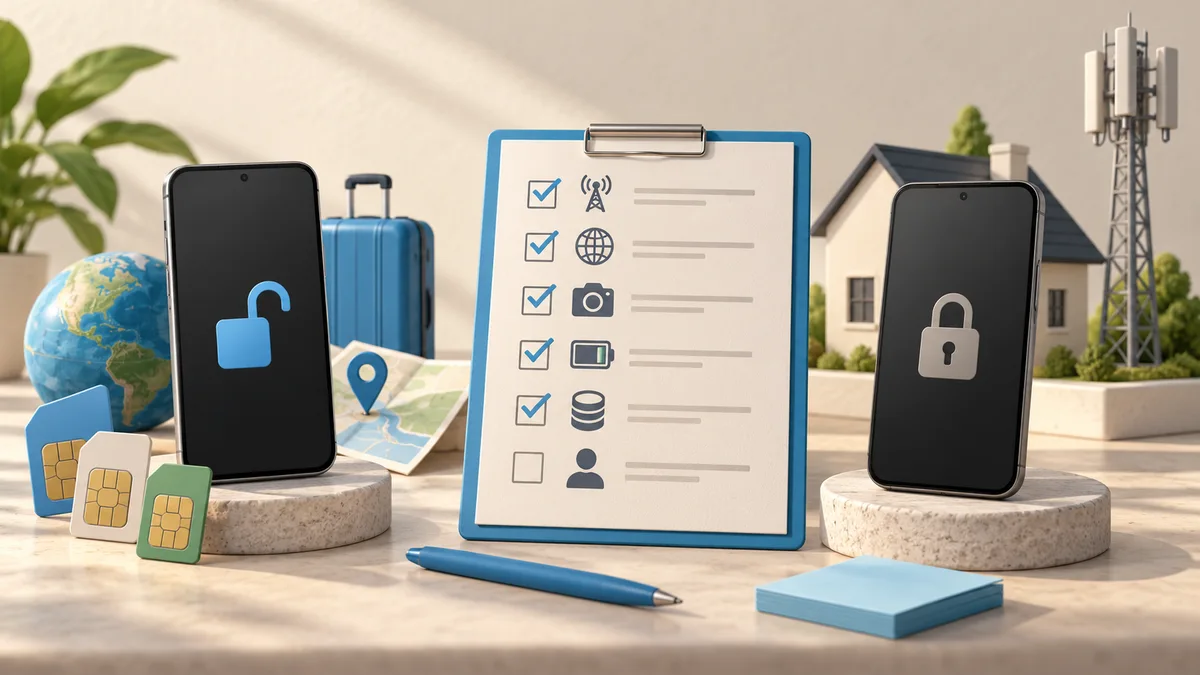
- Identify the exact model and the carrier you intend to use.
- Confirm present unlock status, rather than a promise that it can be unlocked.
- Check the device with the destination carrier before transferring service.
- Read the return window and the conditions for a compatibility-related return.
Sources: Straight Talk: bring your own phone; Apple: inspect a preowned iPhone
Used phones need a separate ownership check
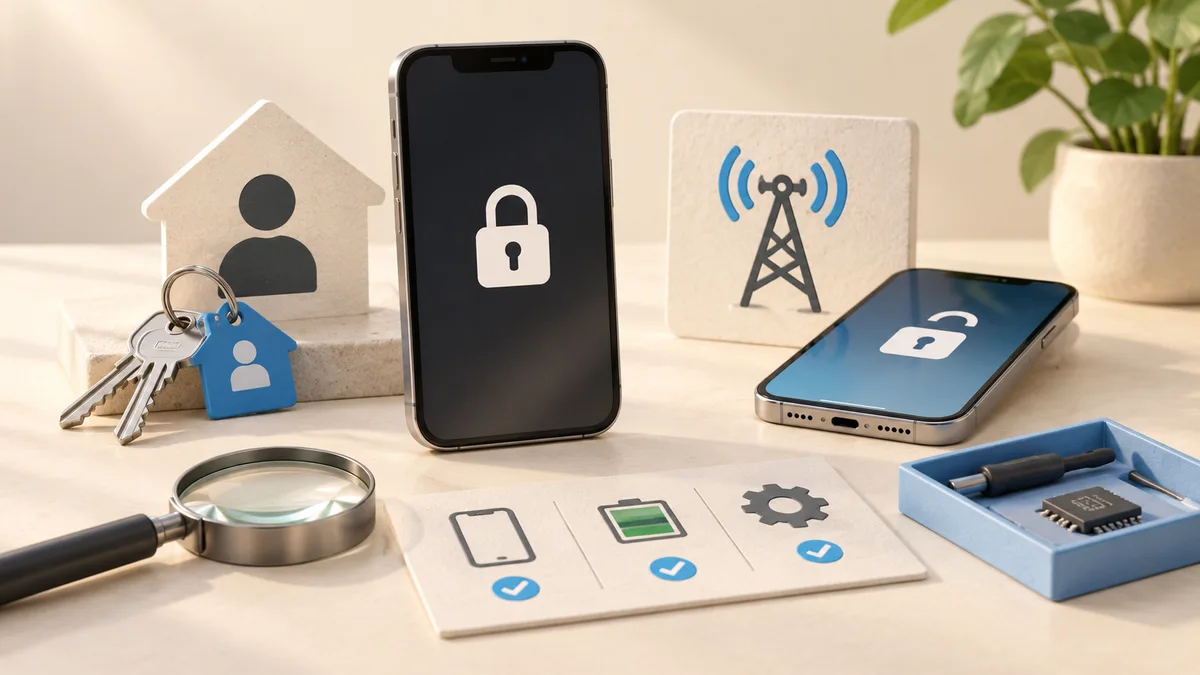
Apple advises against buying an iPhone with Activation Lock enabled. That previous-owner protection is separate from a carrier lock: a phone advertised as carrier unlocked can still have an ownership problem. Ask the seller to resolve it before you buy rather than budgeting for an unofficial workaround.
Apple also recommends inspecting physical condition, battery health and available parts-and-service history. Keep those checks alongside compatibility. Our Straight Talk phone guide can help compare features after eligibility is established, but no shortlist replaces checking the individual device you will receive.
Sources: Apple: inspect a preowned iPhone; Straight Talk: bring your own phone
Common questions
Does unlocked mean the phone works with every carrier?
No. Unlocking removes a carrier restriction. The receiving carrier still needs to accept the device, and you should check coverage where you will use it.
Can Apple unlock an iPhone from its carrier?
Apple says only the carrier can unlock an iPhone for use with another carrier. Contact that carrier and check its current eligibility requirements.
Is an unlocked used phone automatically safe to buy?
No. Verify ownership access, condition, return terms and compatibility separately. For an iPhone, do not buy a device with Activation Lock still enabled.
PUT IT INTO PRACTICE
Compare your options
Compare our phone shortlist after checking the exact device with Straight Talk. A recommendation does not guarantee activation eligibility.
Compare phones for Straight TalkSources and editorial approach
ChooseRight researched the sources below to explain the topic and its practical trade-offs. Examples are illustrations, not results from our own product testing. Sources checked October 21, 2026. Artwork is AI-generated for explanation and does not document hands-on testing.