
START HERE
The short answer
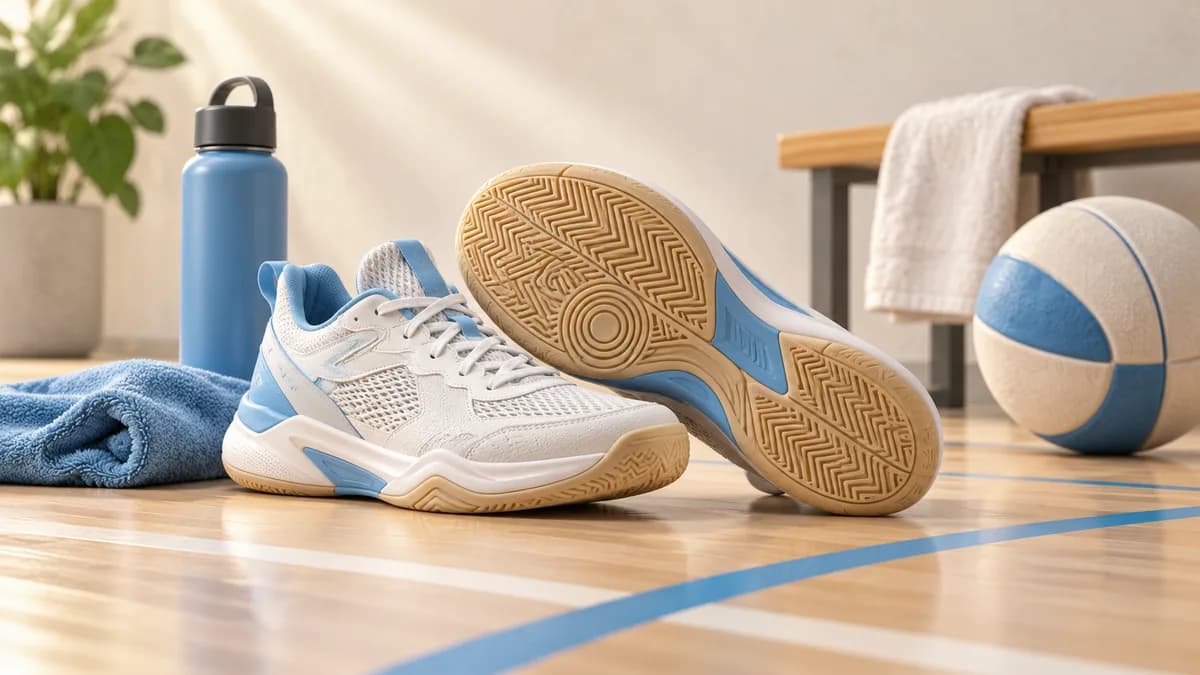
Non-marking shoes have outsoles designed not to leave rubber scuff marks on indoor playing surfaces. Look for an explicit non-marking description on the exact model or an outsole marking, then confirm the venue rules. Sole color alone is not reliable proof, and non-marking does not guarantee grip on every floor.
- Verify the exact model, not just the brand or the color of its sole.
- Non-marking, clean and suitable for your sport are separate checks.
- Keep court shoes clean and assess fit, lateral support and surface compatibility.
What non-marking actually tells you
adidas describes non-marking rubber outsoles as designed to avoid marking indoor court surfaces. The useful promise is about scuffing. It does not mean a dirty shoe cannot bring grit onto the floor, or that the shoe is appropriate for every game played in the building.
Think of the label as one requirement on your checklist. You still need to know which surface you will use and what the facility allows. Ask before your first session if its rules are unclear, especially when a general sports hall has different areas or a specialist playing surface.
How to check a pair before you arrive
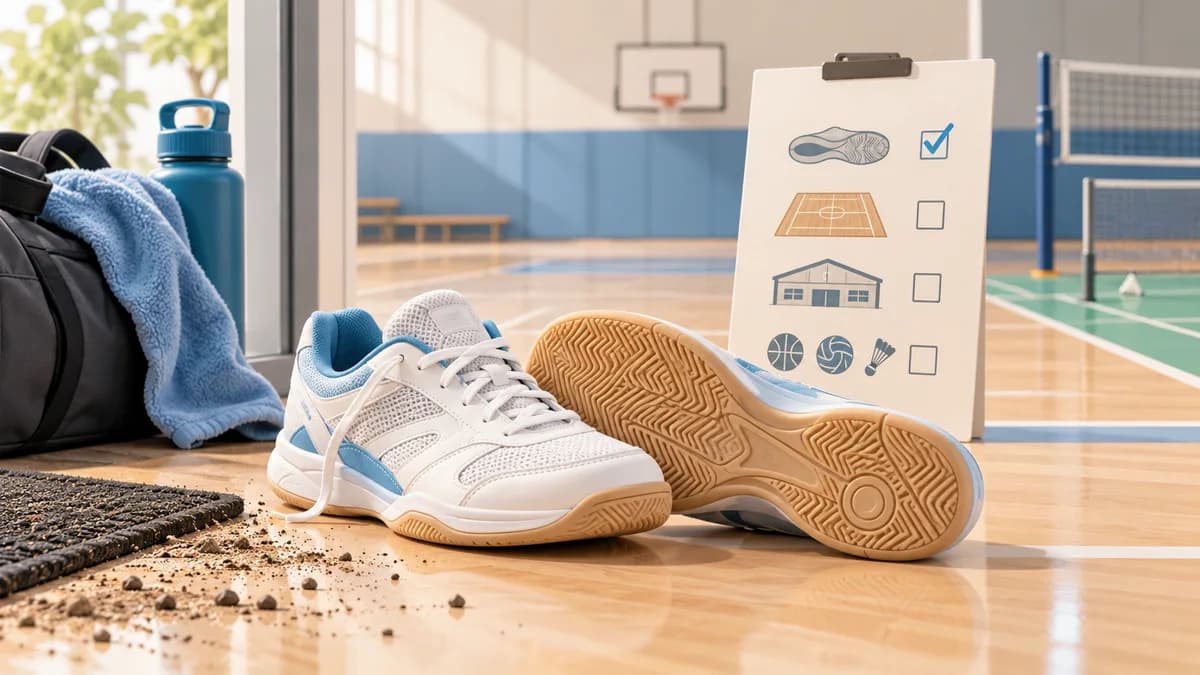
Turn the shoe over and look for non-marking wording. adidas notes that this may be molded into the outsole. If it is absent, find the exact model on the manufacturer website or ask the manufacturer or retailer to confirm the specification. A missing stamp is not conclusive either way.
Do not rely on a light-colored sole, the word rubber or a photo alone. Those clues do not document the outsole specification. If you already own the shoes, retain the model number and the product information so you can show the venue what they are. Avoid testing an uncertain shoe by deliberately scuffing the court.
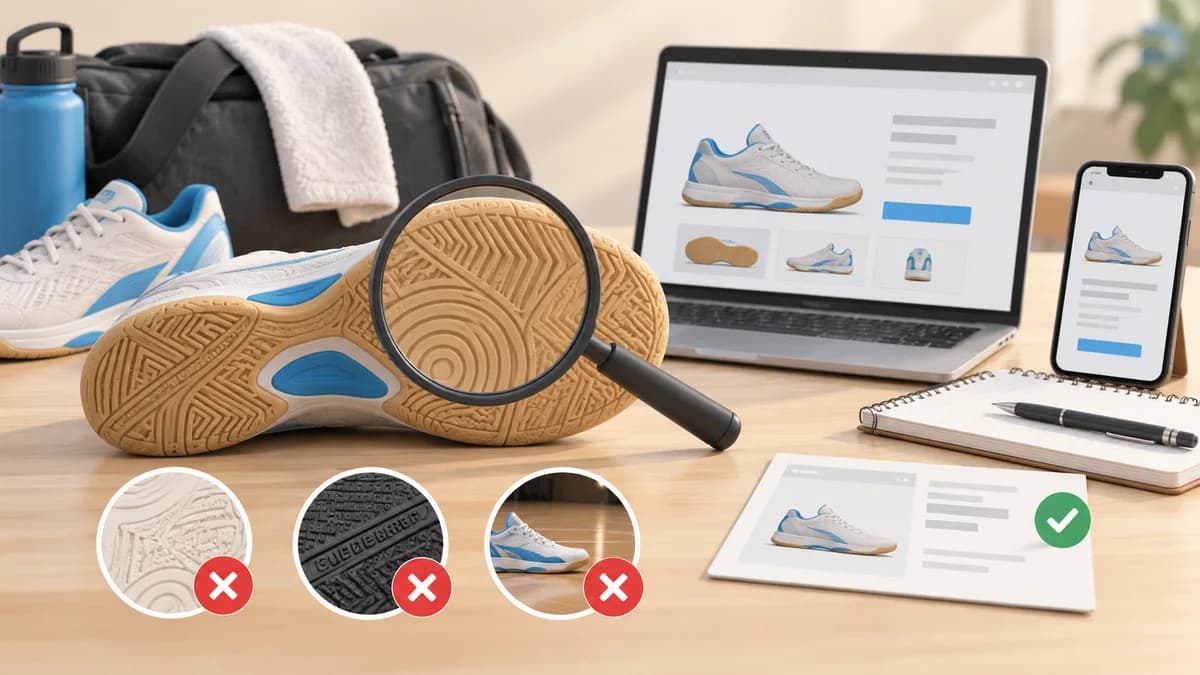
- Match the model code and version to the manufacturer listing.
- Look for an explicit non-marking outsole description.
- Check the facility footwear policy before playing.
- If the evidence is unclear, ask rather than guessing from the sole color.
Non-marking is not the same as non-slip
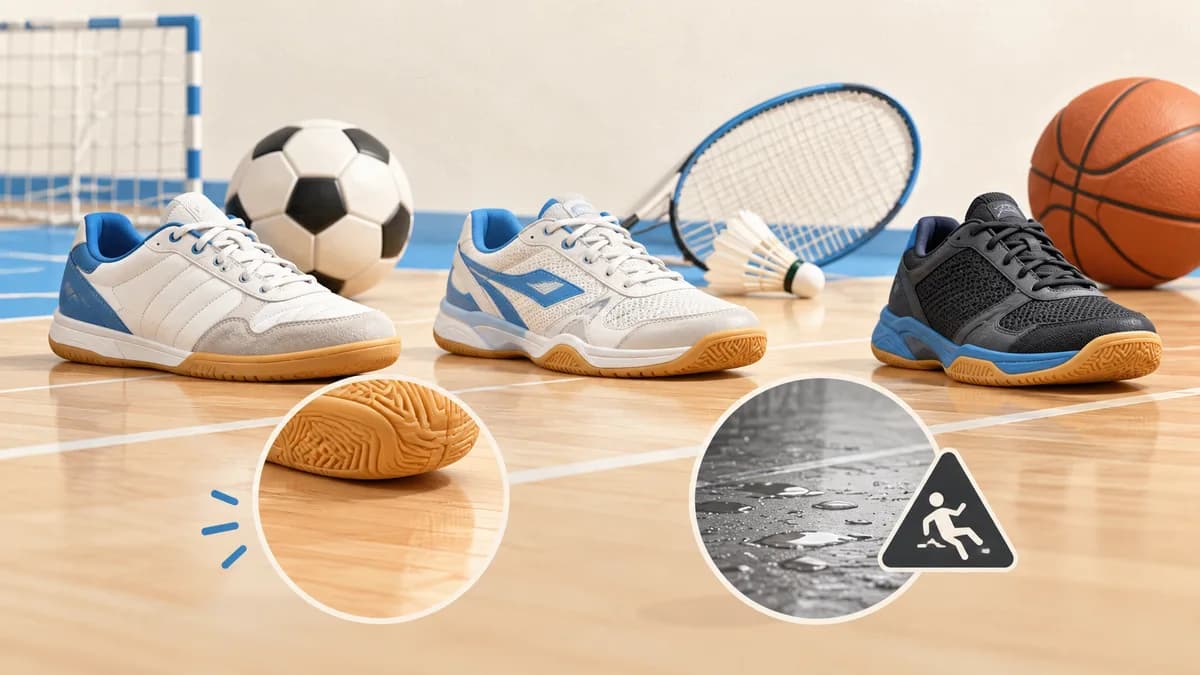
A shoe can be designed to avoid scuffs without being suitable for a wet floor or every playing surface. Indoor shoe designs vary by activity. You should not interpret a non-marking claim as a slip-resistance certification or permission to play on a damp court.
For example, indoor soccer footwear and racket-sport footwear may both mention indoor use, yet they are built for different movements and playing demands. Choose the shoe around your sport after confirming the floor requirement. The comparison below separates terms that are often treated as synonyms.
| Term | What to check | What not to assume |
|---|---|---|
| Non-marking | Explicit outsole specification | Universal grip or suitability for every court |
| Indoor | The sport and intended surface | That any indoor shoe fits your activity |
| Clean | No dirt, grit or debris on the sole | That a clean outdoor shoe is approved |
| Court shoe | Fit and support for your sport | That every court shoe has identical cushioning |
Sources: adidas: indoor footwear and activity-specific design; adidas: indoor soccer footwear versus other surfaces
For badminton, check movement and fit next
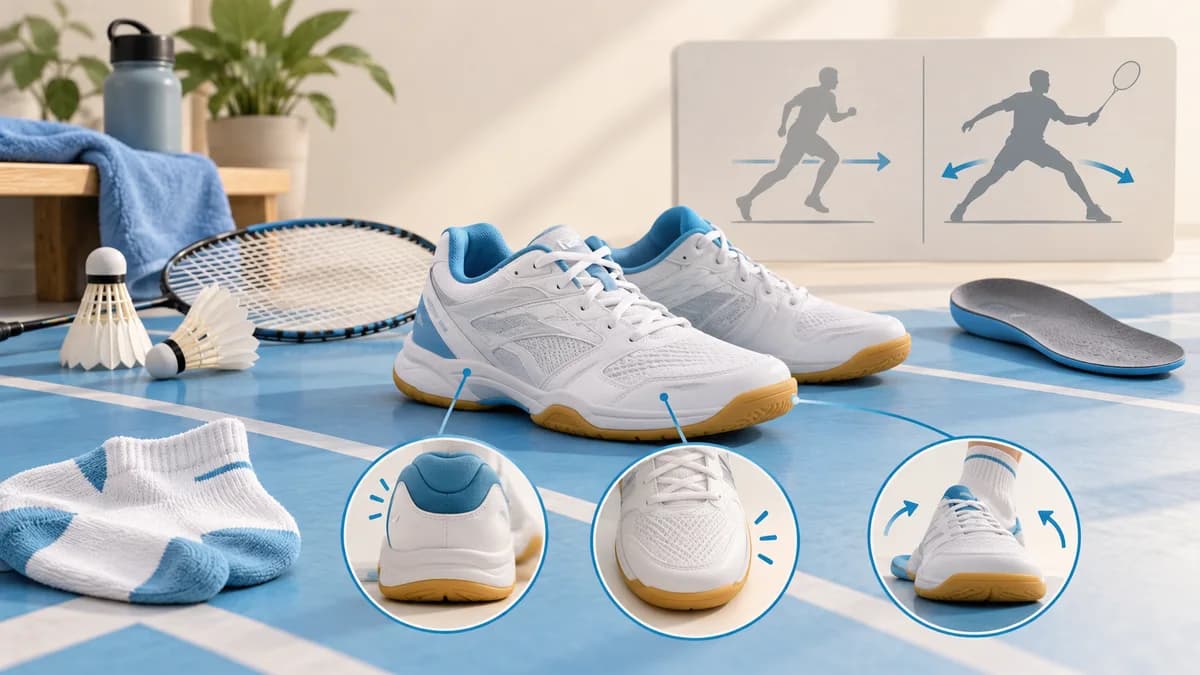
Racket sports involve lateral movement as well as forward steps. Decathlon contrasts this with the more linear demands of running when explaining table tennis footwear. That distinction is useful when choosing for badminton too: a comfortable jogging shoe is not automatically the best match for court movement.
Try footwear with the socks you will actually wear. Check that your heel feels secure, the forefoot is comfortable and your foot does not slide excessively during gentle changes of direction. These are fit checks, not a test that proves injury prevention. If the fit feels wrong, do not expect a non-marking label or a more expensive model to fix it.
Keep court shoes ready for the next session
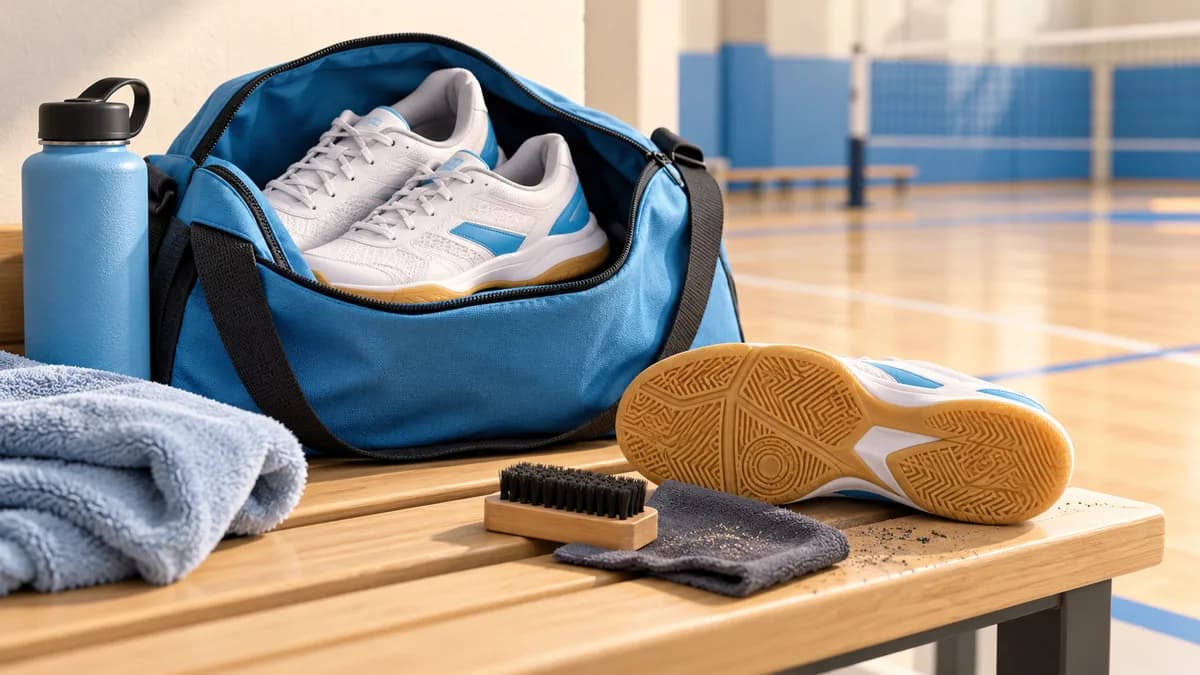
Decathlon notes that dust picked up outdoors can reduce grip. A practical approach is to carry your court shoes and change at the venue instead of wearing them on the trip there. Before stepping onto the playing area, inspect the outsole for grit and clean it according to the manufacturer care instructions.
Check wear at the same time. If the sole is damaged, the shoe feels unstable or grip has noticeably changed, investigate before continuing to play. Do not apply improvised oils or sticky treatments to the outsole. For a dirty or slippery court, alert the facility staff; a new pair of shoes is not a substitute for addressing the floor condition.
Common questions
Can black-soled shoes be non-marking?
Do not decide by color alone. Check the exact model specification or outsole label and the venue policy. Neither a dark sole nor a pale sole establishes whether that particular pair qualifies.
Can I wear non-marking shoes outside?
Check the manufacturer intended use. Outdoor wear can bring dirt onto the court and may not suit an indoor outsole. Keeping a clean pair for indoor play is a practical way to meet court cleanliness requirements.
Are all running shoes non-marking?
Do not assume so. Verify the exact outsole specification. Even when a running shoe meets a non-marking requirement, its fit and movement support may not be suitable for your chosen court sport.
PUT IT INTO PRACTICE
Compare your options
Compare five badminton shoe options, including fit considerations and the practical tradeoffs to check before buying.
Find badminton shoes for your court and fitSources and editorial approach
ChooseRight researched the sources below to explain the topic and its practical trade-offs. Examples are illustrations, not results from our own product testing. Sources checked October 21, 2026. Artwork is AI-generated for explanation and does not document hands-on testing.