
START HERE
The short answer
5W-30 meets a lower-temperature winter viscosity grade than 10W-30; both meet the SAE 30 high-temperature grade. Use the viscosity and performance specifications required by your vehicle, rather than choosing by climate or mileage alone.
- The W means winter, not weight.
- The shared 30 is a viscosity category, not an identical formula.
- Check manufacturer approvals as well as SAE viscosity.
Understand the first number and the W
The winter grade relates to low-temperature cranking and pumping behavior. A 5W classification addresses colder test conditions than 10W. This helps explain why the first number matters when an engine starts cold, rather than only after it has warmed up.
The number is not a temperature reading or a direct measure of oil quality. It also does not tell you that a 5W oil is always thinner at every possible temperature. The complete grade and the exact product's specifications provide a more useful picture.
Sources: AMSOIL: Understanding viscosity and cold tests; Castrol: Oil viscosity explained
Understand what the shared 30 does and does not mean
Both oils fall into the SAE 30 high-temperature viscosity category. That is a range defined by testing, not a promise that they have identical measurements. Two products can share a grade and still differ in their published data and performance approvals.
Mobil's product data illustrates this distinction by listing separate viscosity measurements for its 5W-30 and 10W-30 formulas. Treat those values as examples for the listed products, not universal figures for every oil bearing either grade.
Sources: Mobil: 10W-30 product data and comparisons; AMSOIL: Understanding viscosity and cold tests
Read beyond the large grade on the front
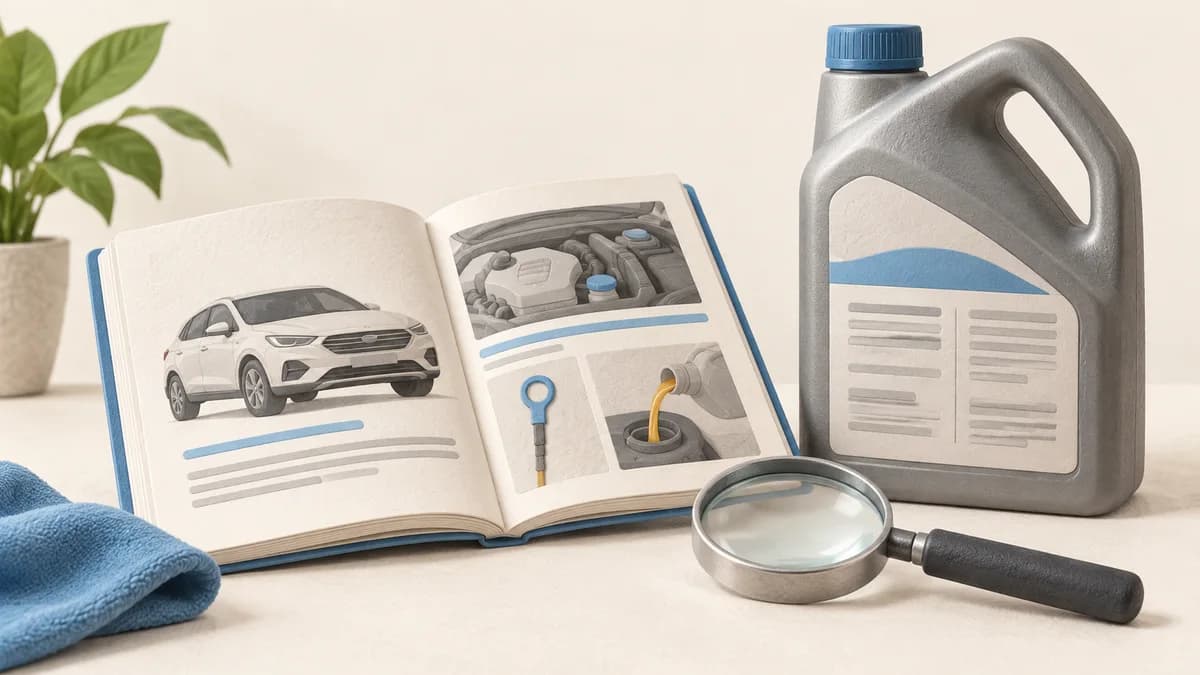
Find the required viscosity, service category and manufacturer specification in the vehicle manual. Then check the oil container or current product data for the required claims or approvals. A familiar brand name is not a substitute for this match.
API's consumer guide advises following the vehicle maker's recommended viscosity and performance standard. This matters when two oils appear similar on the shelf: the front label may match while the detailed specification does not. If a requirement is unclear, ask the vehicle maker or a qualified service provider.
Sources: American Petroleum Institute: Motor oil guide; Castrol: Oil viscosity explained
Avoid changing grade to solve an unexplained problem
Do not assume that hot weather, high mileage or an oil-consumption concern automatically calls for changing from 5W-30 to 10W-30. Those observations do not override the manufacturer's lubrication requirements, and the two oils still share the same high-temperature grade.
If the manual explicitly permits alternatives within stated conditions, follow that guidance. Otherwise investigate the concern first. Changing the winter rating is not a diagnosis for leaks, pressure warnings or engine noise, and an additive is not a shortcut to a documented oil specification.
Sources: American Petroleum Institute: Motor oil guide; AMSOIL: Understanding viscosity and cold tests
Make the choice from a short checklist
Before buying, record the model year, engine variant, required SAE grade and any manufacturer approval. Use the exact product name when checking technical information because similarly named oils may target different applications. Keep the purchase or service record with the vehicle's maintenance information.
For topping up, use the prescribed oil and level-check procedure rather than guessing a quantity from the bottle size. API recommends matching viscosity and service category when mixing brands is necessary. A routine top-up does not replace an oil change or investigation of repeated oil loss.

| Label detail | Why it matters |
|---|---|
| 5W or 10W | Low-temperature viscosity classification |
| 30 | High-temperature viscosity grade |
| Performance category | Required service standard |
| Manufacturer approval | Compatibility requirement for the exact engine |
Sources: American Petroleum Institute: Motor oil guide; Mobil: 10W-30 product data and comparisons
Common questions
Is 10W-30 thicker when the engine is hot?
Both are SAE 30 oils at high temperature. Their exact measurements can differ within the grade, so the first number alone does not establish that comparison.
Can I use 5W-30 instead of 10W-30?
Only when it meets the vehicle maker's allowed viscosity and performance requirements for your application. Do not assume universal interchangeability.
Does synthetic oil change the meaning of the numbers?
No. Base-oil type and SAE viscosity are separate information. A synthetic label does not replace the required grade or approval.
Sources and editorial approach
ChooseRight researched the sources below to explain the topic and its practical trade-offs. Examples are illustrations, not results from our own product testing. Sources checked October 30, 2026. Artwork is AI-generated for explanation and does not document hands-on testing.