
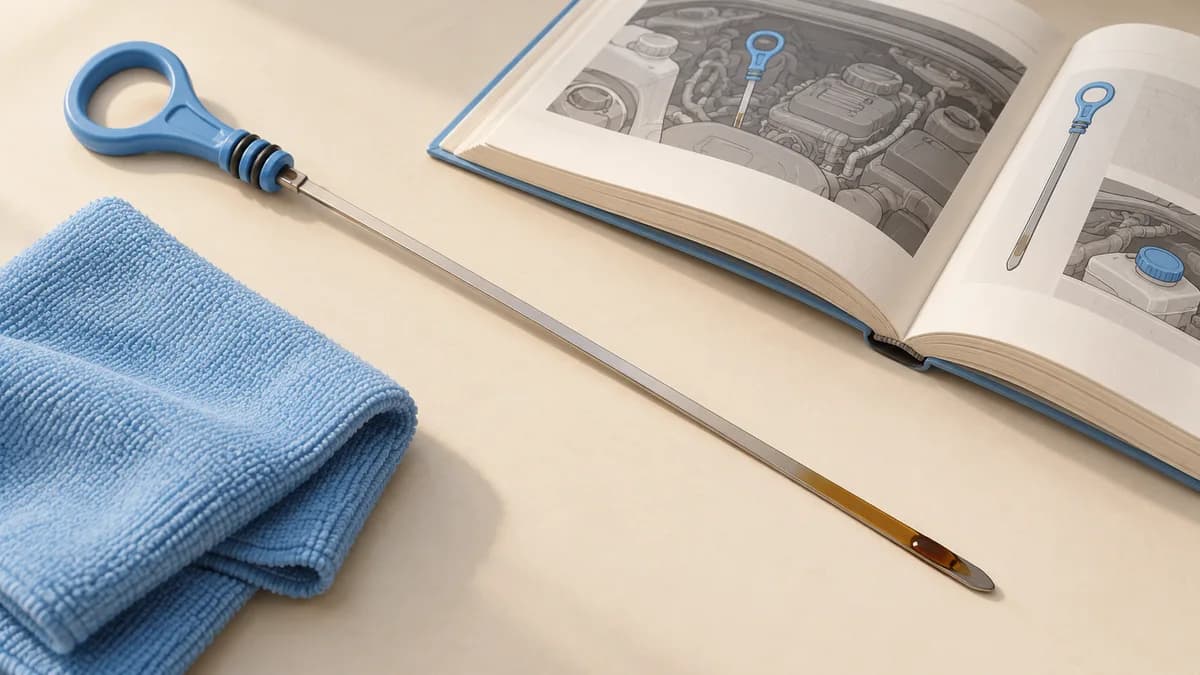
START HERE
The short answer
Follow your vehicle manual for engine temperature and waiting time, park level and switch the engine off. For a conventional dipstick, wipe it, fully reinsert it and read it again against the marked range. Add only the specified oil when needed, without exceeding the maximum.
- Use the model-specific waiting time, not a universal rule.
- Oil level, oil life and oil pressure are different information.
- Repeated oil loss or a pressure warning needs investigation.
Find the procedure for your engine
Identify the engine variant as well as the model year. Locate the oil-check section and confirm whether the vehicle uses a dipstick, an electronic reading or a combination. Also find the oil-filler location before handling any caps under the hood.
Do not assume a familiar waiting time applies to every engine. The cited Ford manual specifies a warm engine followed by a fifteen-minute wait; Ford's general support article gives a different interval. That difference is a reason to use the exact manual, not average the two.

Sources: Ford owner manual: Model-specific engine oil check; Ford: Engine oil checking and topping-up guidance
Set up a safe, repeatable check
Use level ground and secure the vehicle as the manual directs. Switch the engine off and observe its prescribed temperature and waiting conditions. Avoid using a sloped driveway simply because it is convenient; repeatability is part of getting a useful reading.
Keep clear of hot components and moving parts. Ford notes that cooling fans can operate even with the engine off, so keep clothing and hands away. If access is awkward or you cannot identify the correct components, ask a service professional to show you the procedure.

Sources: Ford owner manual: Model-specific engine oil check; Ford: Engine oil checking and topping-up guidance
Read the dipstick, then confirm anything unclear
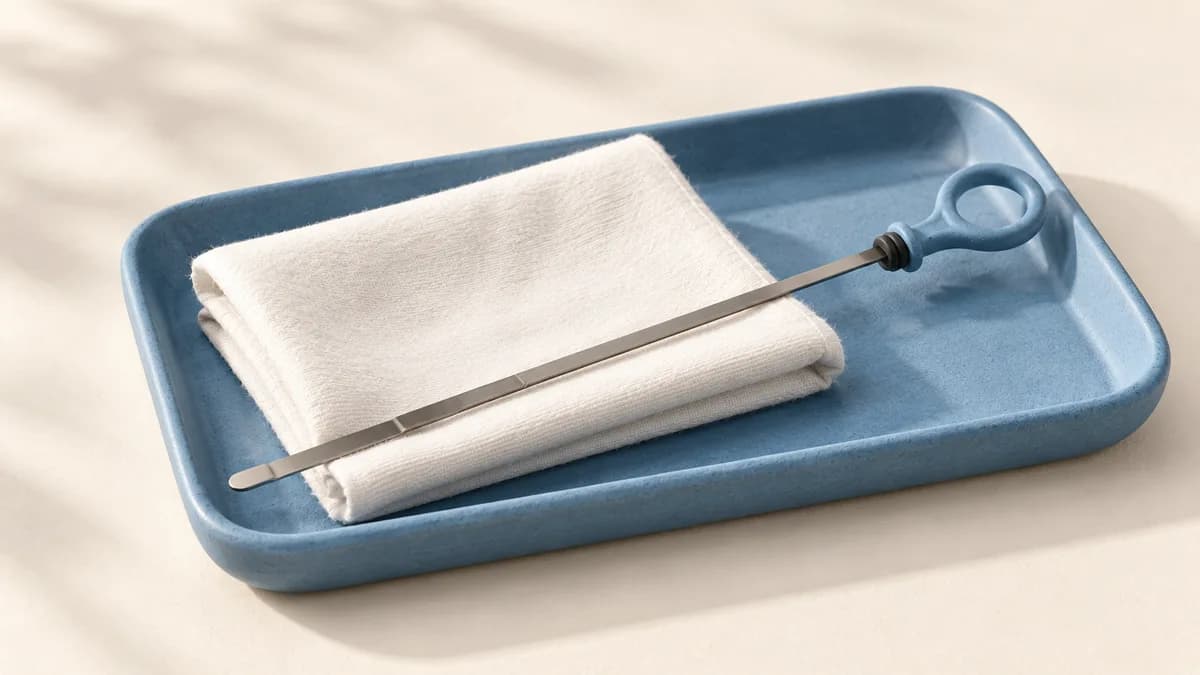
For the conventional method, remove the dipstick and wipe it with a clean lint-free cloth. Fully seat it, withdraw it again and compare the oil trace with the marked minimum and maximum. Keep the dipstick and cloth away from dirt while handling them.
If the trace is smeared or inconsistent, repeat the documented check rather than adding oil on an uncertain reading. Learn how the range is marked on your own dipstick. Notches, holes and crosshatching can look different, and a generic illustration cannot identify your engine's exact marks.
Top up only when the reading calls for it
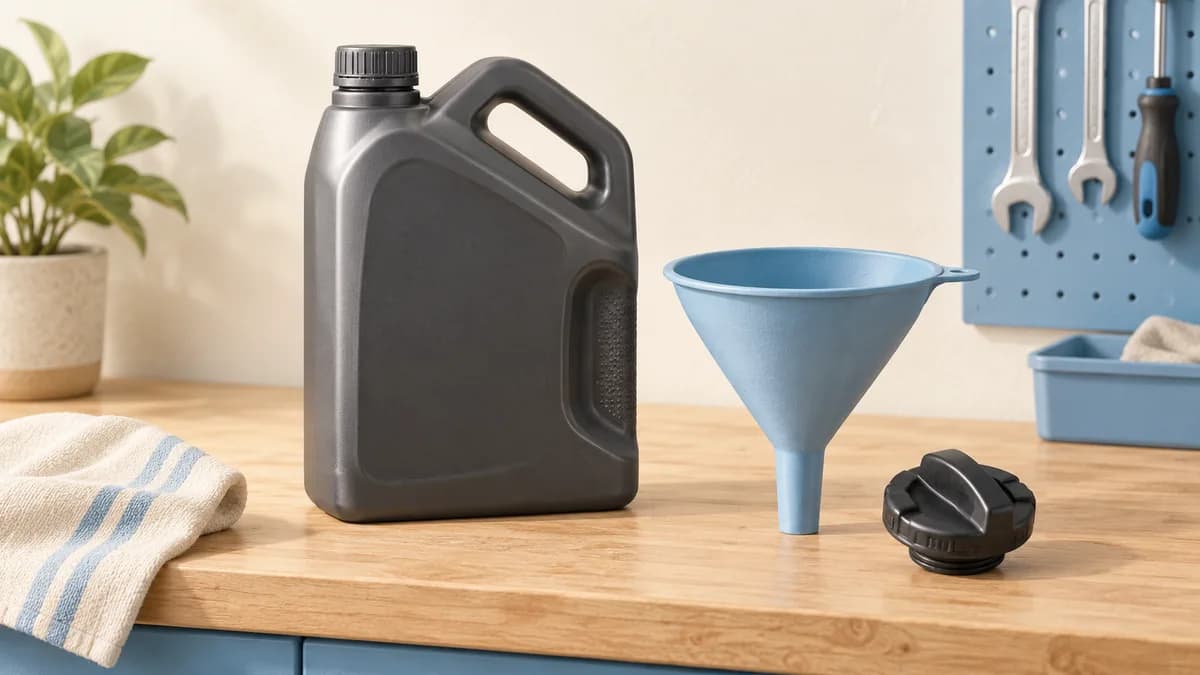
Check the manual's separate topping-up precautions before opening the filler. The cited Ford manual prohibits adding oil to a hot engine and removing the filler cap while the engine is running. A warm-engine level check is not permission to top up immediately: let the engine cool as required by your vehicle's instructions.
Use the specified oil and correct fill opening. Add modest amounts and recheck without exceeding the maximum; the bottle's capacity is not the amount missing. Clean up spills, secure the cap and reseat the dipstick. Arrange an assessment if the level is above its permitted range or repeatedly falls, rather than treating the symptom with additives.
Sources: Ford: Engine oil checking and topping-up guidance; Ford owner manual: Model-specific engine oil check
Separate level from service reminders and pressure
An oil-life reminder is about the service interval, not proof that the sump is full. A low-level message and a low-pressure warning also require different interpretation. Read the exact message and its action in the vehicle manual instead of treating every oil symbol as a request for a small top-up.
For an oil-pressure warning while driving, stop safely and follow the vehicle's urgent instructions. The cited Ford manual directs shutting the engine down when pressure remains low despite an acceptable oil level. A normal dipstick reading does not establish that circulation or pressure is safe.

| Information | What it tells you |
|---|---|
| Dipstick or electronic level | Oil quantity under the required checking conditions |
| Oil-life reminder | When service is due according to that system |
| Oil-pressure warning | A pressure problem requiring the manual's urgent response |
| Repeated top-ups | A reason to document use and seek assessment |
Sources: Ford owner manual: Low oil pressure warning; Ford: Oil-life monitor and oil-level messages
Common questions
Should I check the oil hot or cold?
Use your vehicle's instructions. Some procedures require warming the engine and waiting a specified time afterward; others differ.
Does a full dipstick mean the oil is still good?
No. Level and service life are different. Continue to follow the manufacturer's oil-change requirements.
Can I drive with an oil-pressure warning if the level is normal?
Do not assume that is safe. Follow the urgent instructions for your vehicle; pressure can be wrong even when the oil quantity is within range.
Sources and editorial approach
ChooseRight researched the sources below to explain the topic and its practical trade-offs. Examples are illustrations, not results from our own product testing. Sources checked October 30, 2026. Artwork is AI-generated for explanation and does not document hands-on testing.