
START HERE
The short answer
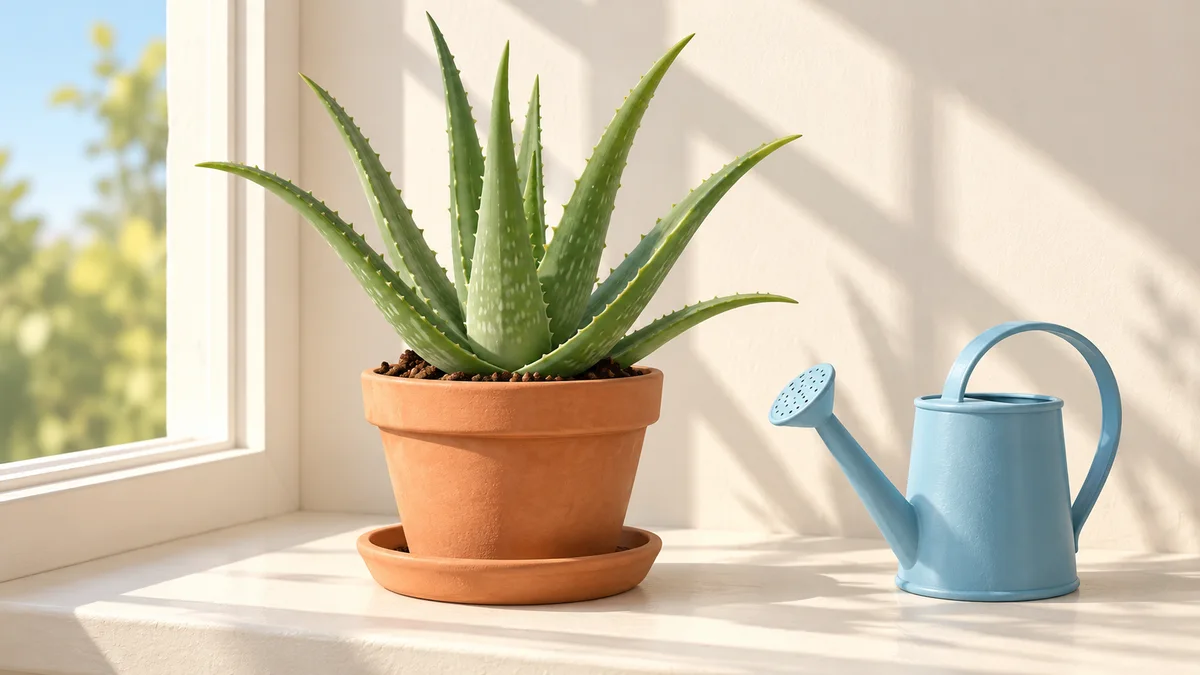
Let an indoor aloe's potting mix dry between waterings, then water thoroughly and let excess water drain away. The interval depends on light, season, container and mix, so there is no dependable once-a-week rule.
- Use a reminder to check moisture, not to force watering.
- A drainage hole and empty saucer matter.
- Slow winter drying usually means less frequent watering.
Check the root-zone conditions
University of Wisconsin Extension advises allowing aloe soil to dry between waterings and avoiding continuously wet roots. A dry-looking surface alone does not describe all the potting mix beneath it, particularly in a deep container.
Look at several clues together: the feel of accessible mix, the pot's weight compared with its recently watered weight, and how long it has remained damp. These are household observations, not exact moisture measurements. If the pot still feels wet and heavy, delay watering and check again.
Water the mix, then let the pot drain
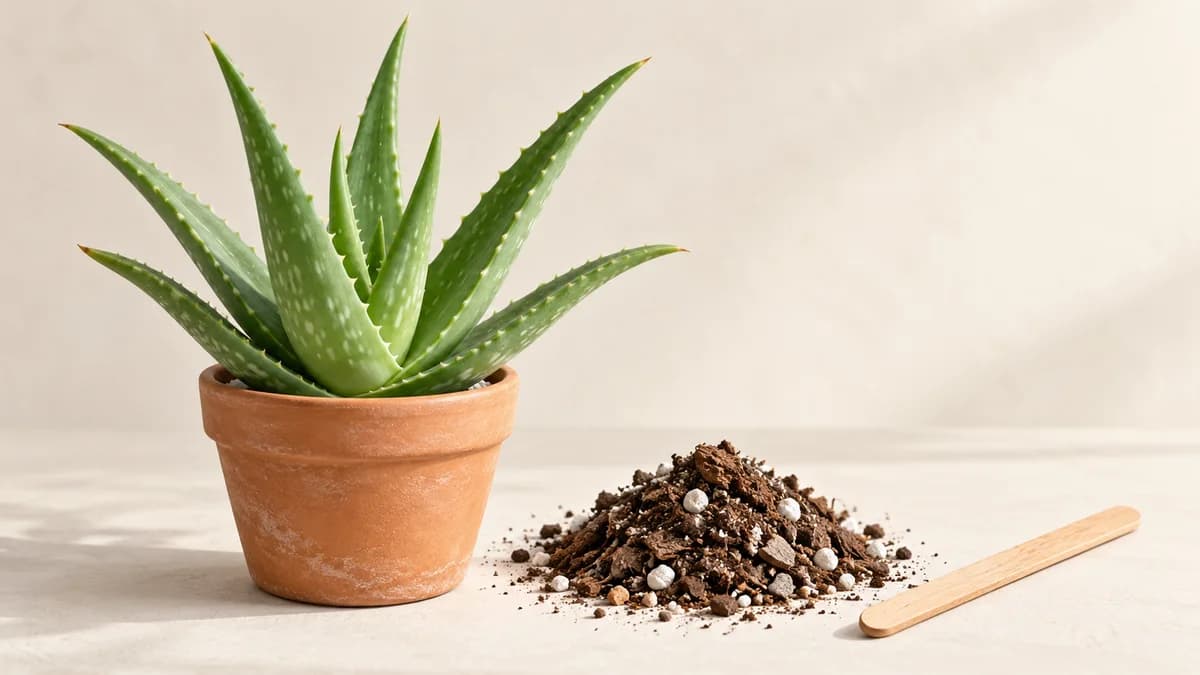
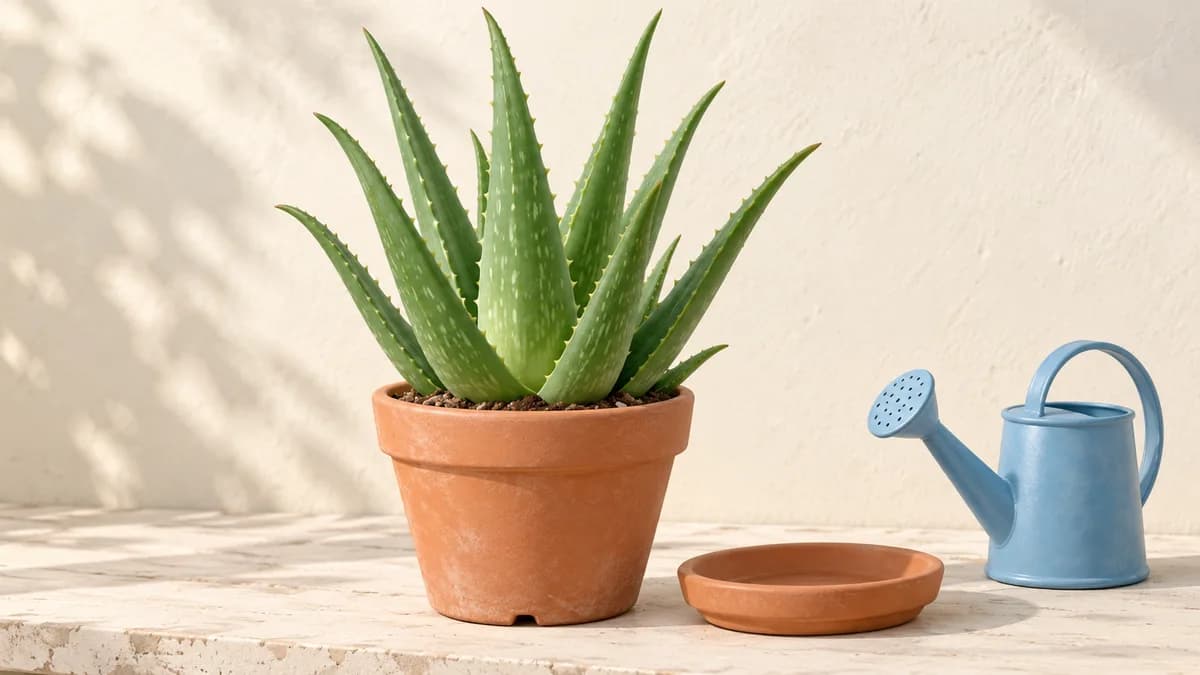
When watering is needed, wet the potting mix and allow excess water to leave through the drainage hole. Avoid leaving the container standing in a saucer of water. A decorative outer pot can hide a pool even when the inner pot has good drainage.
Set a simple routine: take the nursery pot out of its cover, water in a suitable place, let it finish draining and return it. Check the outer pot afterward. The point is to give the root zone water without turning the decorative container into a reservoir.
Sources: Iowa State Extension: caring for houseplants; RHS: growing houseplant cacti and succulents
Expect the interval to change
Aloes need bright conditions, and RHS notes that continuously wet compost and shade are poor growing conditions. The same watering frequency can become excessive when a plant is moved to a darker room or its growth slows in cooler conditions.
Keep a small record when you change location: note the watering date and when the pot next becomes dry. After a few cycles, that observation can guide how often you inspect it. Do not copy another household's interval without considering its light and container.
Sources: RHS: aloe growing preferences; University of Wisconsin Extension: small aloes
Check the container before blaming your schedule
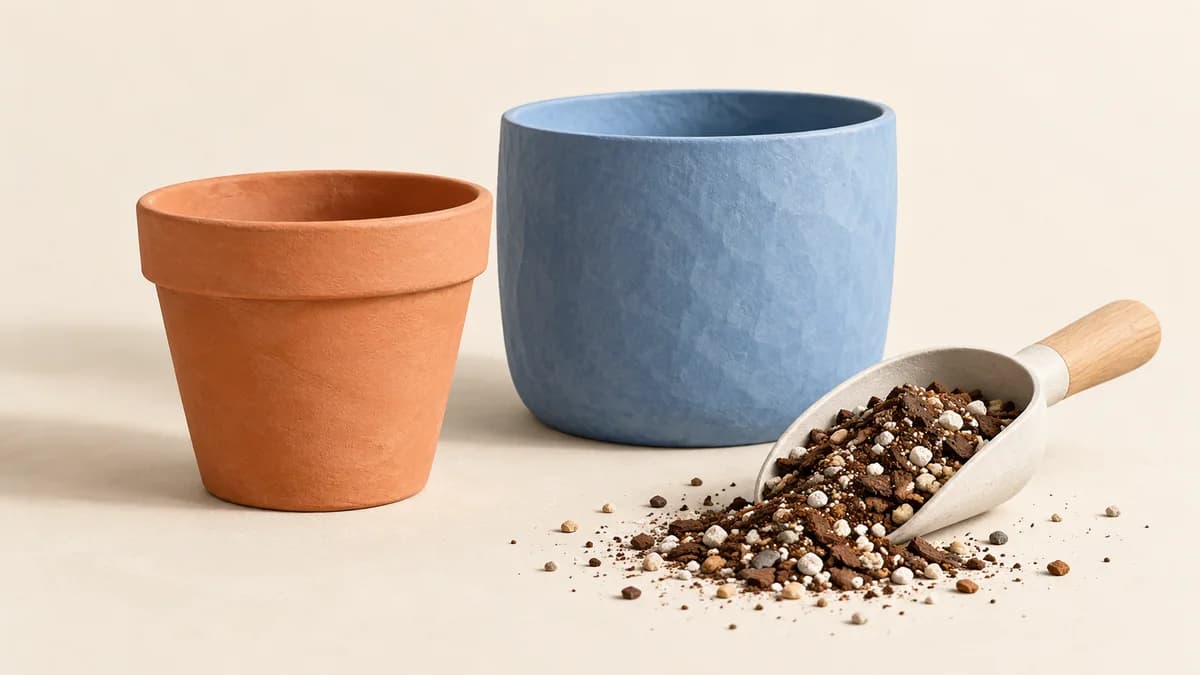
Potting mix and drainage determine how useful your watering routine can be. If the mix stays damp for an unusually long time, pouring less on the same day every week may not solve the underlying setup. Check the drainage hole and whether water collects inside an outer container.
This article focuses on an established indoor aloe. A newly divided plant or a plant with damaged roots may need different aftercare. Follow the relevant propagation or repotting guidance rather than treating a troubled plant as a normal watering experiment.
| What you notice | What to check next |
|---|---|
| Mix still damp | Wait and inspect drainage |
| Outer pot contains water | Empty it and let the inner pot drain |
| Drying slows after a move | Review light and room conditions |
| Plant recently divided | Use propagation-specific aftercare |
Sources: Iowa State Extension: caring for houseplants; RHS: growing houseplant cacti and succulents
Use leaf changes as a prompt to investigate
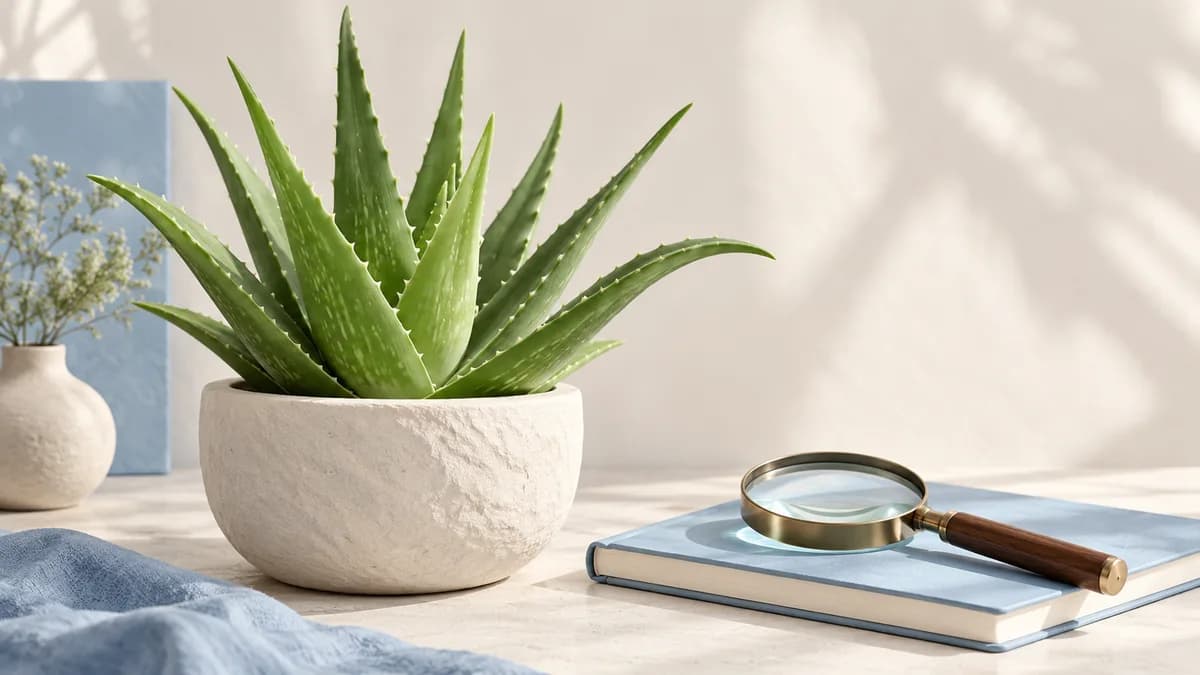
A limp or discolored leaf does not automatically mean the plant needs a drink. Watering, roots, light and other problems can produce overlapping signs. Responding to every change with more water risks making persistently wet conditions worse.
Start by recording what changed recently, then inspect the mix and drainage. If decline continues or the base is soft, seek help from a local extension service with clear photographs and the plant's care history. A photograph plus observations is more useful than asking for a diagnosis from leaf color alone.
Sources: University of Wisconsin Extension: small aloes; Iowa State Extension: caring for houseplants
Common questions
Should I water aloe every seven days?
Not automatically. Check the potting mix and drainage first. Some setups dry much more slowly than others.
Should I leave water in the saucer?
No. Let excess water drain and empty collected water so the root zone does not remain waterlogged.
Does a drooping leaf prove underwatering?
No. Check moisture, drainage and recent changes before adding water. Persistent decline needs closer investigation.
Sources and editorial approach
ChooseRight researched the sources below to explain the topic and its practical trade-offs. Examples are illustrations, not results from our own product testing. Sources checked October 30, 2026. Artwork is AI-generated for explanation and does not document hands-on testing.