
START HERE
The short answer
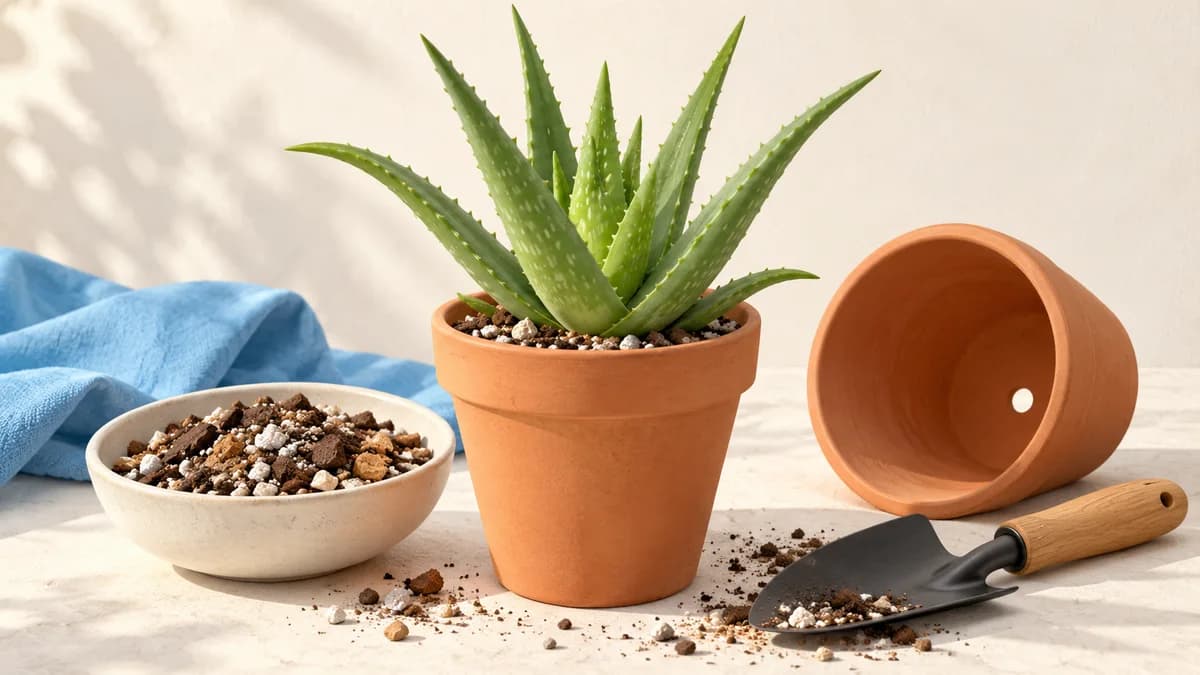
Inspect the roots first. If a healthy aloe has outgrown its pot, move it to a modestly larger container with drainage holes and a freely draining cactus or succulent mix. Keep the plant at its previous depth, handle the rootball gently, and avoid leaving the new pot standing in water.
- Choose a pot to fit the roots, not just the spread of the leaves.
- Drainage holes and suitable mix work together.
- Repotting and removing unrooted offsets are different jobs.
Check roots before choosing a bigger pot
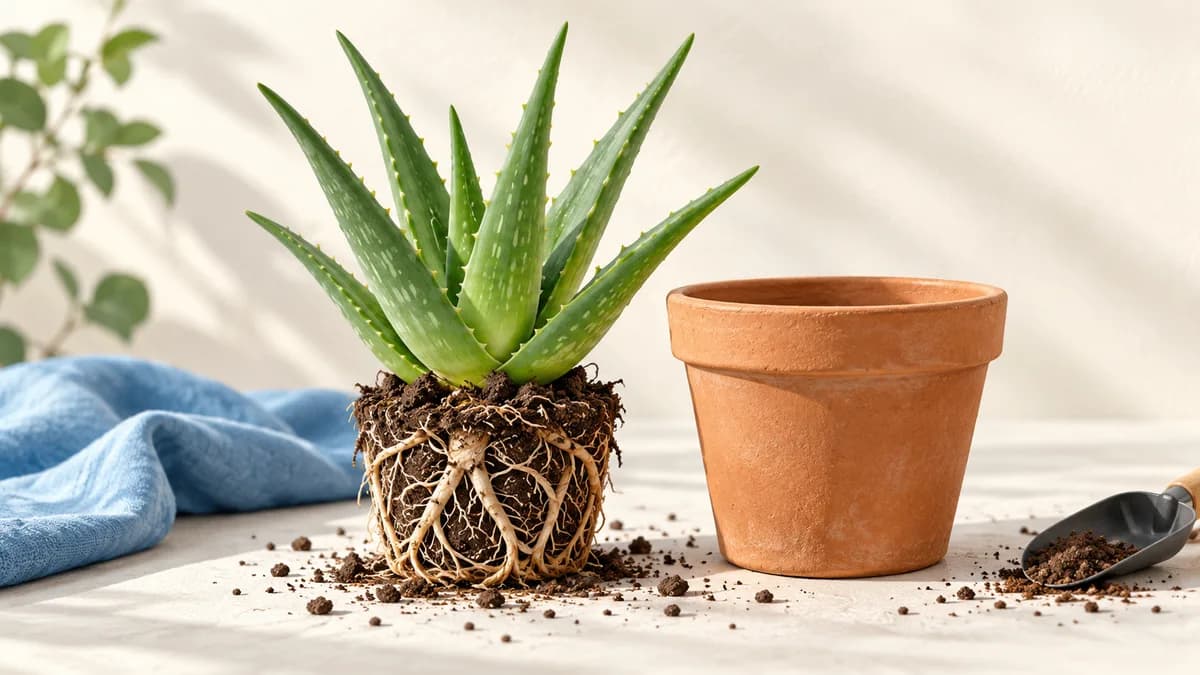
University extension guidance identifies roots emerging from holes, a densely rooted soil mass and a changed watering pattern as reasons to inspect a houseplant. None is a substitute for looking at the rootball. A leaf-heavy aloe can lean because of light or container stability as well as crowding.
Gently ease the plant out far enough to see whether roots densely occupy the available space. If there is still plenty of loose mix around a modest root system, a larger pot may not help. You may need a more stable container or refreshed mix instead of more volume.
For a routine move, active growth in spring or early summer is generally the easier time. Do not postpone investigating a persistently soggy or declining plant merely to wait for a calendar date. Separate an ordinary size upgrade from a plant-health problem.
Sources: Wisconsin Extension houseplant repotting; Illinois Extension repotting guidance
Choose drainage and modest extra room
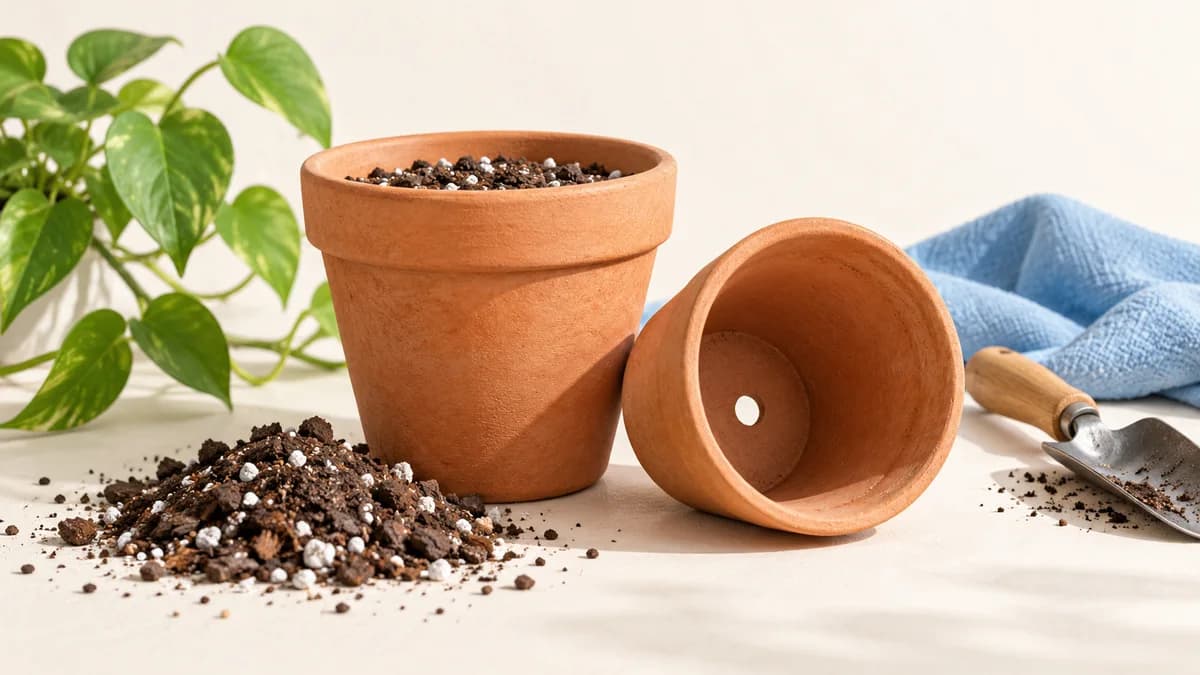
A container should have a way for excess water to leave. A decorative outer pot can still be used, but the inner growing pot needs drainage and should not remain in collected water. Check the opening itself rather than assuming a saucer or a layer of stones fixes a sealed base.
Choose roughly the next suitable size when the roots justify it. An oversized pot leaves a larger mass of mix outside the active roots, which can stay wet too long. Measure the rootball and the usable interior of the new container, since a broad rim can make a pot look larger than its planting space.
RHS recommends a freely draining cactus mix or a suitably amended mix for aloes. A bag labeled potting soil is not enough information by itself. Consider drainage alongside your room conditions and watering habits, rather than buying a heavy moisture-retaining mix and expecting the pot to compensate.
| Check | Why it matters |
|---|---|
| Drainage opening | Excess water needs an exit |
| Interior size | The roots need modest room, not a large wet reservoir |
| Stable base | Heavy leaves should not tip the pot |
| Suitable mix | Aloe roots should not stay continuously wet |
Sources: RHS aloe growing preferences; Wisconsin Extension houseplant repotting
Remove and inspect the rootball
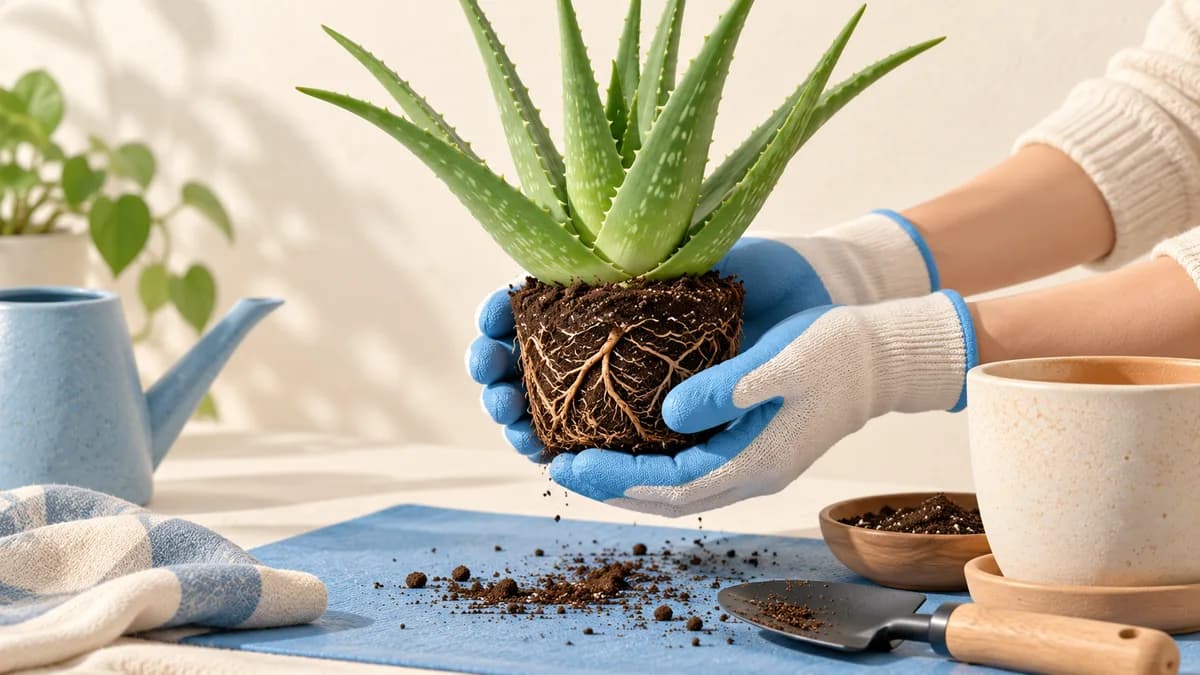
Prepare the new pot, mix and a clear work surface before lifting the aloe. Wear gloves if the leaf edges are uncomfortable to handle. Support the plant near its base and rootball; avoid pulling it out by a single fleshy leaf.
If the pot will not release, loosen its grip carefully rather than tugging harder on the plant. Once it is free, examine the roots and the old mix. Firm roots and a stable crown suggest a routine repot; soft, dark or collapsing tissue needs closer attention.
Keep this inspection separate from an automatic decision to cut every root or divide every offset. A small offset without its own established roots is a propagation task, not simply another miniature plant ready for an identical move. If rot is extensive, ask a local extension service or experienced grower for help identifying the cause.
Sources: Illinois Extension repotting guidance; Ask Extension: aloe vera repotting
Keep the crown above the mix
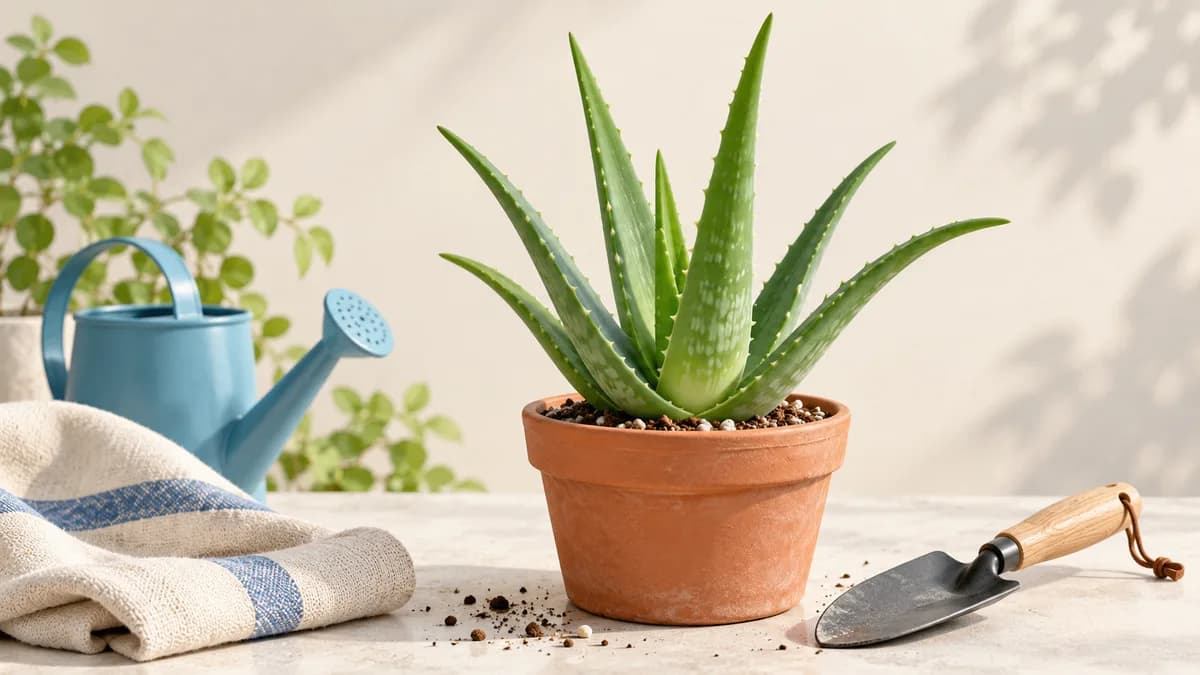
Add enough suitable mix to place the aloe at approximately its old growing depth. Set the rootball upright, then fill the gaps around it without burying the leaf bases. Illinois Extension emphasizes preserving the previous planting depth when repotting houseplants.
Gently settle the mix around the roots rather than compressing it into a hard block. Leave practical space below the rim for watering. Check the final position from the side, not only from above, so a leaning plant is not disguised by piling mix against its leaves.
If the plant is still unstable, revisit the fit and shape of the pot. A heavier container can provide stability without adding a large amount of extra wet soil. Our related pot guide compares container dimensions and drainage details once you know what your own rootball needs.
Sources: Illinois Extension repotting guidance; Wisconsin Extension houseplant repotting
Let the plant settle
Return the aloe to suitable bright conditions without making an abrupt move from a dim room into intense outdoor sun at the same time. A routine repot is easier to monitor when you are not also changing every part of its environment.
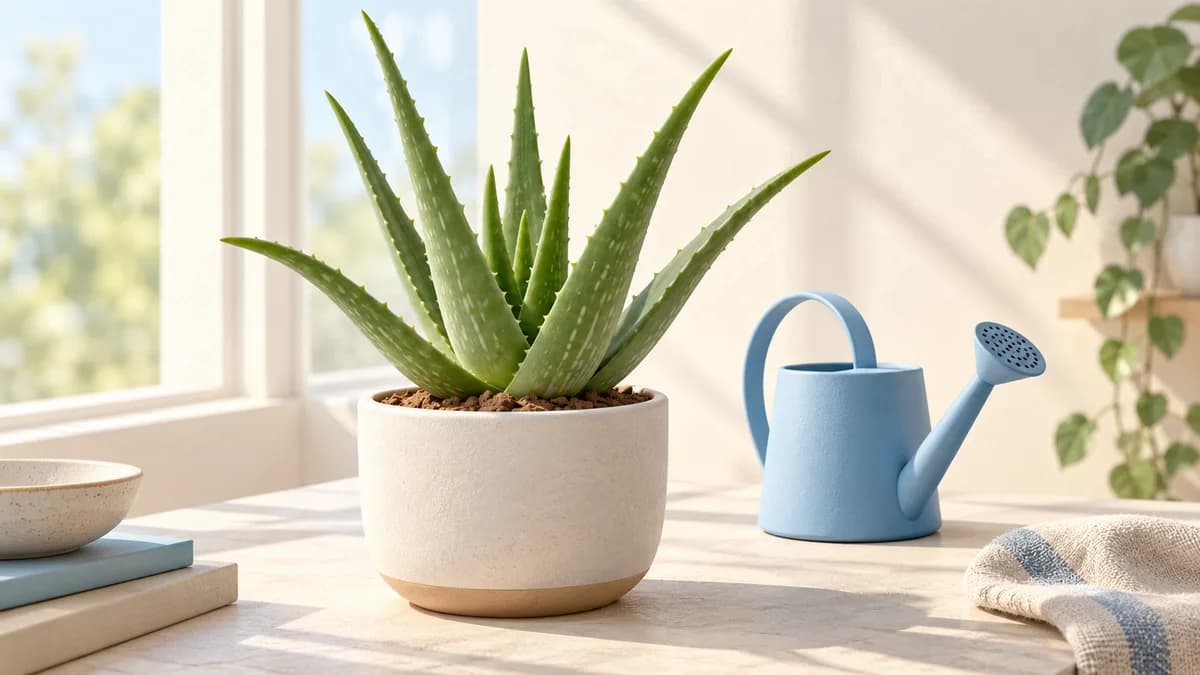
Watering should reflect the condition of the roots and mix, not a fixed daily schedule. Aloe guidance emphasizes allowing the mix to dry between waterings and emptying collected water. A damaged or freshly cut root system needs different attention from a healthy intact rootball, so do not apply a universal immediate-soak rule.
Watch for continued softness, darkening at the base or mix that stays wet unusually long. Adding more water because a recently moved plant looks unsettled can compound the problem. Make a simple note of the repot date and check the actual mix before deciding it needs another drink.
- Keep drainage unobstructed.
- Empty water left in the saucer or outer pot.
- Check the mix before watering again.
- Investigate persistent decline rather than repeatedly upsizing.
Sources: RHS aloe growing preferences; Wisconsin Extension aloe growing conditions; Ask Extension: aloe vera repotting
Common questions
Can aloe grow in a pot without drainage?
A sealed growing container makes excess water difficult to manage. Use a draining inner pot if you want a decorative outer container, and remove collected water.
Should I buy a much larger pot for future growth?
No. Choose a modest increase when the roots need it. Excess mix can stay wet around a small root system.
Do I have to divide all the pups?
No. Inspect crowding and root development first. Separating an offset without established roots is a propagation task with different aftercare.
PUT IT INTO PRACTICE
Compare your options
Use your rootball measurements to compare drainage, size and stability in our five-pot guide.
Compare pots for aloe plantsSources and editorial approach
ChooseRight researched the sources below to explain the topic and its practical trade-offs. Examples are illustrations, not results from our own product testing. Sources checked October 23, 2026. Artwork is AI-generated for explanation and does not document hands-on testing.