
START HERE
The short answer
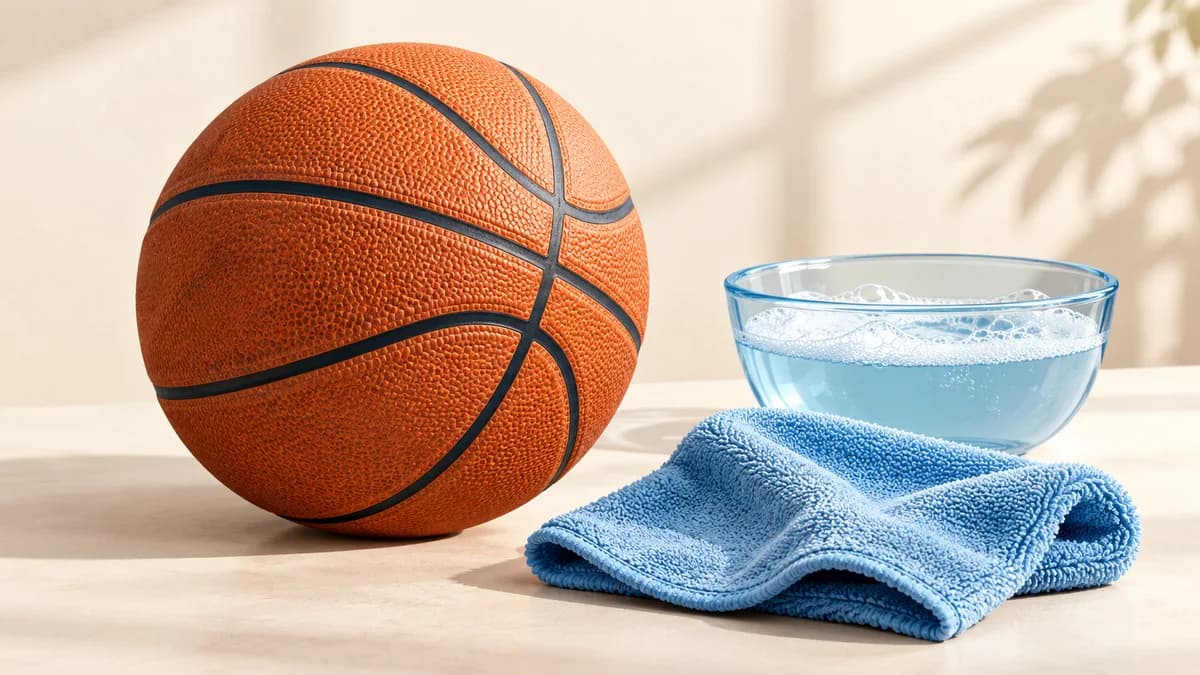
Identify the cover first. For a rubber or composite ball whose maker permits it, wipe away loose dirt and use a soft cloth with a little mild soap and water for stubborn grime, then remove residue with a clean damp cloth. Do not soak it. Treat genuine leather according to its specific care instructions, and dry any ball away from heat and direct sun.
- Rubber and composite cleaning instructions do not automatically apply to genuine leather.
- Use moisture sparingly and never immerse the ball.
- Cleaning cannot restore worn-out pebbling or repair a damaged cover.
Identify the cover before cleaning
Look up the model name on the ball or its packaging. Wilson identifies its official NBA game ball as genuine leather, while many recreational models use rubber or composite covers. The word leather in a retailer title can be shorthand for composite leather, so read the actual material specification.
Spalding distinguishes genuine leather as an indoor material requiring extra care. Its general cleaning guidance gives rubber and composite different levels of scrubbing tolerance. That is a reason to identify your own ball, not a reason to assume every composite model is approved for outdoor play.
If the material remains unclear, begin with a soft dry cloth and ask the manufacturer before using soap or a cleaner. A ball that looks similar in color and panel layout may still have a different surface treatment.
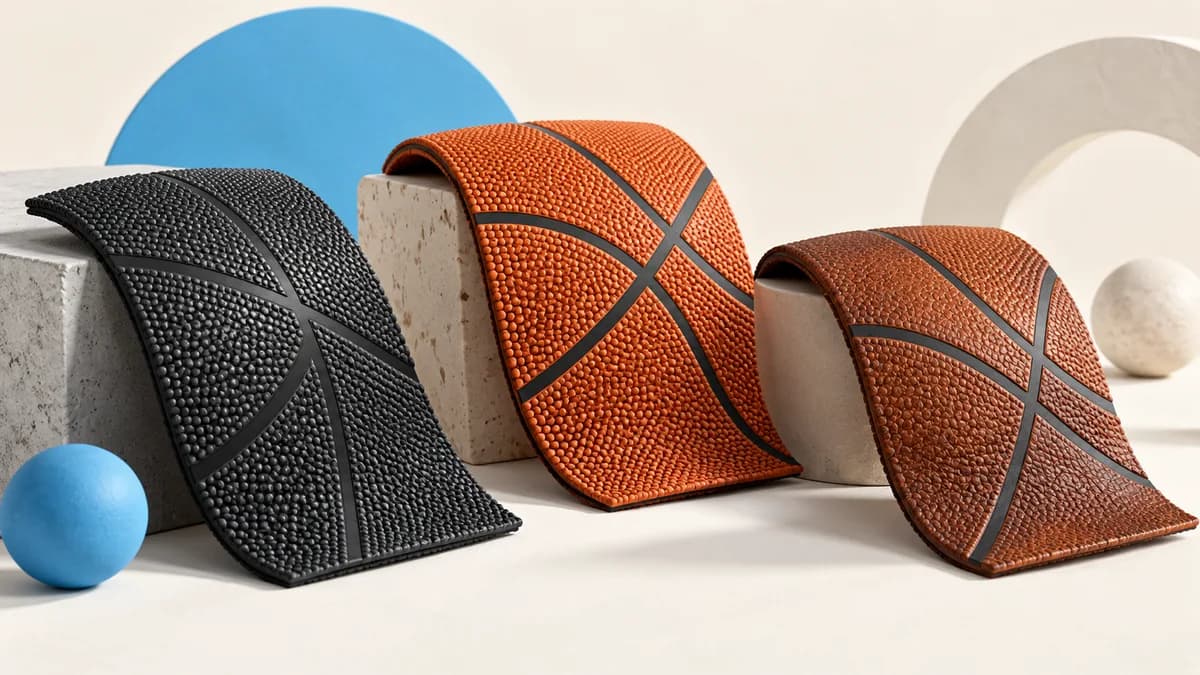
| Cover | Starting approach |
|---|---|
| Rubber | Check maker guidance; a soft brush may be permitted |
| Composite | Use gentle wiping and avoid abrasive scrubbing |
| Genuine leather | Follow model-specific leather care; do not borrow rubber washing instructions |
Sources: Wilson genuine leather game-ball details; Spalding material-specific cleaning guidance; Spalding maintenance and care
Start with loose dirt
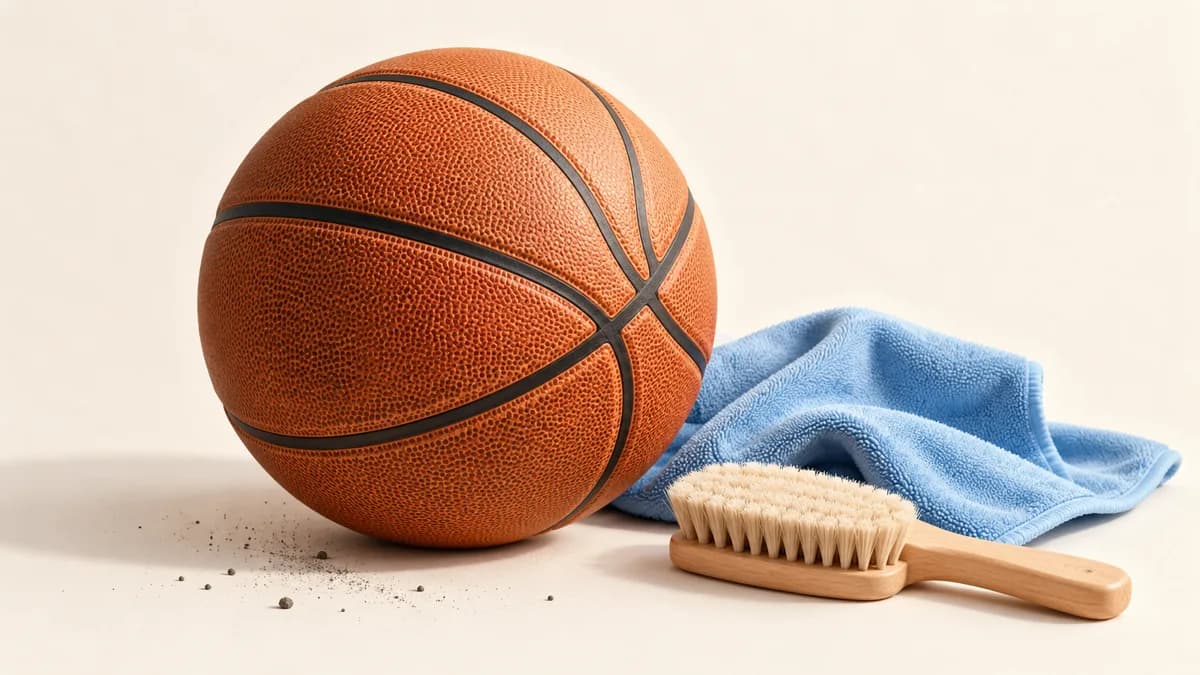
Clear a space and set out a clean soft cloth, another cloth for residue removal and a dry towel. Inspect the seams and cover before adding moisture. If the surface is peeling or a seam is opening, cleaning will not repair it and rough handling can make inspection harder.
Wipe loose dust off gently. For a rubber ball, a soft brush may help with dirt caught in the texture when the manufacturer allows it. Do not reach immediately for a stiff household scrubbing brush, wire brush or abrasive pad because the ball feels durable.
This preparation also helps you see what actually needs cleaning. A smooth patch caused by wear is different from a removable film. Stop treating a worn surface as a stubborn stain that needs progressively stronger chemicals.
Use the gentlest model-approved method
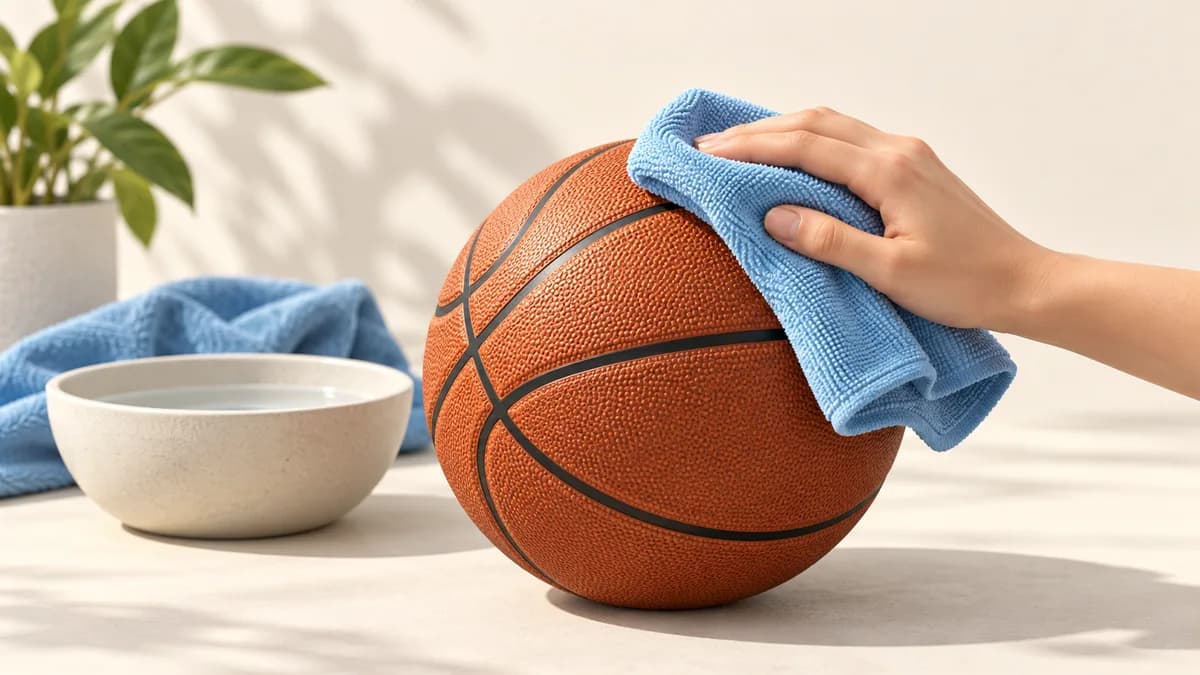
For an appropriate rubber or composite ball, Spalding recommends mild soap and water applied with a soft cloth or sponge, followed by wiping with a clean damp cloth. Keep the cloth damp rather than turning the process into a soak. Work on a small area first and check the result.
Use lighter pressure on composite covers. Genuine leather deserves its own instructions and any specifically approved care product; do not interpret a general soap method as permission to wash a premium leather ball. When uncertain, stop at gentle dry wiping until the maker confirms what is suitable.
Remove soap residue rather than leaving a scented or slippery film. If your purpose is disinfection, that is a separate requirement: use a product and procedure approved for the exact material and intended setting. Ordinary washing advice is not a verified pathogen-kill protocol.
Sources: Spalding material-specific cleaning guidance; Wilson ball-cleaning recommendations, hosted by WIAA
Dry without heat or soaking
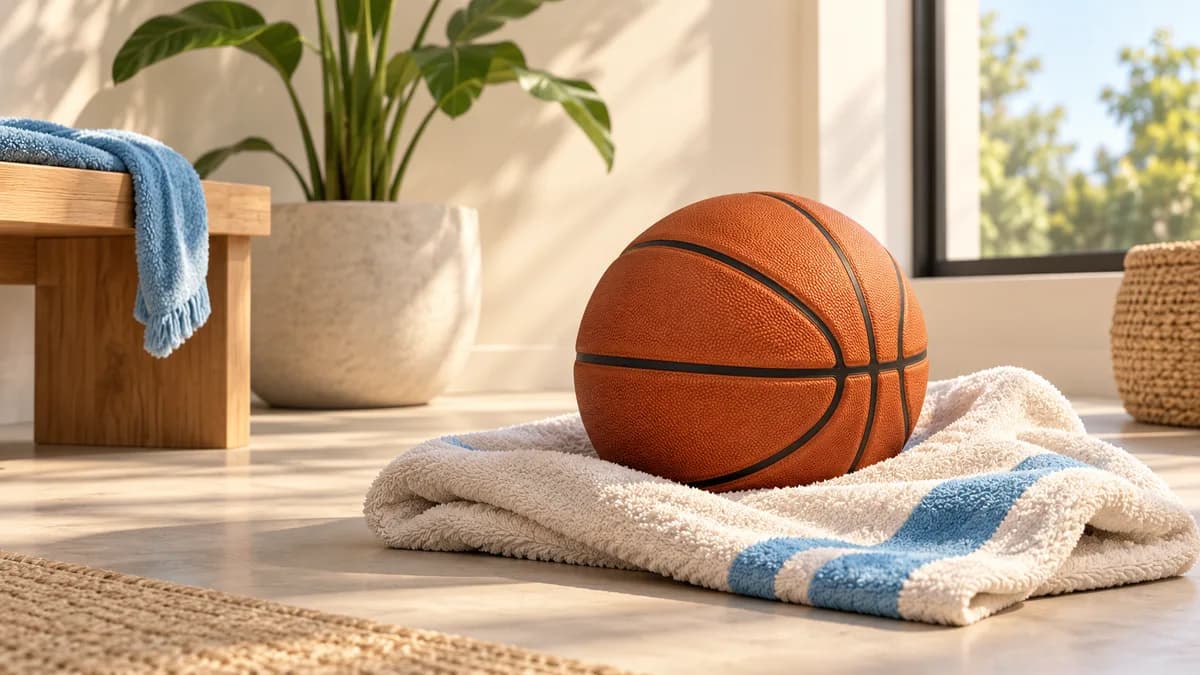
Pat the surface with a dry towel and let the ball finish drying indoors. Spalding advises against soaking and against using a heater. Direct sunlight and prolonged heat are also poor storage conditions, so a sunny car window is not a helpful shortcut.
Do not put a damp ball straight into a closed bag because the outside seems mostly dry. Give seams and textured areas time to dry naturally, then check that the surface feels clean rather than soapy before the next session.
A cleaning routine should be boring and repeatable: a suitable cloth, limited moisture and ordinary air drying. If a proposed hack involves a washing machine, dishwasher, hair dryer or immersion, it goes well beyond the manufacturer guidance used here.
Sources: Spalding: taking care of your basketball; Spalding maintenance and care
Check grip and store properly
After drying, inspect the cover again. Remaining slickness may come from residue, wear or the particular material rather than a need for more soap. A genuine leather game ball has its own break-in behavior, which should not be confused with dirt that must be scrubbed away.
Check pressure against the value printed near the valve or specified for that exact model. Spalding warns against overinflation. Do not use extra air to compensate for worn grip, and do not assume every ball size or model uses one universal pressure.
Choose the correct ball for your court and keep it in a cool, dry place between sessions. If the cover is damaged or your indoor ball keeps suffering outdoors, our basketball guide can help compare suitable materials and uses. Replacing an unsuitable ball is different from cleaning one that is still in good condition.
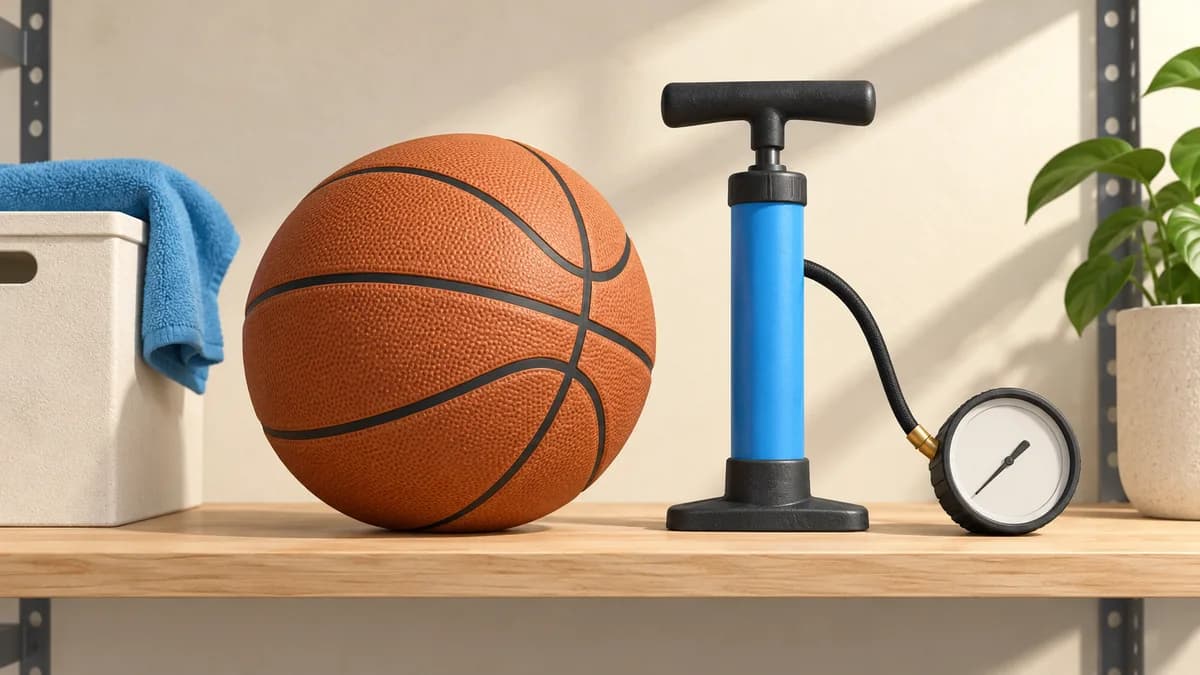
- Use the ball on its intended court surface.
- Follow the printed inflation guidance.
- Wipe off dirt after play instead of letting it accumulate.
- Store dry, away from prolonged heat and sunlight.
Sources: Spalding maintenance and care; Wilson genuine leather game-ball details
Common questions
Can I soak a basketball in water?
No. The manufacturer guidance used here advises against soaking. Apply limited moisture with a cloth when permitted for the cover.
Can I clean a leather basketball with dish soap?
Do not assume a rubber or composite cleaning method applies to genuine leather. Follow the exact leather-ball instructions and approved care products.
Will cleaning make an old ball grippy again?
It may remove dirt or residue, but it cannot rebuild worn pebbling or fix a damaged cover. Inspect the ball after it is clean and dry.
PUT IT INTO PRACTICE
Compare your options
Match the ball material, size and intended court to your routine before replacing worn equipment.
Compare our five basketball picksSources and editorial approach
ChooseRight researched the sources below to explain the topic and its practical trade-offs. Examples are illustrations, not results from our own product testing. Sources checked October 23, 2026. Artwork is AI-generated for explanation and does not document hands-on testing.