
START HERE
The short answer
Remove trapped hair gently, then clean the bristles using the method approved for the exact brush. Many plastic brushes permit warm water and a mild cleanser, but cushions, wood and electrical parts need different handling. Avoid unapproved soaking and let the brush dry completely as instructed.
- Identify the handle, cushion and bristle materials before wet cleaning.
- Remove loose hair first so you can reach the base gently.
- Drying orientation and soaking permission vary by model.
Check what the brush is made from
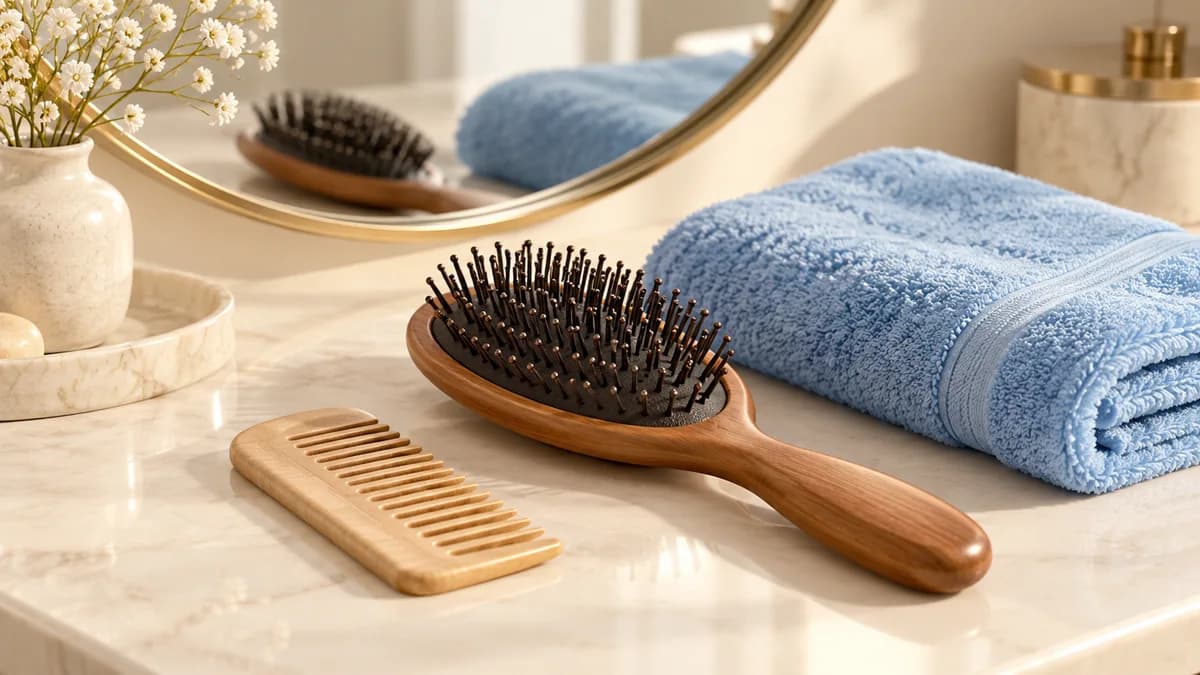
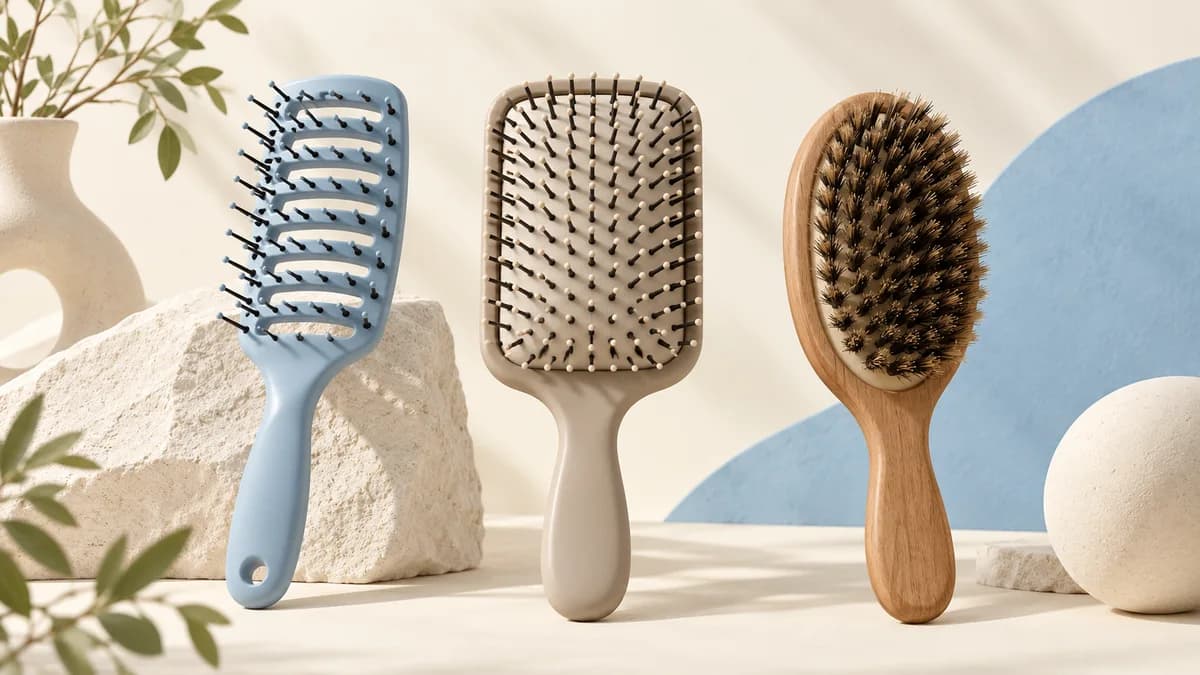
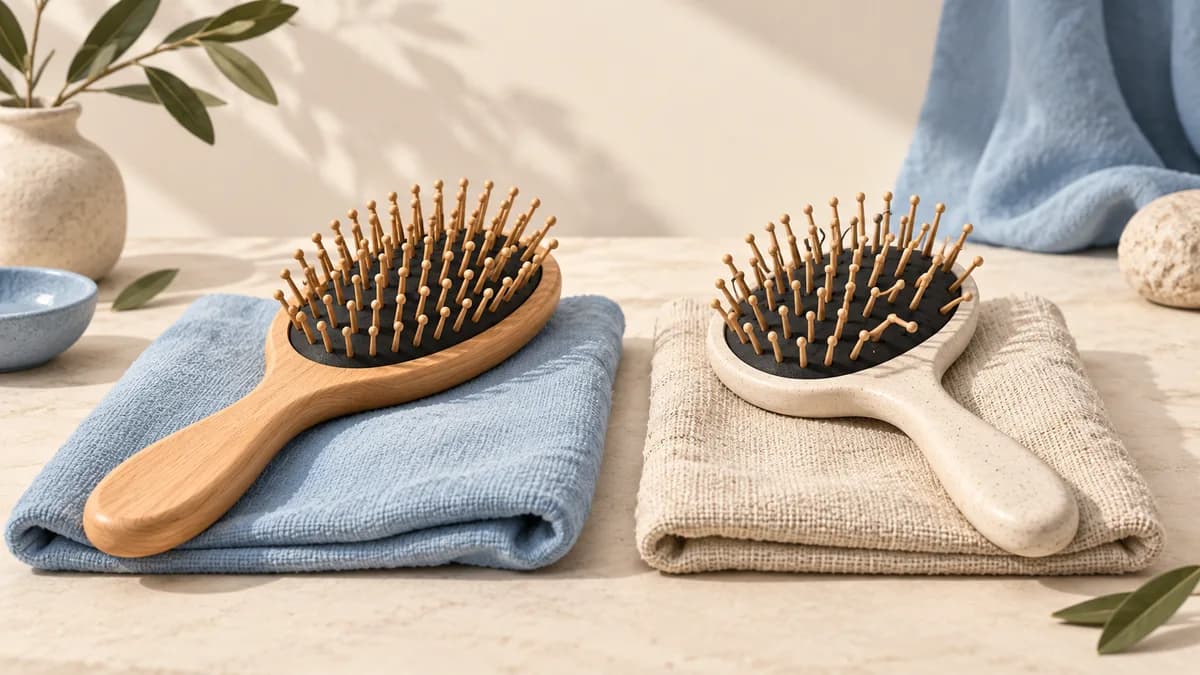
Inspect the handle, bristle base and any cushion or air hole. Conair distinguishes ordinary plastic brushes from padded and wooden models, cautioning against submerging the latter parts. Natural bristles do not determine the method on their own: the handle and cushion also matter. Find the care instructions for the complete brush, not just its most visible material.
An electrical straightening or heated brush is a separate appliance. Do not place it in a bowl because an article about ordinary hairbrushes describes washing. Unplug it, let it cool and follow its appliance manual. For a non-electrical brush with unknown construction, begin with gentle dry removal and seek model guidance before adding water.
Sources: Conair: hairbrush cleaning by construction; Mason Pearson Japan: care limitations and brush construction
Lift loose hair before cleaning the base
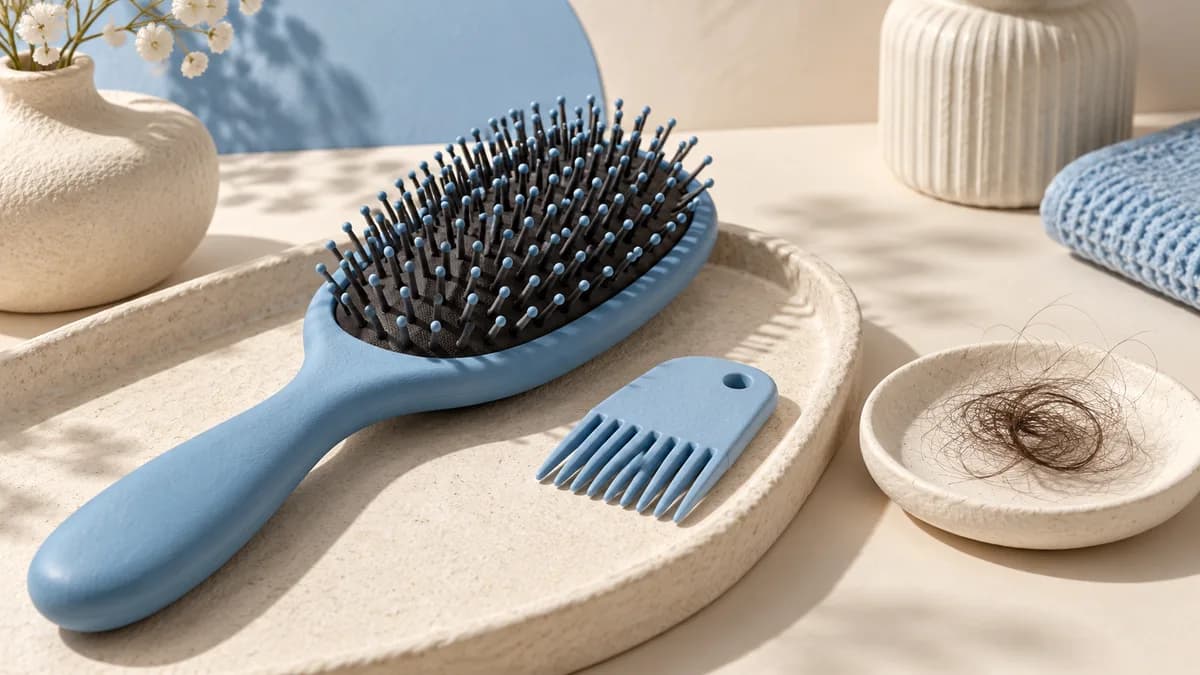
Use the brush maker recommended cleaning tool or a suitable comb to lift accumulated hair carefully. Tangle Teezer describes using the end of a tail comb between the teeth on specified models. Work in small sections instead of pulling a dense mat of hair hard enough to bend teeth or disturb a cushion.
Pay attention to the attachment points as you work. The aim is to remove trapped strands, not to pry apart a pad or pull out bristles. If a round brush has tightly wrapped hair, consult its cleaning instructions rather than cutting blindly near the bristles. Clear loose lint with a gentle cleaning brush before deciding whether wet cleaning is needed.
Sources: Tangle Teezer: model-specific brush cleaning; Conair: hairbrush cleaning by construction
Clean only the parts the maker permits
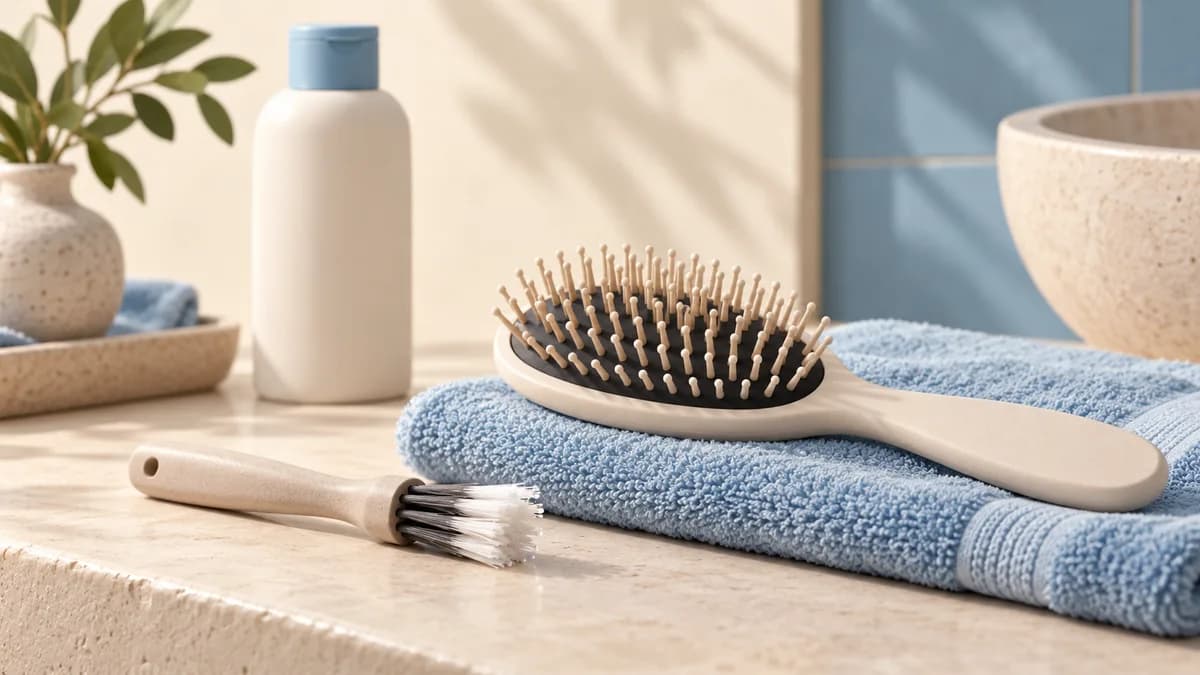
For its Original and Ultimate Styler models, Tangle Teezer describes dipping a separate toothbrush in warm soapy water and gently working between the teeth. That is a controlled cleaning method, not a recommendation to leave the entire brush soaking. Clean the spaces you can reach without forcing a brush into joints or openings.
Instructions differ substantially. Mason Pearson's Japanese care guidance warns against directly washing its brushes with water and against detergent or shampoo washing. Conair permits different treatment for some of its plastic designs. If you own another model, use these examples to see why checking matters, rather than choosing whichever procedure looks easiest.
Sources: Tangle Teezer: model-specific brush cleaning; Mason Pearson Japan: care limitations and brush construction; Conair: hairbrush cleaning by construction
Follow the specified drying position
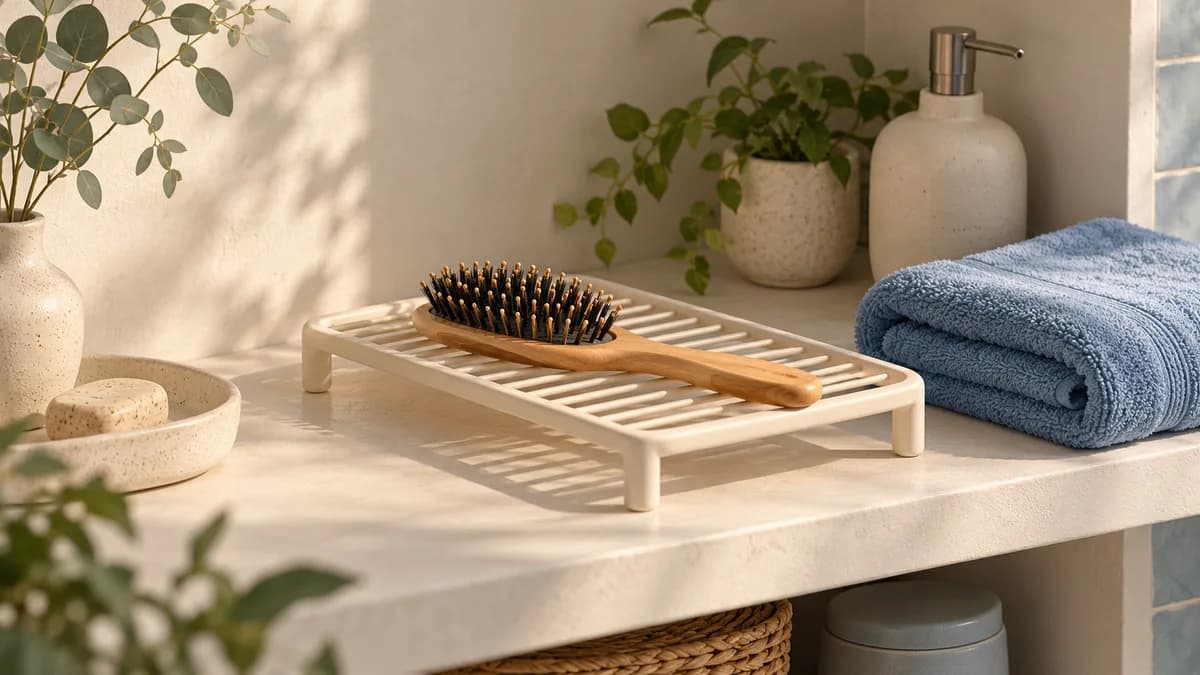
Remove remaining cleanser or moisture in the way the brush maker specifies, then allow it to dry fully. Tangle Teezer tells owners of the cited models to air-dry with the teeth facing upward and avoid using a hair dryer. Do not turn a drying rule for one brush into a universal bristles-up or bristles-down rule.
Keep the brush in a suitable airy place while it dries, with no direct heat used to hurry the process. If you hear water trapped inside a housing or notice persistent moisture around a cushion, contact the manufacturer before using it again. Do not remove a fixed pad or drill an opening to release water without an approved procedure.
Sources: Tangle Teezer: model-specific brush cleaning; Mason Pearson Japan: care limitations and brush construction
Inspect the brush before returning it to use
Check for damaged teeth, missing protective tips, a split cushion or a rough edge that was hidden by the trapped hair. A cleaning routine cannot put those parts back into their original condition. If the brush catches or scratches after cleaning, stop and assess whether it needs replacement or manufacturer service.
Between deeper cleaning sessions, remove accumulated hair so it does not form a dense layer. Choose the wet-cleaning frequency from the model instructions and the buildup you actually see, rather than an arbitrary daily soak. A clean-looking brush is not necessarily disinfected; this routine removes ordinary hair and residue and does not establish a medical decontamination process.
| Construction | Important care question |
|---|---|
| Washable plastic | Which cleanser and rinsing method are permitted? |
| Cushioned or hollow | How do I keep water out of internal spaces? |
| Wood or natural bristles | What does the complete brush care guide permit? |
| Electrical styling brush | What does the appliance manual allow after unplugging? |
Sources: Conair: hairbrush cleaning by construction; Mason Pearson Japan: care limitations and brush construction; Tangle Teezer: model-specific brush cleaning
Common questions
Can I soak a wooden hairbrush?
Do not assume so. Conair warns that submerging wooden brushes can affect the wood and finish; follow the specific maker guidance.
Should every brush dry with its bristles down?
No. Tangle Teezer specifies teeth-up drying for some models. Follow the drying position in your own brush instructions.
Does shampoo disinfect a hairbrush?
Ordinary cleaning does not establish disinfection. Use a suitable documented process if you have a specific contamination concern rather than relying on a household cleaning recipe.
Sources and editorial approach
ChooseRight researched the sources below to explain the topic and its practical trade-offs. Examples are illustrations, not results from our own product testing. Sources checked October 30, 2026. Artwork is AI-generated for explanation and does not document hands-on testing.