
START HERE
The short answer
Identify the finish, remove loose dirt with a suitable soft brush, then use a footwear cleaner approved for that leather. Avoid soaking and direct heat. Let the shoes dry before using compatible conditioning or protection products, and test those products in a discreet area first.
- Match the cleaner to the finish, not just the word leather.
- Separate cleaning, conditioning, polishing and protection.
- Air-dry at room temperature rather than using a radiator or hair dryer.
Identify the leather finish first
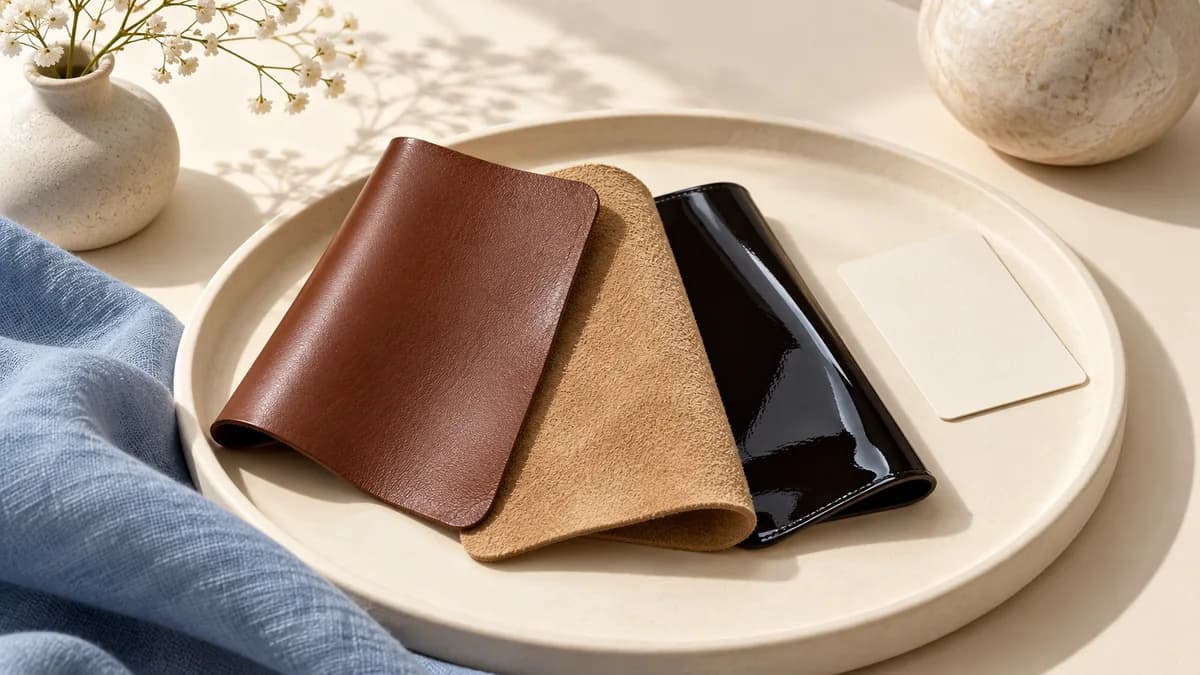
Smooth leather, suede and glossy patent leather do not share one cleaning routine. ECCO publishes separate care guidance for leather and suede, while Clarks emphasizes selecting products appropriate to the shoe. Check the product page or care label, and remember that one shoe may combine leather with textile panels, elastic or decorative finishes.
Before treating a conspicuous area, test the approved product somewhere discreet and let it dry so you can judge any color or finish change. If you cannot identify the leather or the stain, ask the shoe maker or a professional cleaner. A familiar household cleaner is not automatically suitable because it works on another brown material.
Sources: ECCO: separate material care guides; Clarks: cleaning and protecting leather shoes
Remove loose dirt and expose the areas to clean
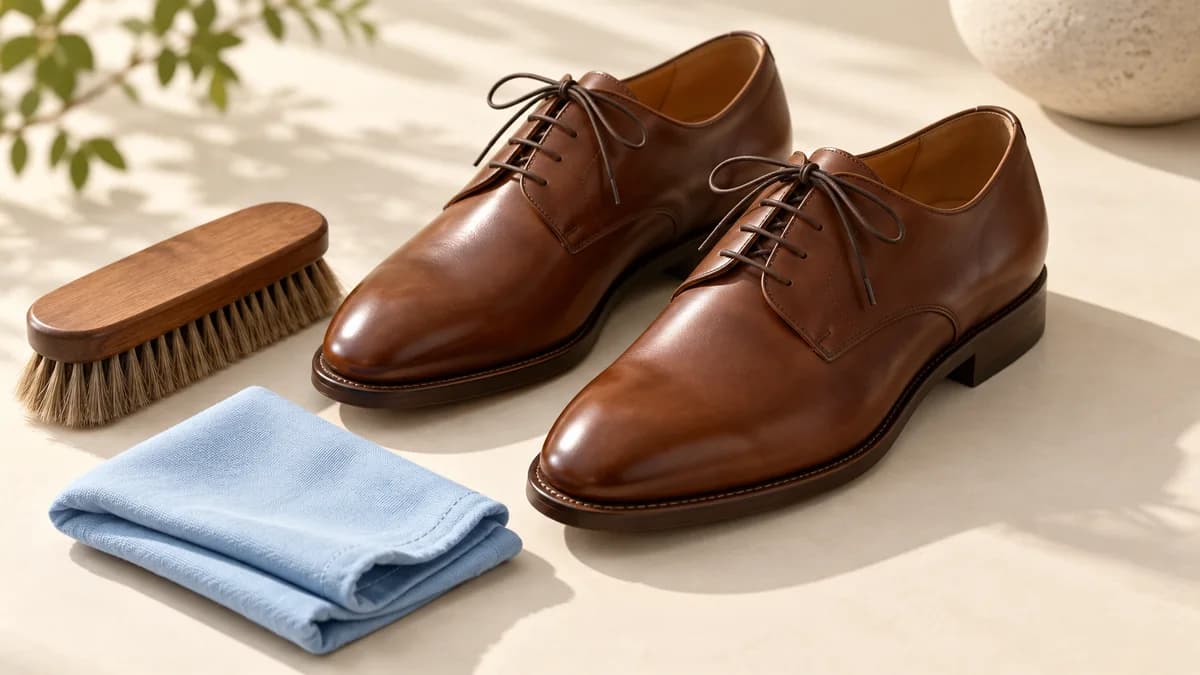
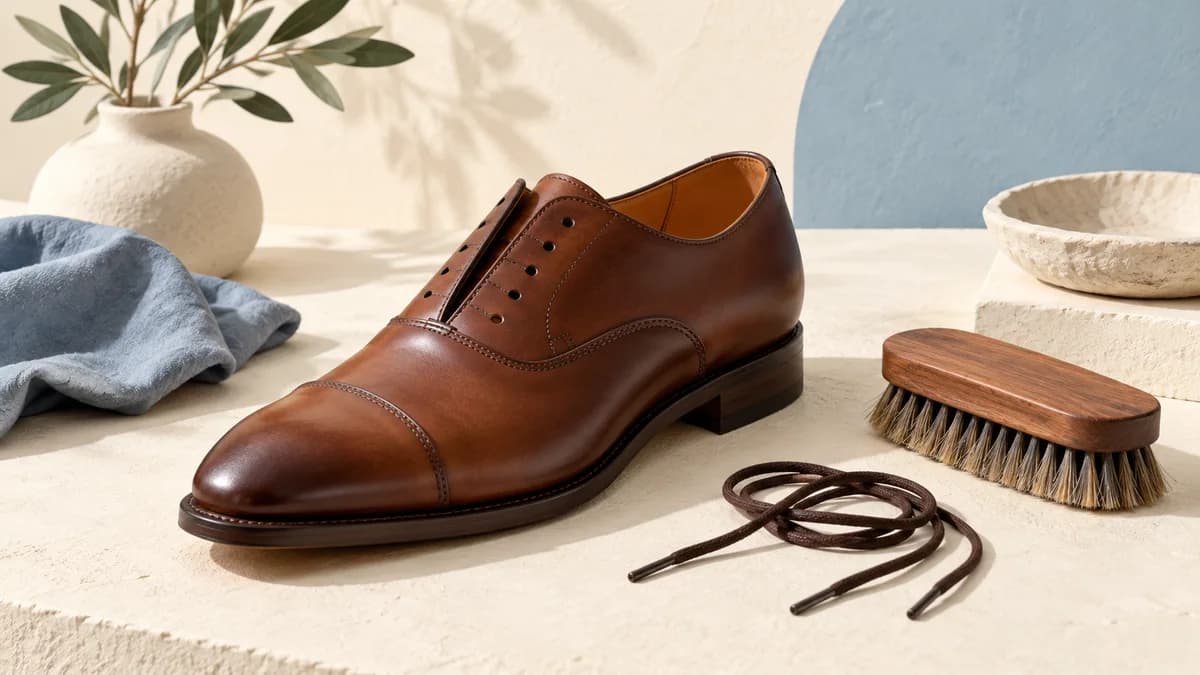
Take out the laces where appropriate and brush away loose dirt with a soft shoe brush. ECCO puts this step before applying cleaner. Use a brush clean enough for the finish you are working on, rather than one still loaded with another shoe's colored polish or gritty outdoor debris.
Work around seams and the edge of the sole without scraping the upper. Separate the upper-care task from any method needed for the outsole or removable insole. You do not have to soak the whole shoe to reach a muddy edge. When the loose dirt is gone, reassess the mark: a scuff that has removed the finish may need different attention from surface grime.
Sources: ECCO: smooth leather care sequence; Clarks: cleaning and protecting leather shoes
Apply a compatible cleaner sparingly
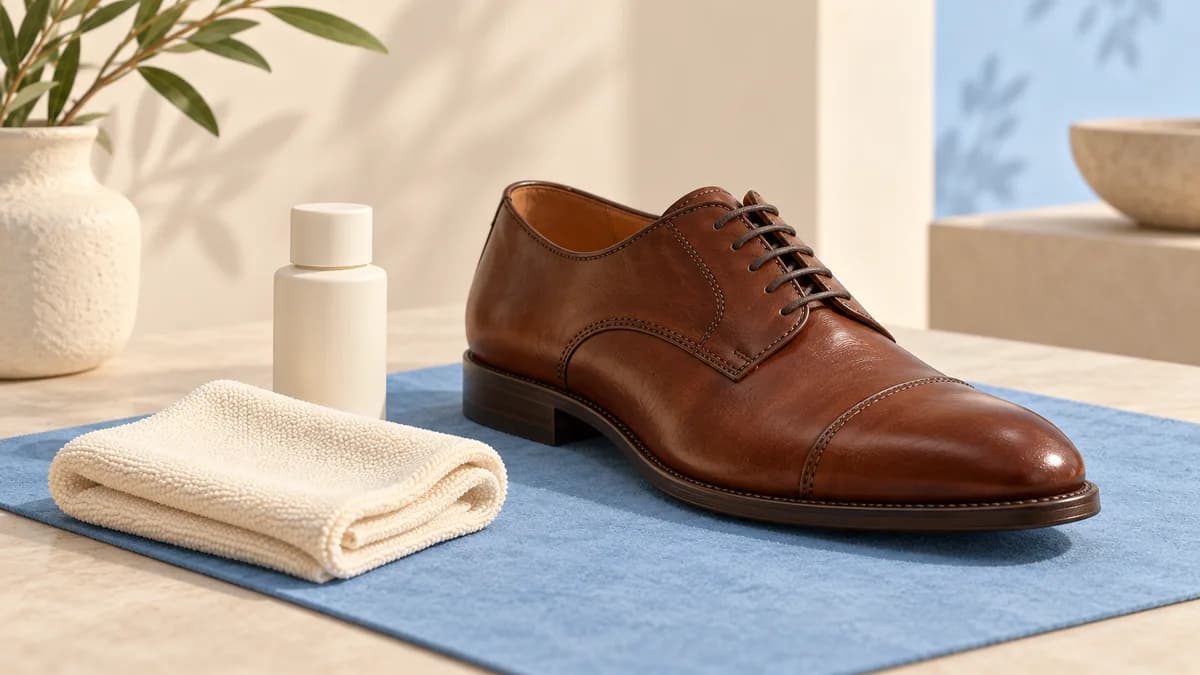
Use a footwear leather cleaner approved for the finish and follow its application instructions. Clarks describes gentle work with a soft cloth and warns against soaking leather. Put the product where the instructions specify rather than spraying freely into seams, linings or adjacent materials that may need different care.
A little visible improvement is a reason to proceed carefully, not to add more pressure until every mark disappears. Stop if color transfers unexpectedly, the surface becomes tacky or the finish changes. Avoid mixing several cleaning recipes in a single session: that makes it difficult to tell which product affected the leather and complicates any later professional repair.
Sources: Clarks: cleaning and protecting leather shoes; ECCO: footwear care and product selection
Dry naturally, then assess conditioning
If the shoes are damp, let them dry at room temperature away from direct heat. Clarks warns against radiators and hair dryers because excessive heat can dry and crack leather. ECCO's smooth-leather routine waits until the shoe is completely dry before the conditioning stage and uses a shoe tree to support its shape.
Conditioner is not a substitute for cleaning, and more is not automatically better. Use a small amount of a product suitable for the exact leather, following its instructions. A cream intended for smooth leather may be inappropriate for suede, patent or a special coating. If the finish is unfamiliar, confirm compatibility rather than applying conditioner just because the shoe feels stiff.
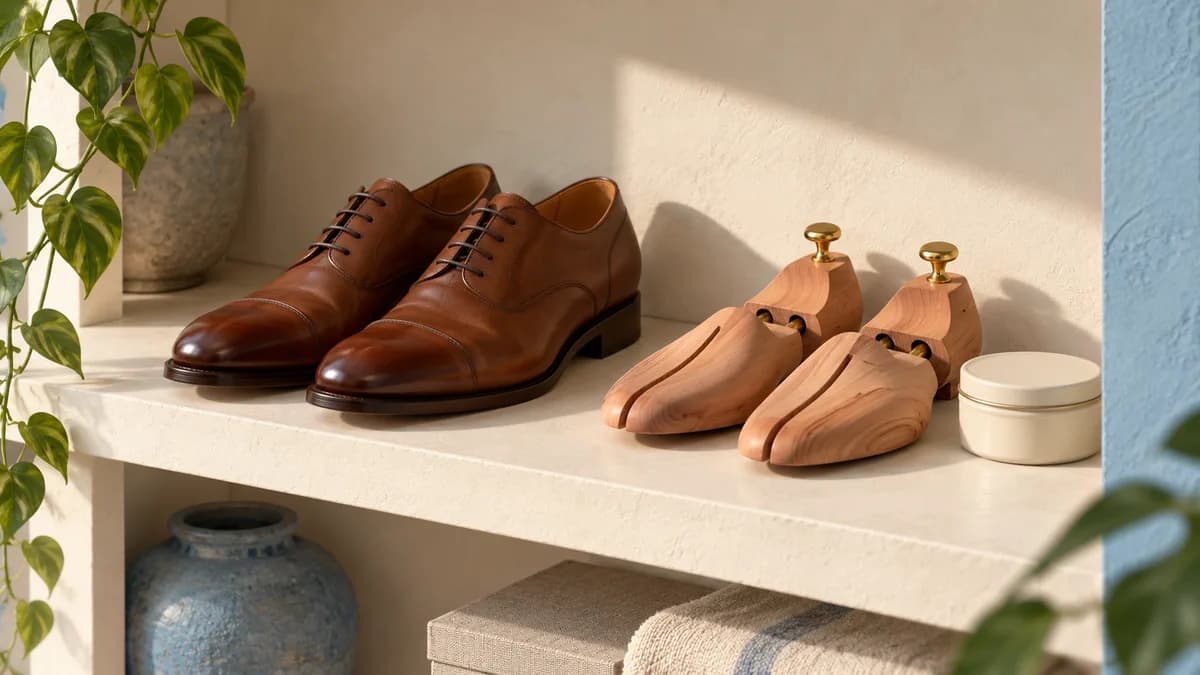
Sources: Clarks: cleaning and protecting leather shoes; ECCO: smooth leather care sequence; ECCO: separate material care guides
Choose the finishing steps you actually need
Polish can adjust the appearance of suitable smooth leather, while a protection product has a different purpose. Neither should be assumed to make a shoe waterproof. Follow the product instructions for compatible materials, application and drying, and keep any spray use within its stated ventilation and handling requirements.
For regular upkeep, brush off dry dirt after wear and store the shoes clean and dry. Inspect loose stitching, sole separation or damaged leather separately from appearance. Cleaning does not repair structural problems or correct a poor fit. Keeping a short note of the successful cleaner and finish makes the next care session simpler than starting again with an unverified home remedy.
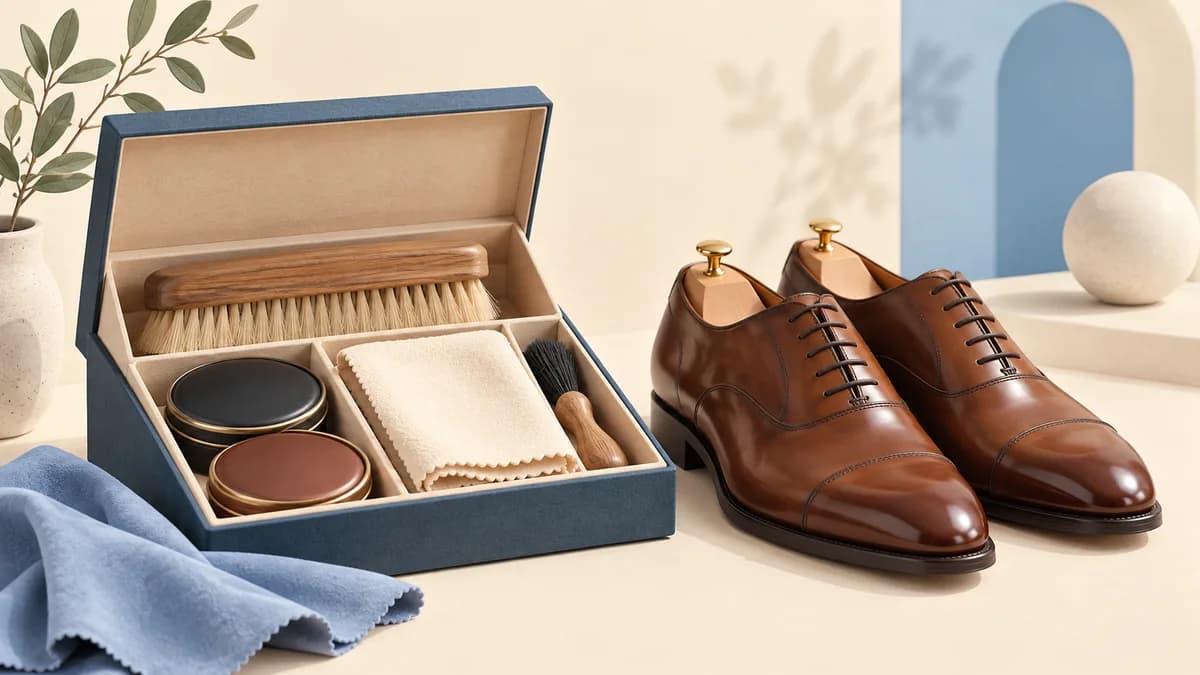
| Step | Purpose |
|---|---|
| Brushing | Remove loose debris before applying product |
| Cleaning | Lift surface dirt with a compatible cleaner |
| Conditioning | Care for suitable leather after it is dry |
| Polishing or protection | Optional finish-specific treatment, following its label |
Sources: ECCO: footwear care and product selection; Clarks: cleaning and protecting leather shoes
Common questions
Can leather shoes go in the washing machine?
Do not machine-wash them unless the shoe maker explicitly permits it. The care methods cited here use controlled surface cleaning and avoid soaking.
Should I use the same cream on suede?
No. Choose a product and method approved for suede or nubuck rather than assuming smooth-leather cream is appropriate.
Will cleaning remove every scuff?
No. Some marks are finish damage or deeper staining. Repeated aggressive cleaning can make them worse; ask the manufacturer or a repair specialist when the approved method is insufficient.
Sources and editorial approach
ChooseRight researched the sources below to explain the topic and its practical trade-offs. Examples are illustrations, not results from our own product testing. Sources checked October 30, 2026. Artwork is AI-generated for explanation and does not document hands-on testing.