
START HERE
The short answer
Outdoor quad-skate wheels are usually softer to make uneven pavement feel less harsh; rink wheels are often harder for glide on smooth floors. Match the exact wheel to the surface, then check diameter, axle and bearing fit and clearance. A hardness number alone does not establish compatibility or safety.
- Lower numbers on the same durometer scale generally describe softer wheels.
- Check fit and clearance as well as indoor or outdoor labeling.
- A softer wheel does not make loose gravel or wet pavement suitable for skating.
Read durometer as one specification
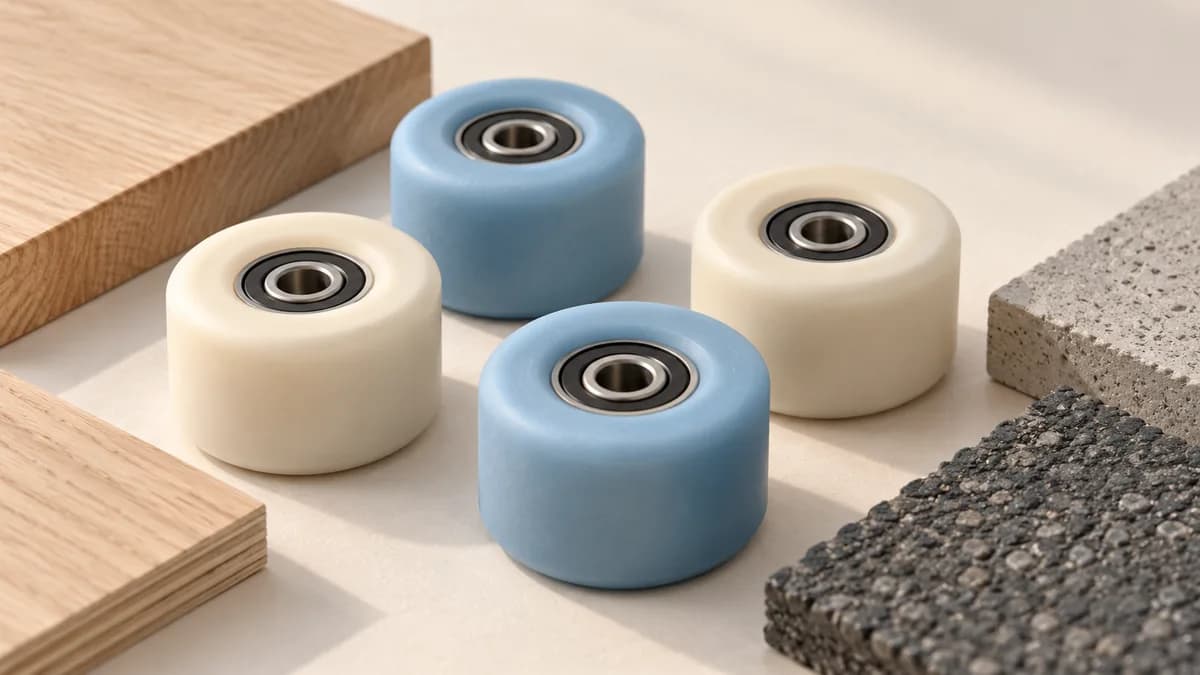
Wheel durometer describes hardness. On the commonly used A scale, a lower number indicates a softer material. Riedell presents roughly 78A to 85A as a typical outdoor quad-wheel range and approximately 88A to 101A for indoor use. These are manufacturer guidelines, not a universal boundary separating every usable wheel.
Hardness is only one part of the feel. Wheel shape, size and formulation also vary, so two wheels with similar markings need not behave identically. Read the intended surface and skating-style description, and compare like-for-like specifications. Do not interpret a large number as a higher quality score or assume a wheel outside a familiar range is automatically wrong.
Match the actual ground, not just the building
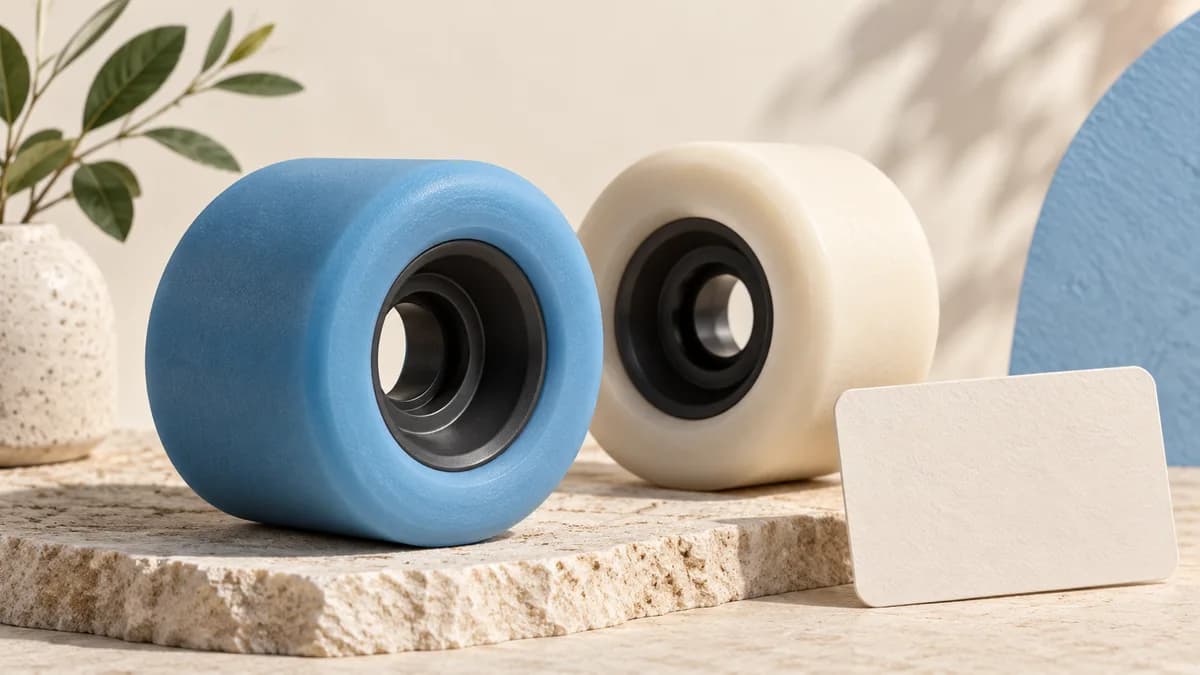
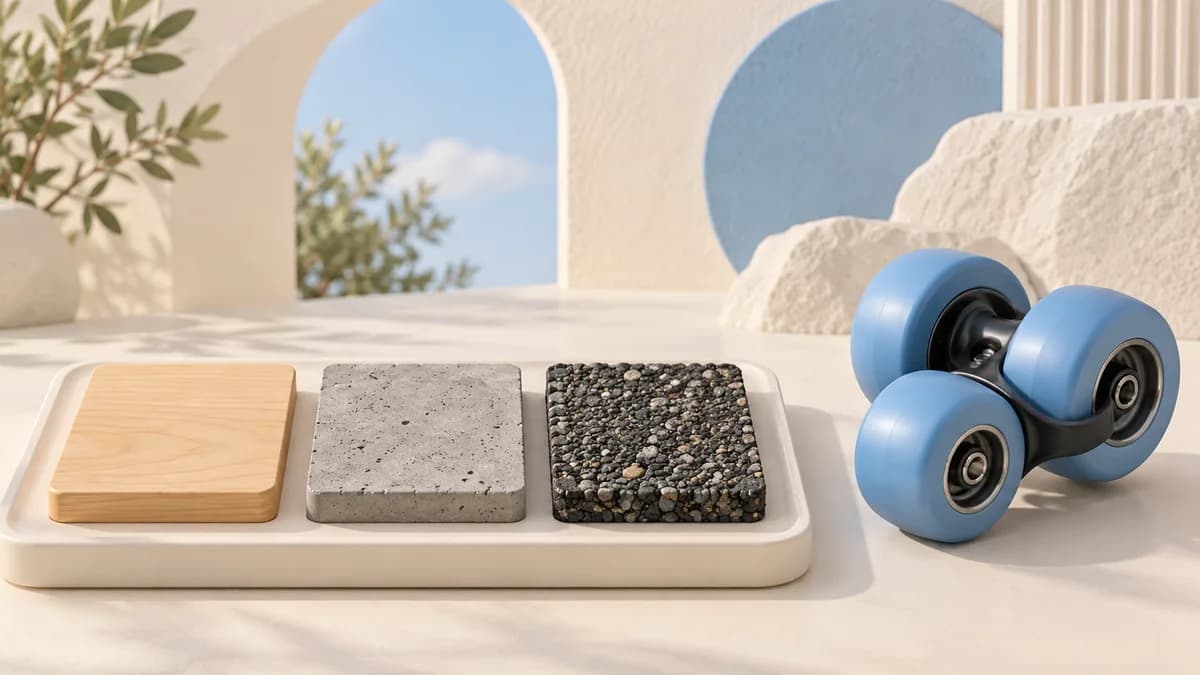
Softer outdoor wheels can reduce the harsh feel of small surface irregularities; harder rink wheels often glide more freely on a smooth floor. The indoor or outdoor label is a shortcut for those conditions. A rough indoor concrete space and a very smooth outdoor court are not identical to the stereotypical polished rink and uneven sidewalk.
The appropriate setup also depends on the skating activity. Ask the venue or instructor about its floor and permitted wheels, then follow the wheel maker guidance. Do not compensate for poor stopping skills by selecting a wheel solely because someone describes it as grippy. Grip and control must suit the floor, technique and complete skate together.
Sources: Riedell: outdoor and rink skating differences; Riedell: roller skate wheel hardness by surface
Confirm that a replacement wheel fits
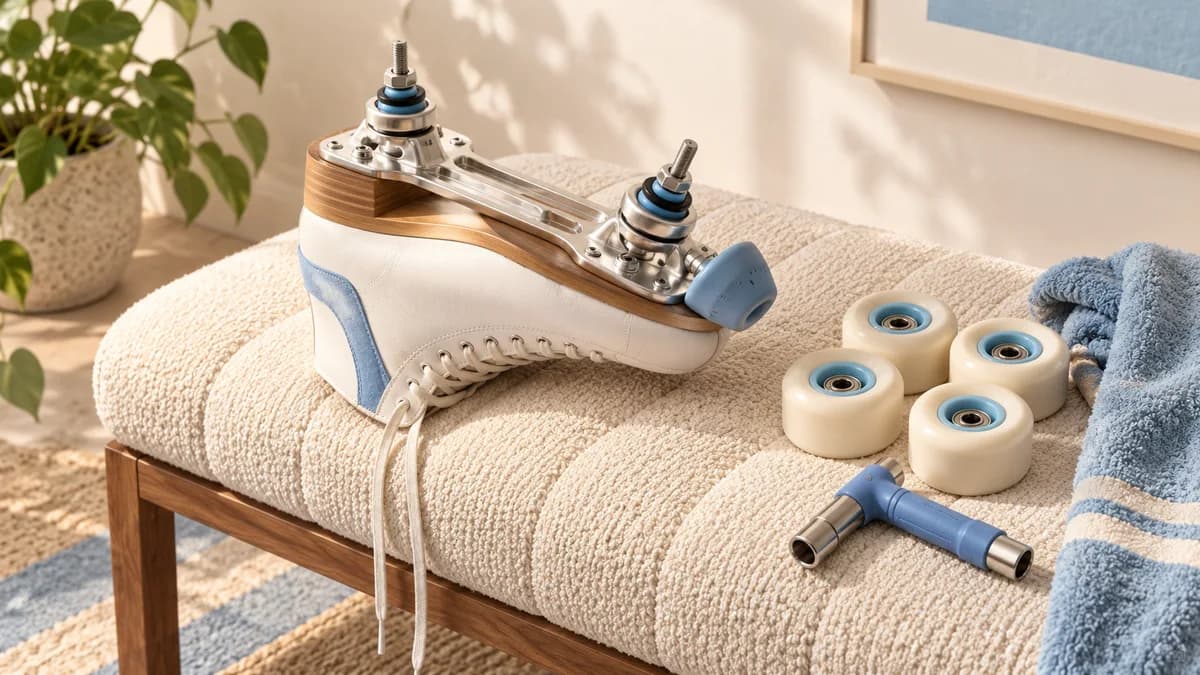
Before ordering a wheel set, identify the skate model, current wheel dimensions and the required bearing and axle fit. Check the manufacturer limits rather than assuming that every quad wheel fits every quad skate. More diameter can change clearance, and a component that can be slid onto an axle is not necessarily an approved combination.
If you are unfamiliar with wheel changes, ask a skate shop to verify the setup and show the correct process. Keep the required hardware and follow the model instructions for securing the axle nuts. The goal is a properly retained wheel that rotates as intended, with no rubbing or unexplained play. Do not use a test ride to diagnose an assembly you know is uncertain.
Sources: Riedell: outdoor and rink skating differences; Riedell: adult skate components and selection
Decide whether one set or two makes sense
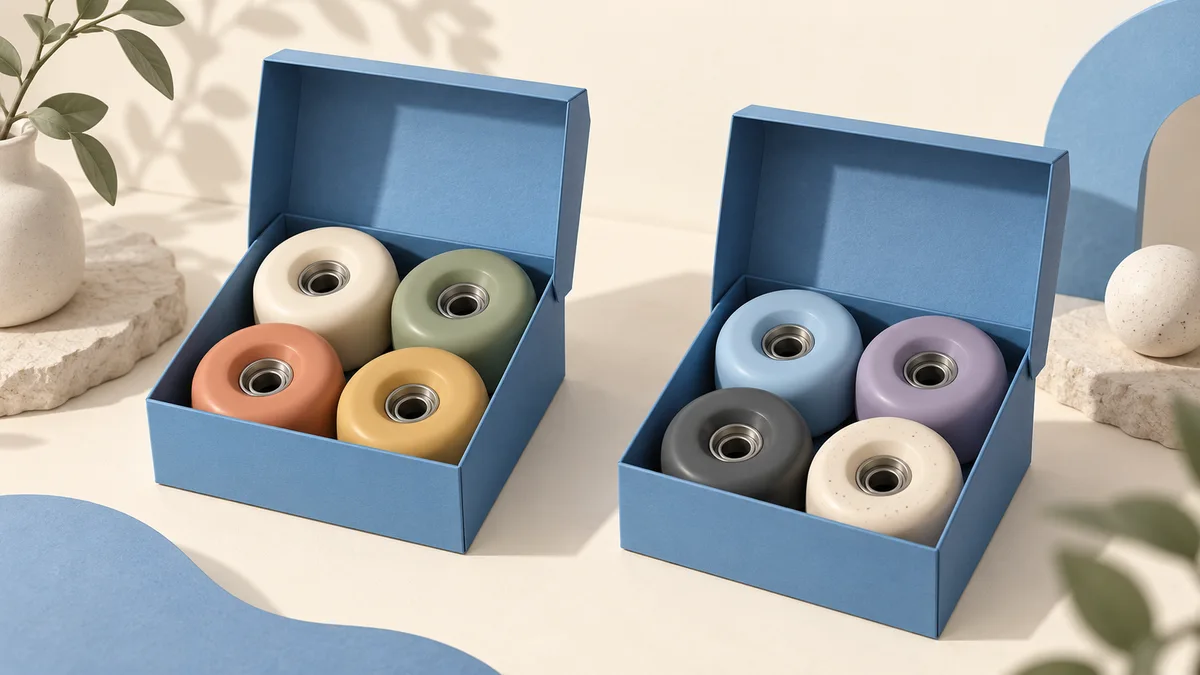
For regular rink and outdoor sessions, separate compatible wheel sets can make the change of surface more manageable. A middle-ground wheel may be convenient, but convenience is a trade-off rather than a promise of the same feel everywhere. A beginner who mainly uses one location can start by matching that location instead of buying several sets at once.
Keep sets organized with the hardware and care notes they require. Before entering a rink, inspect and clean equipment used outside and follow the venue rules. Grit and embedded debris should not be carried onto someone else's skating floor. If a wheel is damaged or badly worn, a change of location is not a reason to keep using it.
Sources: Riedell: outdoor and rink skating differences; Riedell: roller skate wheel hardness by surface
Relearn the feel after a change
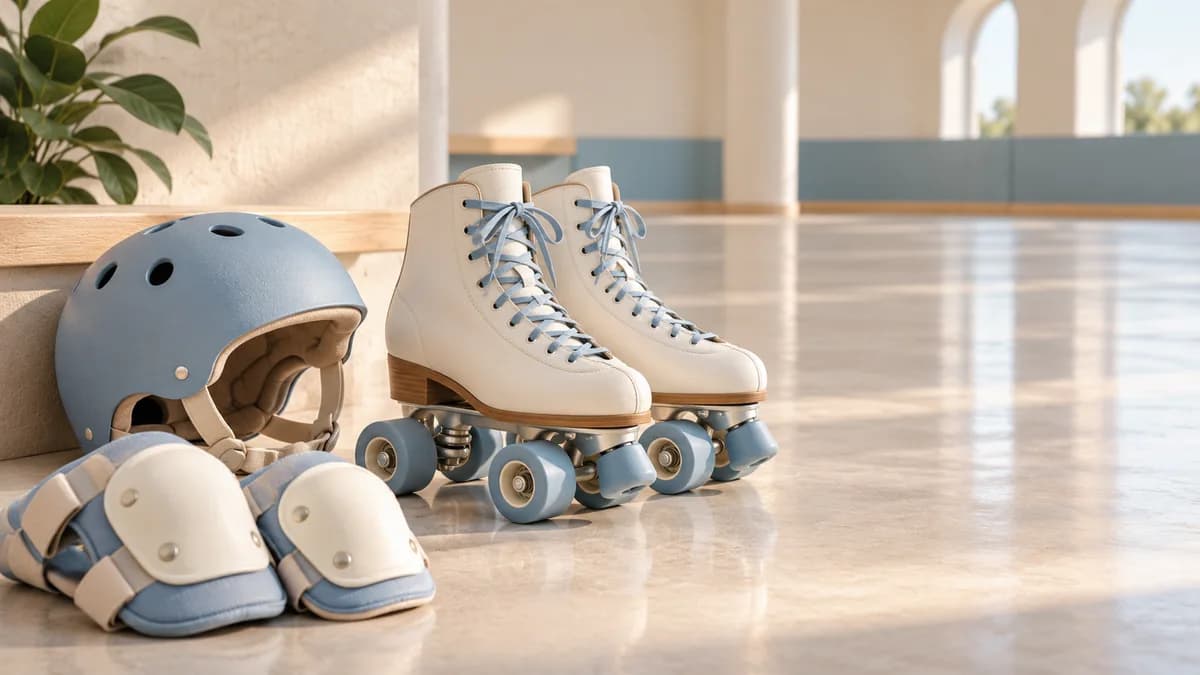
Changing wheels can alter the way a skate rolls and responds. Start a new setup in a controlled area and reacquaint yourself with turns and stopping before returning to normal speed. Keep your protective equipment and instruction routine in place; replacing wheels does not remove the need for either.
CPSC recommends smooth paved surfaces without traffic and warns against water, sand, gravel and dirt for inline skating. The same hazards are a sensible reason to reconsider a recreational quad route rather than relying on softer wheels to solve it. Treat a route that exceeds your skills or equipment limits as a route to avoid, not a wheel-shopping problem.
| Question | Why it matters |
|---|---|
| What is the actual surface? | Roughness and grip needs vary within indoor and outdoor categories |
| What does the wheel maker specify? | Hardness alone does not describe the whole wheel |
| Does it fit this skate? | Diameter, bearings, axle and clearance need checking |
| Can I control the new setup? | Practice turns and stopping before increasing speed |
Sources: CPSC: surface hazards and skating protection; Riedell: outdoor and rink skating differences
Common questions
Can I use outdoor wheels in a rink?
Sometimes, subject to venue rules and clean equipment. Softer wheels may feel slower or more grippy than your usual rink setup.
Are 78A wheels always best outdoors?
No. That is a common soft-wheel specification, not a universal recommendation for every surface, skater or discipline.
Can I change wheels without buying new boots?
Often, if the replacement set is compatible with the complete skate. Confirm dimensions, hardware and clearance before changing it.
Sources and editorial approach
ChooseRight researched the sources below to explain the topic and its practical trade-offs. Examples are illustrations, not results from our own product testing. Sources checked October 30, 2026. Artwork is AI-generated for explanation and does not document hands-on testing.