
START HERE
The short answer
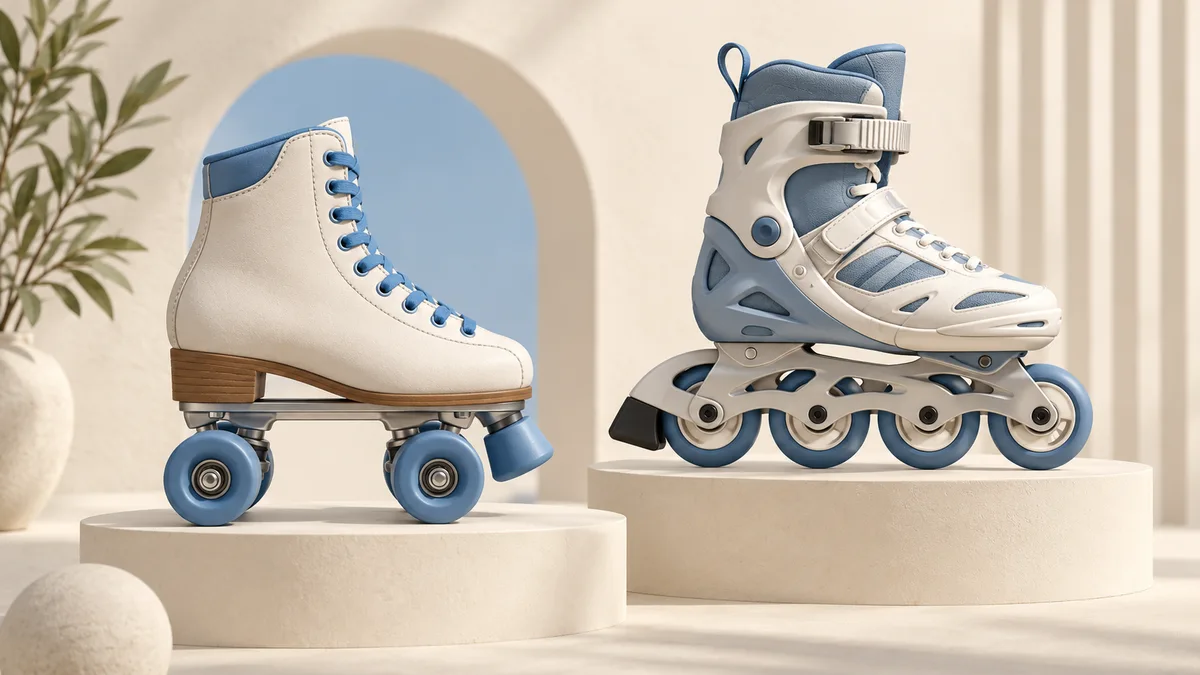
Quad skates put four wheels in two pairs beneath each foot; inline skates place their wheels in a row. Quads are common in rhythm skating and roller derby, while recreational inlines are common for fitness skating. Fit, suitable surfaces and learning to stop matter more than a universal beginner winner.
- Choose the activity and practice location before the skate style.
- Check the actual brake or toe-stop arrangement on the model.
- Neither layout makes traffic, wet surfaces or unlearned stopping skills safe.
Understand the wheel arrangement
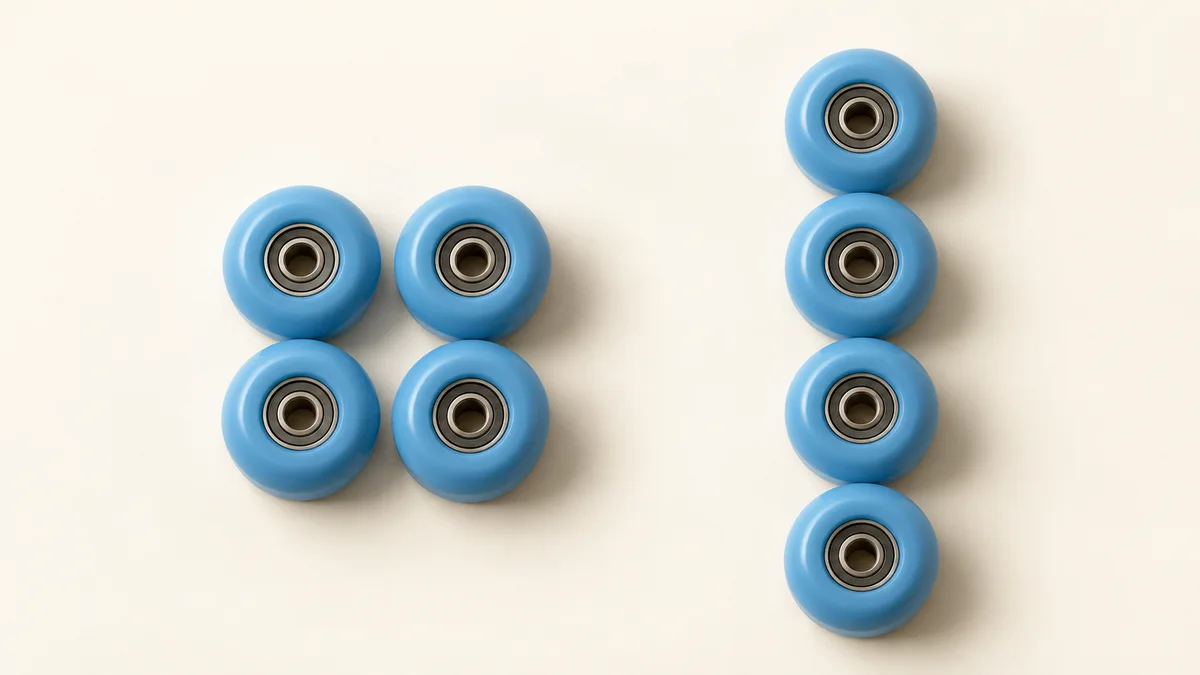
A quad skate has a pair of wheels toward the front and another toward the rear, mounted on trucks below a plate. An inline uses wheels arranged along a frame. That difference changes how you balance and steer, but it does not tell you everything about the complete skate. Boot construction, wheel size and the chosen discipline still matter.
Riedell associates quads with dance, rhythm and derby, and inlines with fitness and hockey. Those are useful starting points, not exclusive boundaries. Avoid choosing on the assumption that four side-by-side wheels guarantee effortless learning or that inline wheels automatically make a beginner faster. Each format has skills that need practice.
Sources: Riedell: adult roller skate types and fit considerations
Start with your real practice space
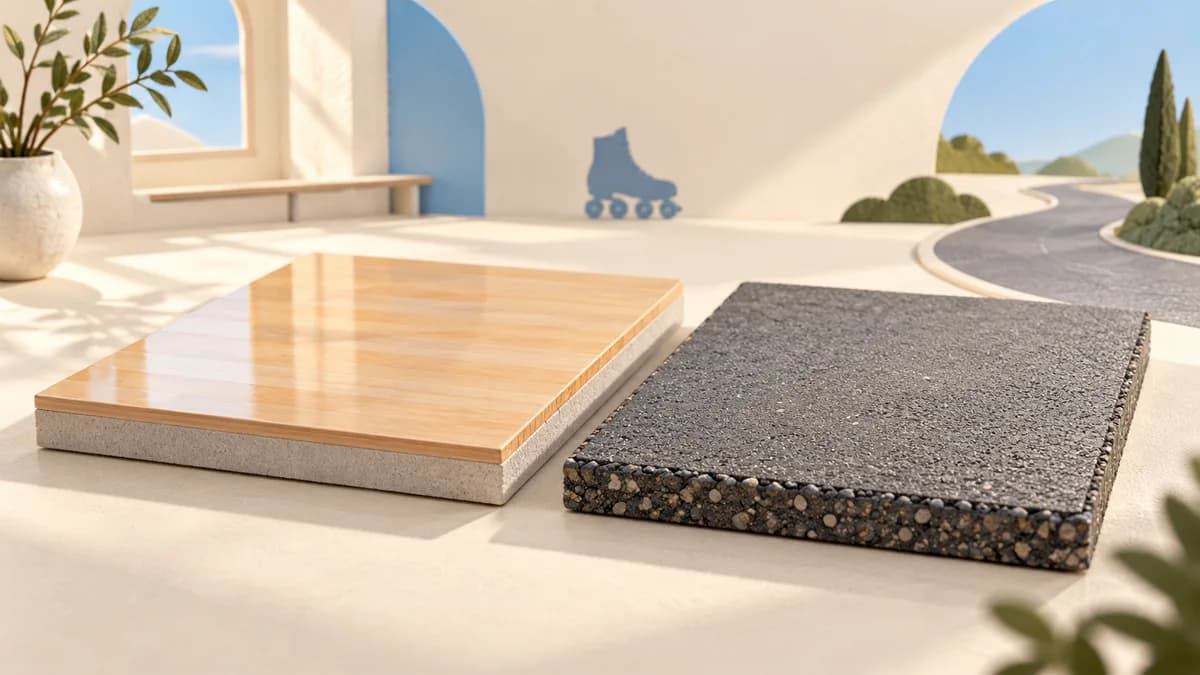
List where you expect to skate most often: a local rink, a supervised class or a smooth paved recreation area. Ask that venue what equipment is suitable and whether it teaches your preferred format. Learning alongside an instructor familiar with the skate type can be more useful than following a general claim that one layout is easier.
For outdoor practice, CPSC recommends smooth paved areas without traffic and avoiding water, sand, gravel and dirt. A wheel configuration is not permission to roll through hazards. Route conditions and your ability to control speed should decide where you practice, especially before considering hills or a longer outing.
Sources: Riedell: adult roller skate types and fit considerations; CPSC: skating safety and protective equipment
Compare fit before comparing speed
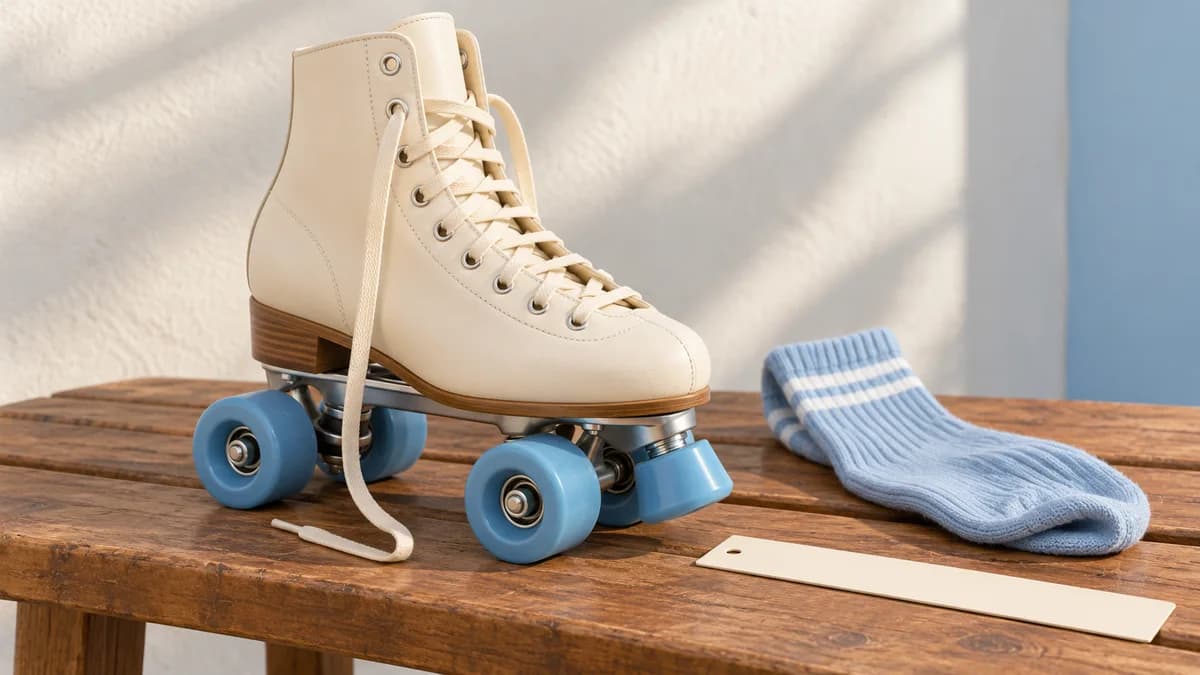
Use the manufacturer sizing instructions and try the skates with the socks you intend to wear. Check heel retention, pressure points and the closure system. A size printed on a skate is not a promise that it matches your everyday shoe size, and a loose boot cannot be made well-fitting by choosing a supposedly more stable wheel layout.
Rollerblade recommends sorting out skate and protective-equipment fit before starting. During a fitting, secure the closures as instructed and spend enough time standing and bending comfortably to notice problems. If one foot feels unsupported or a fastening cannot hold its adjustment, resolve that before your first rolling session rather than hoping practice will fix the fit.
Sources: Rollerblade: introductory fitting and braking practice; Riedell: adult roller skate types and fit considerations
Check how the specific skate stops
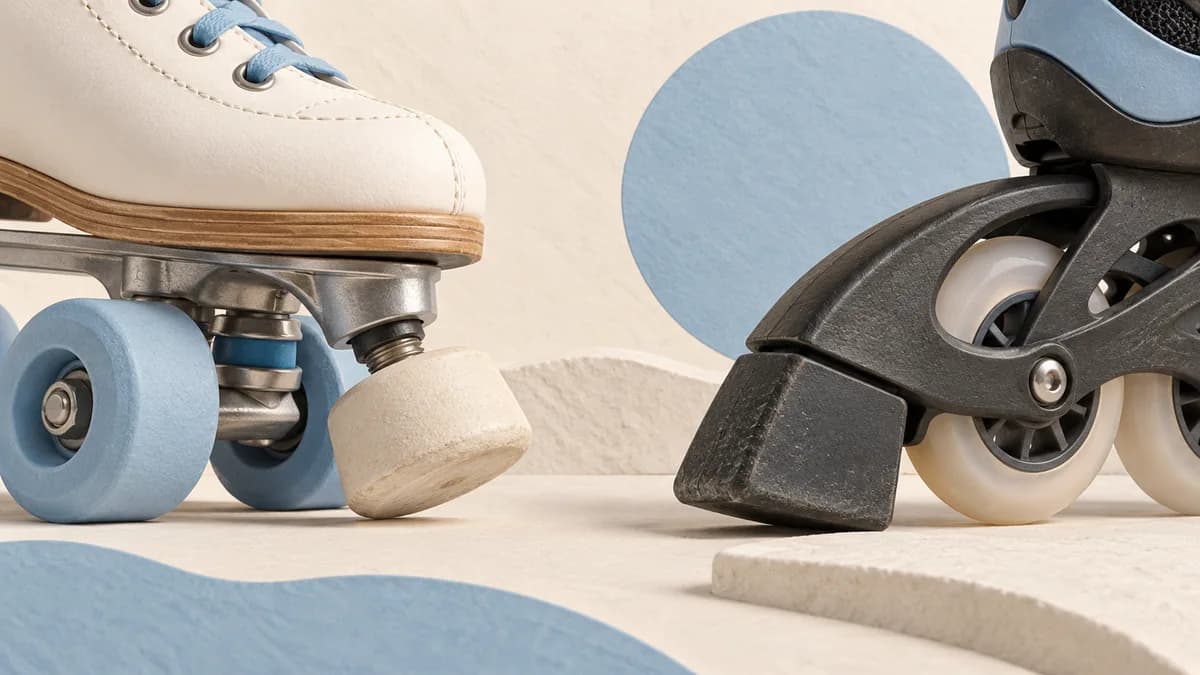
Many recreational inline skates use a heel brake, but some specialist models have no brake. Rollerblade explains that its brake slows the skate progressively rather than stopping instantly, and braking distance increases with speed. A racing or specialist setup without a beginner-friendly brake should not be treated as the default first choice.
Quad models commonly use a front toe stop, with the exact design varying by skating style. Its presence does not teach the technique needed to use it. Arrange instruction appropriate to the model and practice speed control in a suitable area. Do not transfer an online heel-brake demonstration to a toe stop and assume the movement is equivalent.
Sources: Rollerblade: technical manual and brake limitations; Riedell: adult roller skate types and fit considerations
Make the first session a learning session
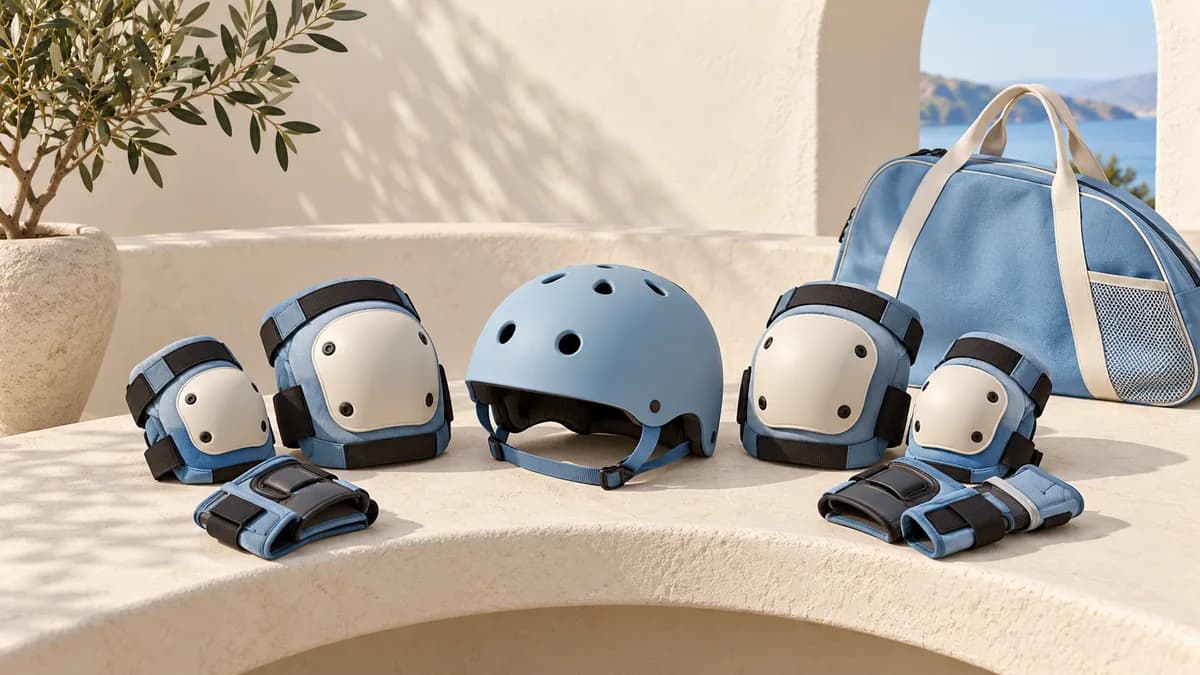
Prepare suitable protective equipment, including a properly fitted helmet and skating pads. CPSC highlights wrist guards, knee and elbow protection along with learning to stop. Rollerblade recommends practicing the braking movement before attempting a slope. Begin with a location and pace that allow you to work on control rather than chasing distance.
If you can, rent or borrow a correctly fitting pair through a lesson before committing to a format. Note what felt difficult: fastening the boot, standing, turning or stopping. That gives a more useful next step than replacing quads with inlines, or the reverse, because the first session was awkward. Progress comes from equipment that fits and skills matched to it.
| Your priority | What to investigate |
|---|---|
| Rink rhythm or derby | A suitable quad setup and discipline-specific instruction |
| Recreational fitness skating | A fitting recreational inline with an appropriate brake |
| Mixed indoor and outdoor use | Wheel suitability, venue rules and your stopping skills |
| First lessons | Rental fit, protective gear and instructor experience |
Sources: CPSC: skating safety and protective equipment; Rollerblade: introductory fitting and braking practice
Common questions
Are quad skates easier than inline skates?
There is no single answer for every learner. The activity, boot fit, surface and teaching approach affect the experience.
Can inline skates be used indoors?
Some can, but confirm the venue rules and the wheels and skate model intended for that surface.
Can I remove an inline heel brake once I can roll?
Being able to roll is not the same as being able to stop reliably. Follow the manufacturer instructions and develop the necessary stopping skills with suitable instruction.
Sources and editorial approach
ChooseRight researched the sources below to explain the topic and its practical trade-offs. Examples are illustrations, not results from our own product testing. Sources checked October 30, 2026. Artwork is AI-generated for explanation and does not document hands-on testing.