
START HERE
The short answer
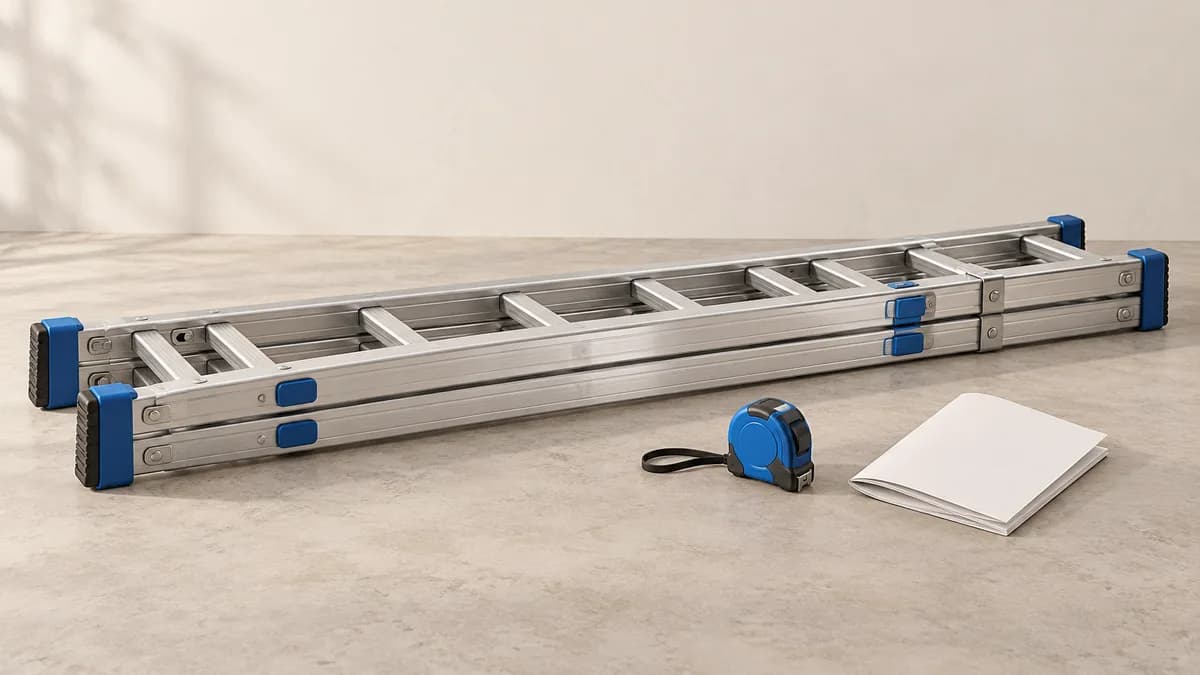
For an ordinary leaning portable ladder, position the feet about one-quarter of the working length away from the vertical line below the upper support. That corresponds to roughly 75.5 degrees from horizontal. The rule does not replace secure supports or the manufacturer instructions.
- Measure working length along the ladder to its upper support.
- Measure setback from directly below that support.
- A correct angle cannot make unstable ground or a damaged ladder safe.
First identify the ladder configuration
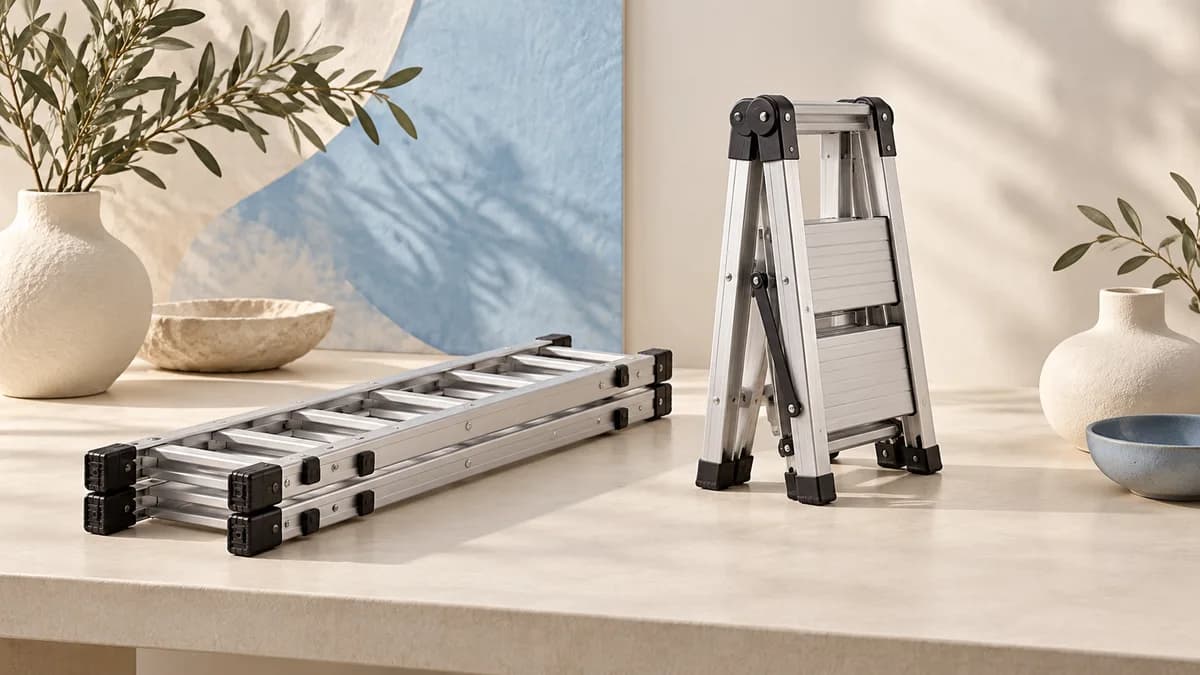
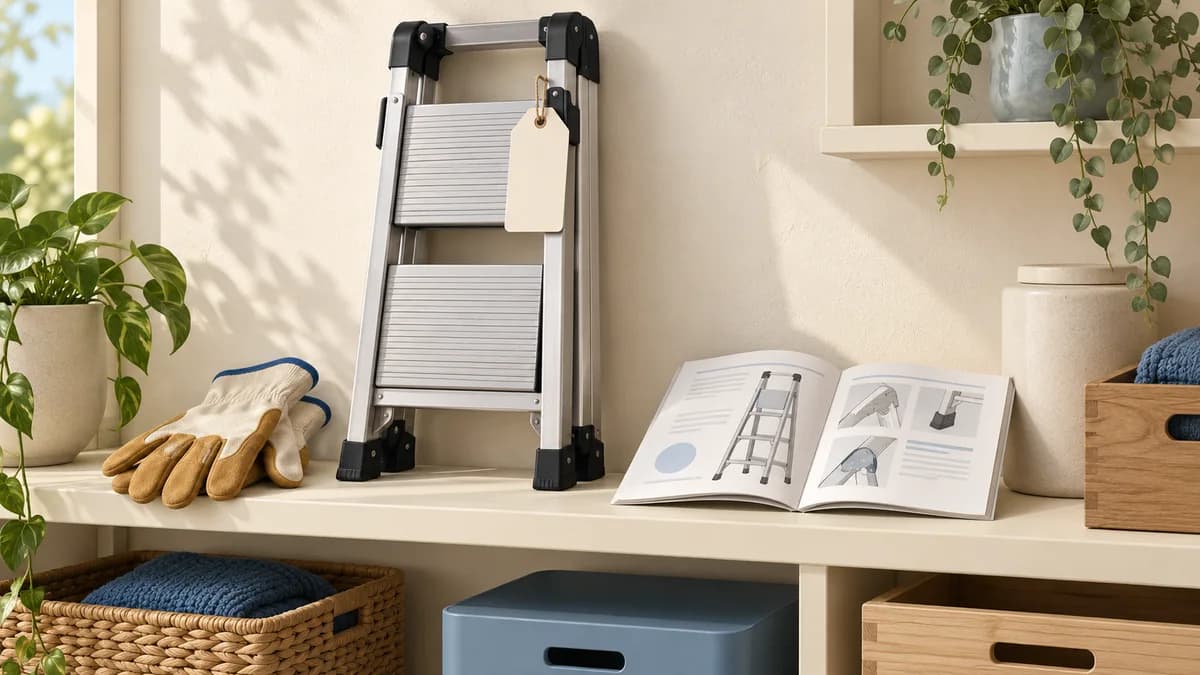
The 4-to-1 guidance concerns ladders that lean against an upper support, including ordinary straight and extension configurations. It is not an instruction to partly open a stepladder until it looks steep enough. A self-supporting stepladder uses its specified spreaders or locks and the configuration described on its label.
Combination and telescoping designs need their own setup checks. Confirm which configuration is permitted, how the sections lock, and what highest standing level applies. If a ladder has missing instructions or cannot lock correctly, finding a more convenient angle is not a solution. Resolve those issues before climbing.
Sources: OSHA: portable ladder angle and use; American Ladder Institute: single ladder use and care
Calculate from the working length
Working length runs along the rails from the feet to the upper support point. Divide that length by four for the approximate horizontal setback. As an illustrative calculation, a 16-foot working length gives a 4-foot setback. That is not the same as saying every ladder advertised as 16 feet belongs 4 feet from a wall.
An extension ladder may have overlap and a portion above its support. Those dimensions change the relationship between its overall size and the section carrying you to the support. Oregon OSHA also explains an easily missed detail: when an eave projects outward, measure the setback from the vertical line below the eave support, not the recessed wall.
Sources: Oregon OSHA: portable ladder setup and working length
Check the angle before climbing
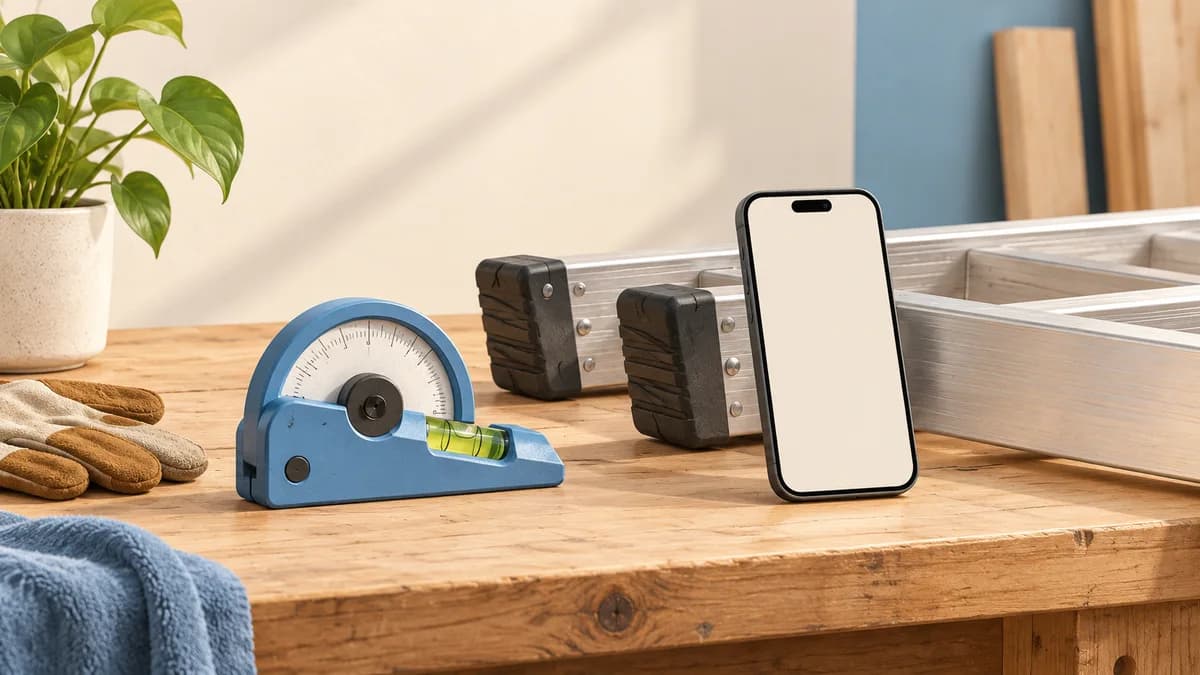
The one-quarter relationship gives an angle of approximately 75.5 degrees from level ground. An angle indicator or the manufacturer setup markings can help check it. Use any indicator according to its instructions; a phone held against the wrong surface or configured to a different reference is not a meaningful confirmation.
Do the check with the ladder stationary and supported. The important question is whether the actual climbing configuration matches the required angle, not whether a calculation on paper is correct. If the available space forces the feet much closer to or farther from the support, choose appropriate access equipment instead of accepting the compromise.
Sources: American Ladder Institute: single ladder use and care; Oregon OSHA: portable ladder setup and working length
Check the site as well as the slope
OSHA advises keeping the top and bottom areas clear and maintaining surfaces free of slipping hazards. The feet need a suitable stable base, and the upper support must suit the ladder. Do not put the feet on a box or loose object to gain height. A neat angle measurement does not compensate for movement underneath.
Check the load rating against the person plus carried equipment, look for nearby electrical hazards, and plan how tools will reach the work area without occupying both hands while climbing. Access to an upper landing introduces additional extension and securing requirements. Treat those as separate checks rather than assuming the angle alone covers roof access.
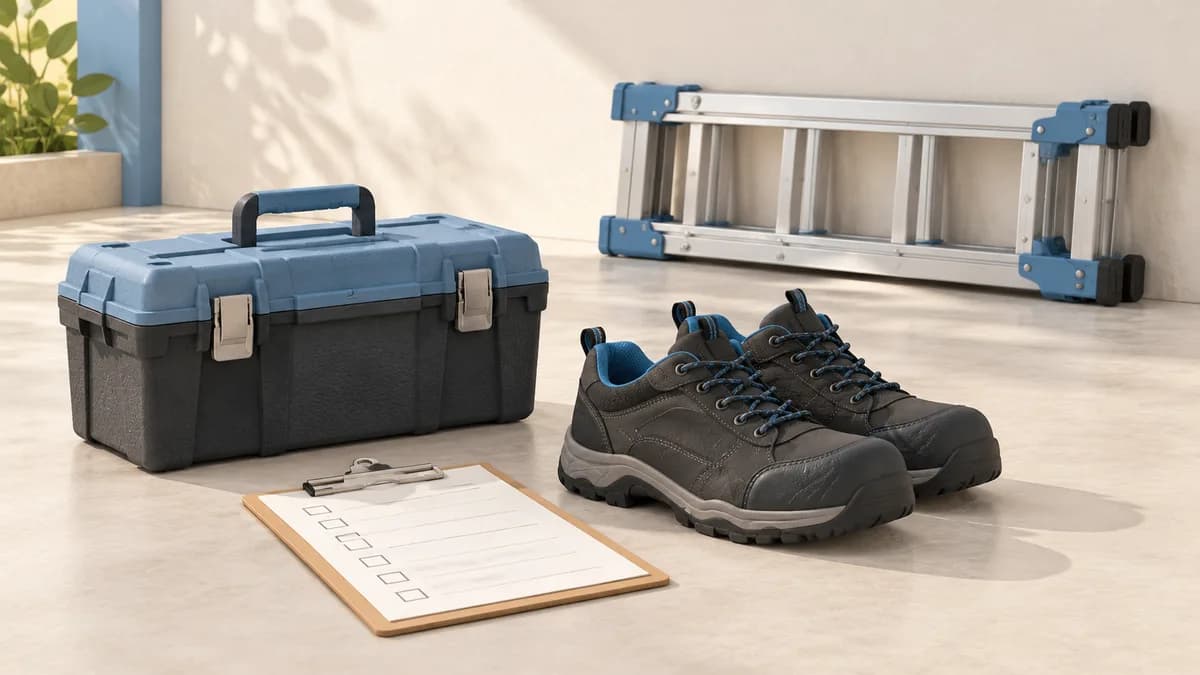
Sources: OSHA: portable ladder safety QuickCard; American Ladder Institute: single ladder use and care
Stop when the setup cannot be made suitable
Look over the rails, feet, rungs and locking components before use. Structural damage, missing parts or a defective locking mechanism calls for taking the ladder out of service and following the maker guidance. Do not improvise repairs or depend on a second person to hold an otherwise unsuitable setup together.
Work near the middle of the rungs and descend before relocating the ladder. If the job repeatedly requires reaching sideways or stretching above the permitted standing level, a different ladder or work platform may be needed. The useful outcome of checking the angle is sometimes deciding that this ladder does not fit this task.
| Check | What to establish |
|---|---|
| Configuration | Leaning use is permitted and locks are engaged |
| Working length | Feet to upper support along the rails |
| Setback | About one-quarter of that working length |
| Site | Stable support, clear area and appropriate access plan |
Sources: American Ladder Institute: single ladder use and care; OSHA: portable ladder safety QuickCard
Common questions
Is the 4-to-1 rule based on wall height?
The guidance cited here uses working length along the ladder. Wall height and rail length are different measurements.
Does this apply to a stepladder?
Not to its ordinary self-supporting configuration. Follow the stepladder label and fully engage its specified spreaders or locks.
Can I use a longer ladder at a shallower angle?
Do not alter the required angle to force a ladder into an unsuitable space. Select equipment and a configuration appropriate to the job.
Sources and editorial approach
ChooseRight researched the sources below to explain the topic and its practical trade-offs. Examples are illustrations, not results from our own product testing. Sources checked October 30, 2026. Artwork is AI-generated for explanation and does not document hands-on testing.