
Finding a good telescoping ladder can turn into a hassle. You probably want something safe, easy to move, and strong, but there are dozens of choices out there. We understand how tough it is to sort through the options. Here are the top 5 models we picked after checking expert ratings and real user feedback:
Best Telescoping Ladder Picks for April 2026 (By User Reviews)
- EN131 CE CERTIFIED: The telescoping ladder meets EN131 CE standards and is equipped with anti-slip foot pads and a safety lock design, ensuring stability and safety during use
- SAFETY & STABILITY: Our lightweight yet extension ladder supports up to 330 lbs. Each step features a double height-locking latch for safety, preventing pinching and allowing easy height adjustment
- ALUMINUM MATERIALS: Crafted from premium, thick aluminum alloy with an oxidized surface, our telescoping ladder is built to last. Reinforced nylon fiber in the plastic parts enhances the ladder's...
- 🛡️【Premium Aluminum Alloy】 RIKADE telescopic ladder using 6063 high strength and high hardness aluminum alloy tube, better quality and safer. Package: 42.3"×19.8"×3.7". The net weight of...
- ⚖️【Great Stability】 Fully safe load bearing 330 pounds, suitable for most people, independent button adjustment of each section can effectively prevent pinching hands when contracted.
- 🔗【Double Hooks】 Compare to old version, the top of telescopic ladder add two hooks which makes the using more safe, they will catch the corner like picture shows. When use it indoor, turn the...
- Reduced Wobble: After repeated tests, we added two new triangle stabilizers on the telescopic ladder, which can reduce the shaking amplitude from 30° to 10° and effectively improve the stability by...
- Safety of Use: The high quality construction of the telescoping ladder ensures that each part retracts safely. Smart locking pins hold the parts in place and prevent sliding, and the ladder will...
- Quality Material: The sturdy frame of the telescopic ladder is made of high-quality aluminum alloy, which is resistant to wear and corrosion, rust, high and low temperatures and aging, and can...
- 🛡️【Premium Aluminum Alloy】 RIKADE telescopic ladder using 6063 high strength and high hardness aluminum alloy tube, better quality and safer. Package: 42.3"×19.8"×3.7". The net weight of...
- ⚖️【Great Stability】 Fully safe load bearing 330 pounds, suitable for most people, independent button adjustment of each section can effectively prevent pinching hands when contracted.
- 🔗【Double Hooks】 Compare to old version, the top of telescopic ladder add two hooks which makes the using more safe, they will catch the corner like picture shows. When use it indoor, turn the...
- Meets new 2019 ANSI/OSHA standards for safety compliance and duty rating.
- Aerospace Engineered using airplane grade aluminum alloy for strength
- Extends and locks by the foot with easy no pinch closure system featuring an Angled Thumb Release to ensure proper hand position
What Makes a Telescoping Ladder Stand Out?
Not all ladders feel the same when you use them. Some seem wobbly. Others take forever to unlock or slide down. A strong telescoping ladder offers a mix of stability, user-friendly locking, and lightweight portability. It should make you feel confident, not nervous, when you climb up.
We have spent time looking at these ladders from every angle, weight, max height, safety, how easy they are to set up. Sometimes, even a small flaw becomes annoying after a few uses. If you have ever tried to unlock a sticky rung while already halfway up, you know what we mean.
A well-designed telescoping ladder closes smoothly, stays sturdy at full height, and does not chew up your fingers or catch on your clothes as you fold it down.
From our research, the best models do not sacrifice one detail for another. They are safe, compact, and reliable, without needing much effort to manage. They also last, which matters if you plan to use your ladder for years.
How to Pick the Right Telescoping Ladder
Choosing the right ladder is not always about just “bigger is better.” It often comes down to your specific situation. Do you plan to use it indoors, outdoors, or both? How much space do you have for storage? Consider these points before you decide.
- Weight capacity; most ladders hold 250-300 pounds, some even more.
- Fully extended height; is 10 feet enough, or do you need 15 feet or higher?
- Material; lightweight aluminum is common, but some steel and fiberglass options exist.
- Locking mechanism; do latches feel secure and easy to unlock?
- Portability; is it light enough to carry around comfortably?
- Storage size; does it fit in your car trunk or closet?
- Certification; does it include safety certifications like EN131 or ANSI?
Ignoring one of these factors could leave you with a ladder that is too short, too bulky, or worse, not strong enough for your needs.
Ladder Height: Find What Works for You
Many buyers just guess when it comes to picking ladder height. Sometimes you only need 7 or 8 feet. Other times, you suddenly have to reach a second-story window. So, what height should you pick?
Ladders listed as 12 or 15 feet often measure the length before you set them up. The actual “working” height is usually less, especially if you want to stay safe and not climb the very top rung.
For general home use, a 10 to 12-foot ladder usually works. If you need one for roof access or frequent outdoor work, something higher might save you time. Just remember, the taller it gets, the heavier it might feel, both to carry and to keep steady.
Materials Matter: Aluminum vs. Steel vs. Fiberglass
Most telescoping ladders use aluminum. Why? It keeps the weight down. Steel feels stronger and can support more weight, but it will wear you out faster when moving it around. Fiberglass is less common for telescopers but does not conduct electricity, which matters for some electrical tasks.
Aluminum usually finds the sweet spot between price, durability, and portability. Just avoid really cheap options. They tend to flex too much and the lock tabs might not last.
Understanding Locking Systems
The best telescoping ladders give you confidence that the rungs will not collapse while you climb. The locking mechanism might be the most overlooked feature. Some have thumb buttons, others use sliding latches, and a few try creative solutions.
If a ladder locks solidly and gives an obvious “click” or tactile feel, you know it is safe to use. If the lock feels loose, or does not fully engage, we would suggest skipping that one. A jammed or weak lock is an accident that can wait to happen.
One little annoyance we found: some models tend to “pinch” your fingers if you are not careful when collapsing them. Better ladders now have slow-closing rungs to help reduce this risk, but you still need to pay attention every time you collapse it.
Never trust a telescoping ladder that does not lock with an audible or clear physical sign. A good lock gives peace of mind at every step.
Weight and Portability
If you rent or move tools often, weight is a constant headache. Ladders that weigh under 20 pounds are much easier to move around but are usually made of thinner material. Heavier options often mean more stability, especially at full height.
In our experience, anything over 30 pounds becomes cumbersome, especially if you need to climb stairs or carry it through tight spaces. On the flip side, too light can feel flimsy, so try to strike a balance. You do not want a workout every time you move your ladder.
Storage and Transport
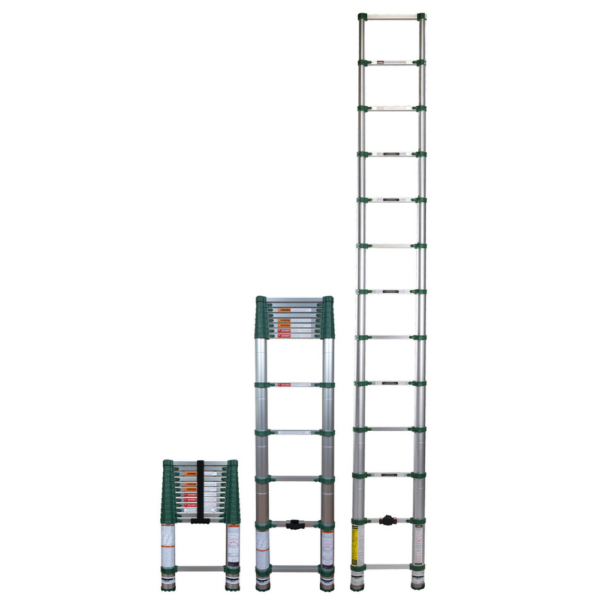
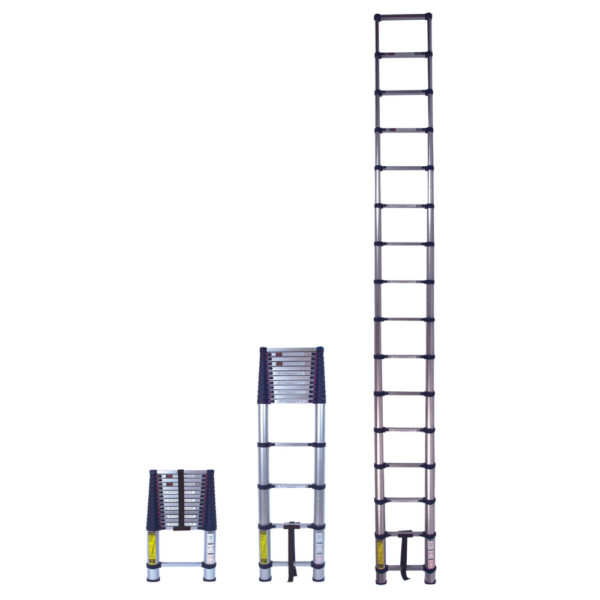
One clear reason people love telescoping ladders: they save space. Instead of wrestling with a long, rigid ladder, you get a tool that shrinks small enough to fit in a closet or car trunk.
| Collapsed Height | Usually 2-3 feet |
| Extended Height | Up to 15 feet or more |
| Average Weight | 18-30 pounds |
| Common Width | About 18-20 inches |
Some models now include a carrying strap or bag. It is not essential, but it does keep things neater, especially if you are working in a professional setting or storing it in your vehicle.
Key Safety Features to Check
Safety should never be an afterthought. We have seen enough ladders where safety was sacrificed for low cost or speed. Here is a short list of proven safety features to check before buying:
- Nonslip feet; wide rubber ends grip the floor and stop skidding.
- Finger-safe closing; look for designs that protect fingers during collapse.
- Secure locks at every rung, not just the bottom or top.
- Clear max-load rating; never buy one without it.
- Labels and instructions for proper height and usage
Do not ignore safety certifications. Ladders marked as certified have passed independent tests for strength and safety. It is a good sign the brand did not cut corners.
Real Pros and Cons: Where Telescoping Ladders Succeed or Fall Short
Extra Features and Upgrades
Some manufacturers add special features that make a ladder stand out. Not everyone needs them, but if you use your ladder every day, they make a difference.
- Carry straps or storage bags for easier transport.
- Slow-descending rungs for finger protection.
- Integrated level gauge for straight ladder setup.
- Extra-wide steps for more comfort.
- Tool trays or hooks near the top (rare but useful).
These improvements are not always worth the extra money, but they do add convenience and safety for frequent use. Buyers doing lots of home projects or repairs may find these features save time and effort in the long run.
Who Needs a Telescoping Ladder?
People often think ladders are for contractors or pros, but telescoping models have clear benefits for everyday users. If you need to change a light bulb, paint, trim a tree, or access a roof, this style makes things easier.
Renters with limited space love them. Homeowners appreciate the flexibility. Even contractors buy them as a backup ladder, thanks to the compact storage and lightweight frame. Telescoping ladders are just as handy for small apartments as they are for garages or truck beds.
Content Switcher: Safety Checks vs. Maintenance Tips
Safety Checklist
Maintenance Tips
Buyer’s Guide: How We Pick the Best Telescoping Ladders
With so many ladders claiming to be the best, we follow a strict process to compare. Here is how we judge and recommend them:
- Review actual user ratings over many months, not just recent ones.
- Check independent test results to verify weight, strength, and certifications.
- Test setup and breakdown time, no one wants a ladder that takes ten minutes to extend.
- Inspect locking mechanisms firsthand, not just through photos.
- Compare warranties and return policies to see which brands back up their claims.
- Look for pain points in verified reviews, like pinched fingers or loose locks.
Sifting through hundreds of reviews is not always pleasant. Even the best ladders will have a few angry buyers, often because of shipping damage or unrealistic expectations (like wanting commercial sturdiness in a 10-pound product). We focus on real patterns that come up again and again.
It is interesting how some ladders seem solid for the first year, then start to show problems. A fifteen-minute test does not always cover this, so we add in long-term reports whenever we can.
FAQ About the Best Telescoping Ladder
What should you look for when buying the best telescoping ladder?
Always check for safety certifications, a sturdy locking system for every rung, and clear weight capacity ratings. The ladder should feel stable at full height and collapse smoothly for storage. Features like nonslip feet, slow-closing rungs, or a carry strap can add value.
Are telescoping ladders safe to use at maximum height?
Most high-quality telescoping ladders are safe when used as directed, on stable ground and within rated weight limits. Never climb past the highest safe step, and always check all locks before putting your weight on the ladder.
How do you keep a telescoping ladder working smoothly?
Keep all locking parts clean and free of debris. Lubricate hinges with a dry silicone spray now and then. Avoid leaving the ladder outside for long periods, especially in rain or harsh sun.
Can a telescoping ladder replace a regular extension ladder?
For most home and light professional uses, a well-built telescoping ladder can handle similar jobs. Very heavy construction work may still require a traditional extension ladder for added strength and height.
What is the best way to store a telescoping ladder?
Collapse it fully and keep it indoors, away from moisture or direct sunlight. A closet, garage, or trunk works well. Check the feet and locks after long storage before reuse.
Choosing the right telescoping ladder is about more than picking the first one that looks good online. It means thinking about your needs, your storage limits, and how much you trust the build. The right decision makes every project go smoother. What task do you find most challenging with your old ladder, and would a telescoping model make it easier?
Last update on 2026-04-22 / Affiliate links / Images from Amazon Product Advertising API

