
START HERE
The short answer
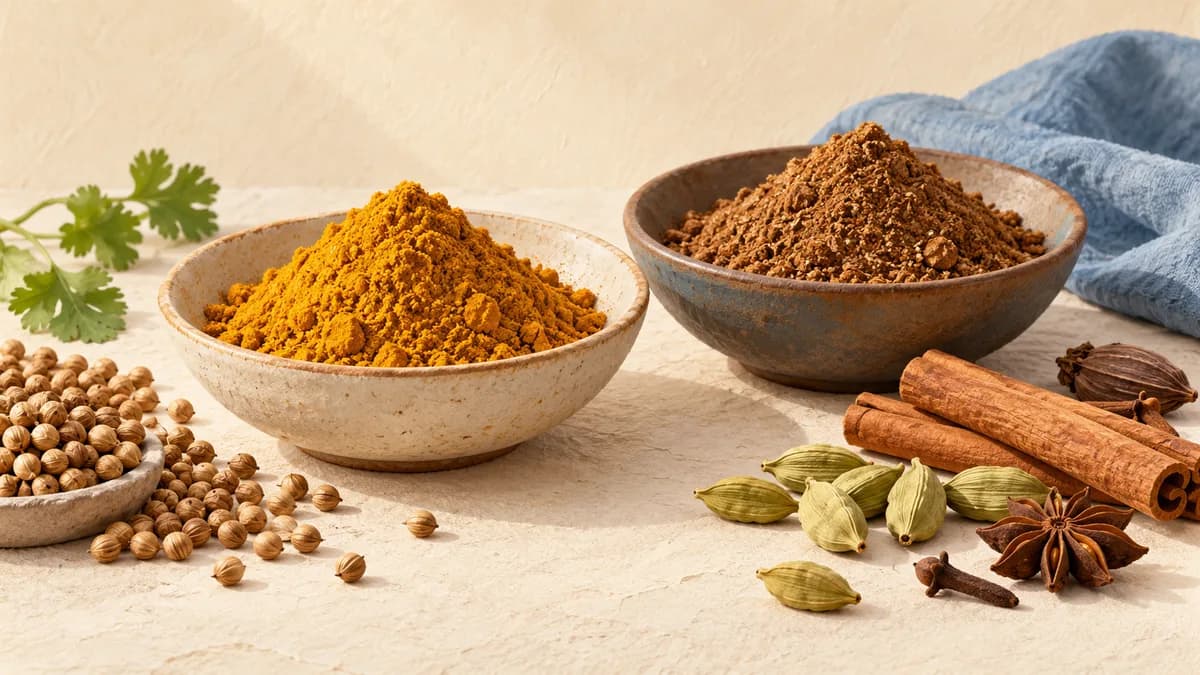
Curry powder and garam masala are different spice blends with overlapping ingredients. Many curry powders contain turmeric; garam masala often emphasizes aromatic spices. Check the actual labels and recipe before substituting.
- Compare ingredients rather than assuming every blend tastes alike.
- A blend can be aromatic without being particularly hot.
- Treat a substitution as a recipe adjustment, not a guaranteed match.
Start with the ingredient lists
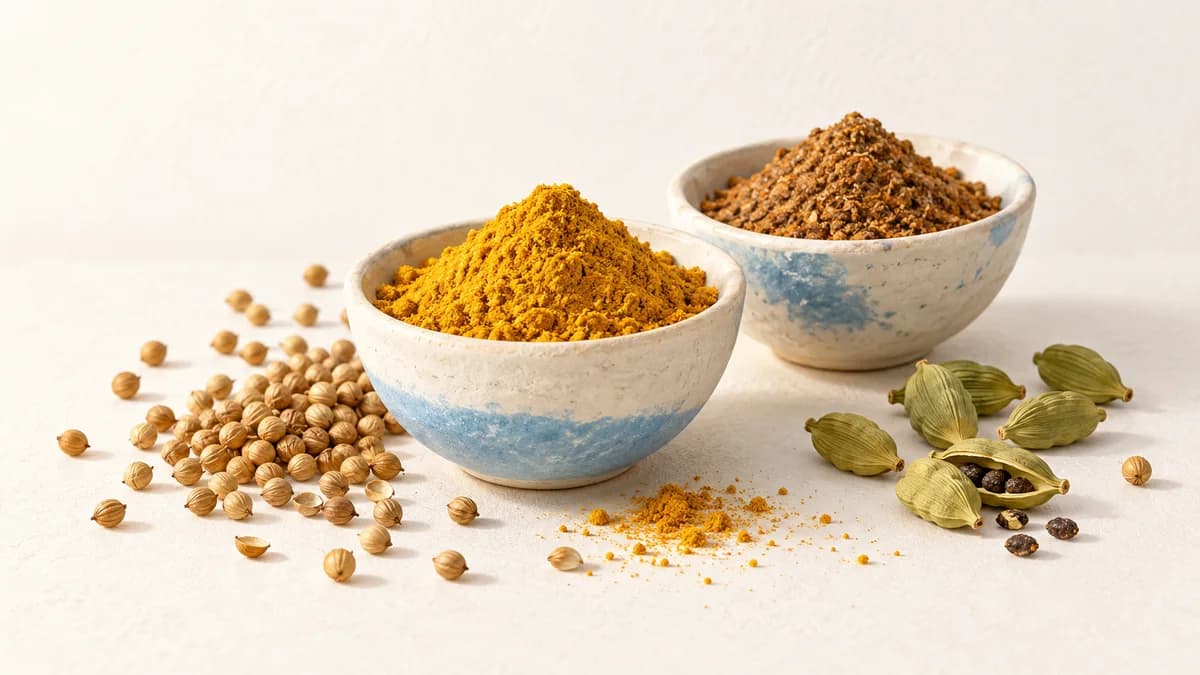
The US McCormick curry powder lists coriander, fenugreek, turmeric and cumin alongside other spices. Its Australian garam masala lists coriander, cumin, allspice, pepper and cardamom, among others. These are concrete examples, not definitions of all curry powders or masalas.
Place your jars beside the recipe and identify the main differences. If one contains turmeric and the other does not, expect a different color as well as a changed flavor. If both contain cumin, that shared ingredient does not make the whole mixtures interchangeable.
Sources: McCormick: curry powder ingredients; McCormick Australia: garam masala ingredients and uses
Separate chili heat from aromatic intensity
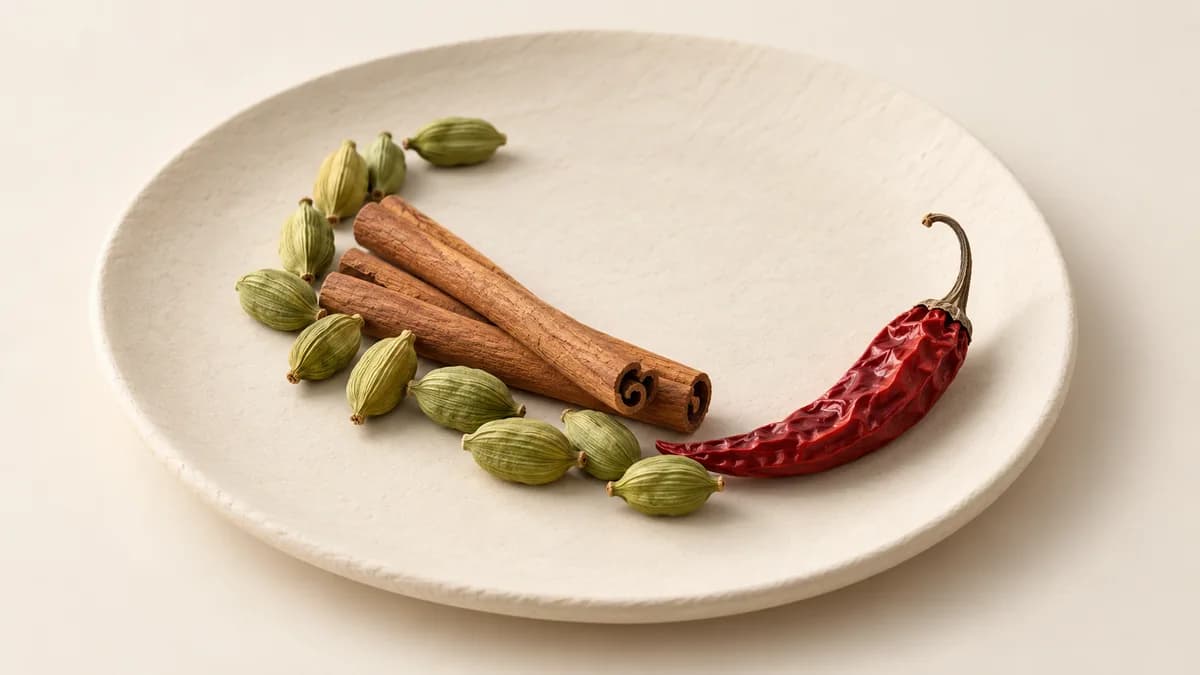
Words such as warm or bold can describe aroma rather than chili heat. Cinnamon, cloves and cardamom create a different impression from a large amount of chili. The garam masala example includes both aromatic spices and chili ingredients, so its name alone cannot predict the heat.
For a heat-sensitive household, inspect the chili and pepper ingredients and the package description. When cooking from a new recipe, avoid adding an extra chili ingredient automatically just because the dish seems pale or smells mild before cooking.
Sources: McCormick Australia: garam masala ingredients and uses; McCormick: curry powder ingredients
Let the recipe decide when the spices go in
There is no reliable rule that every curry powder must go in at the start and every garam masala only at the end. The McCormick garam masala usage instructions include frying it with rice and using it on meat before cooking.
Read the complete method before you start. If the recipe specifies heating spices in oil, have the next ingredients ready so the spices are not left unattended. If it calls for a finishing addition, reserve that amount rather than putting everything in with the onions.
Sources: McCormick Australia: garam masala ingredients and uses; University of Delaware Extension: using herbs and spices
Make a cautious substitution
If the correct blend is unavailable, decide whether you want a close reproduction or simply a pleasant meal with what you have. For the first goal, find a recipe designed for your blend or follow the recipe author's substitution. For the second, a small test portion gives more control.
University of Delaware Extension describes testing a spice combination in a portion of soup or stew before changing the full pot. This is especially useful when one blend is unfamiliar. Do not use uncooked meat or an unsafe-to-taste mixture for that check.
| What differs | What to reconsider |
|---|---|
| Turmeric | Color and earthy flavor |
| Chili or pepper | Heat level |
| Clove, cinnamon or cardamom | Aromatic balance |
| Added salt | Other seasoning in the recipe |
Sources: University of Delaware Extension: using herbs and spices
Keep the result easy to repeat
Record the brand, blend name and amount next to your recipe after a successful substitution. A note such as garam masala is less useful than the exact blend when you buy another jar with a different ingredient list.
Keep the original packaging information if you decant spices. Ingredients and allergen information matter as much as the jar's appearance, and formulas can change. Check the current package rather than assuming an old online photograph describes the bottle in your kitchen.

Common questions
Can I replace curry powder with the same amount of garam masala?
Not with a guaranteed result. The recipe and the actual blends determine how much the flavor changes. Prefer a recipe-specific substitution or adjust a small safe-to-taste portion first.
Does garam masala always contain turmeric?
No universal ingredient list applies. Some commercial blends contain turmeric and others do not; inspect your package.
Is curry powder a single spice?
No. It is a blend. The combination and proportions vary between products.
Sources and editorial approach
ChooseRight researched the sources below to explain the topic and its practical trade-offs. Examples are illustrations, not results from our own product testing. Sources checked October 30, 2026. Artwork is AI-generated for explanation and does not document hands-on testing.