
START HERE
The short answer
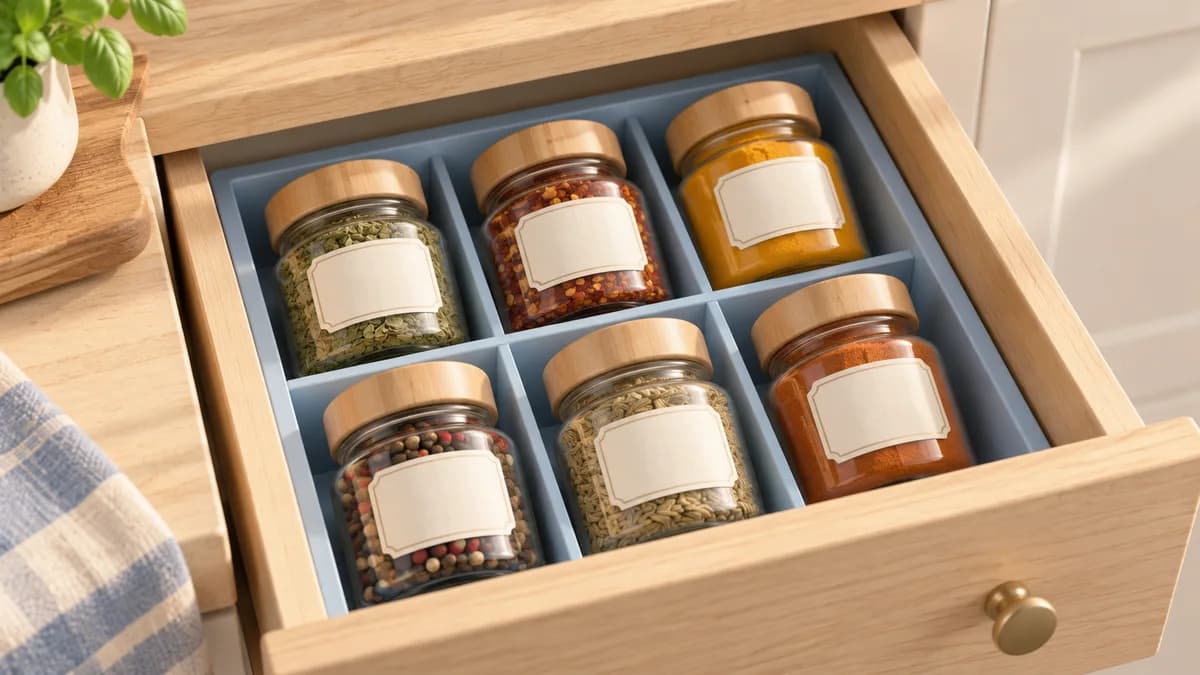
Store dried spices in tightly closed containers in a cool, dry place away from sunlight. Use a dry spoon rather than shaking the jar over a steaming pan, and retain labels and dates when transferring spices.
- Choose a dry cupboard away from the range and sink.
- Keep moisture out during cooking, not only during storage.
- Buy quantities that match your actual recipes.
Move the rack away from steam
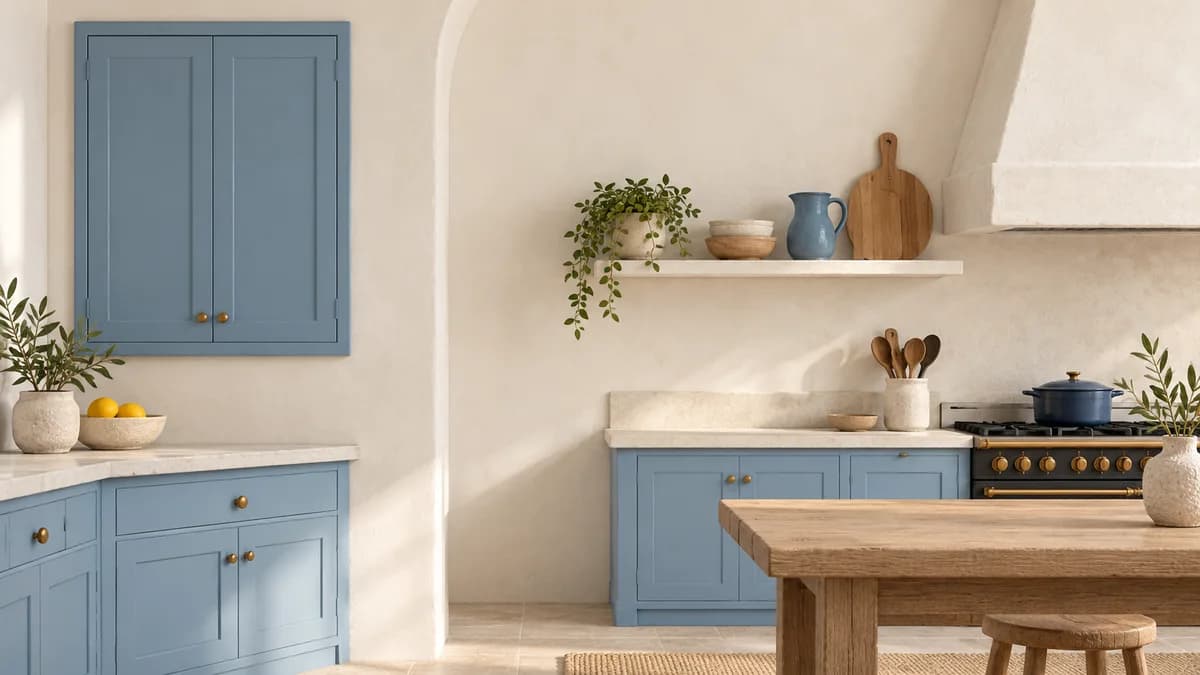
McCormick advises keeping spices away from heat, moisture and direct sun. A location above a range or beside a dishwasher can expose jars to conditions that are easy to miss when the kitchen is not in use.
Before reorganizing, notice which surfaces become warm or damp while you cook. Choose a nearby dry cupboard rather than the most decorative shelf. Keep frequently used jars toward the front so good storage does not become inconvenient enough to abandon.
Use containers that close properly
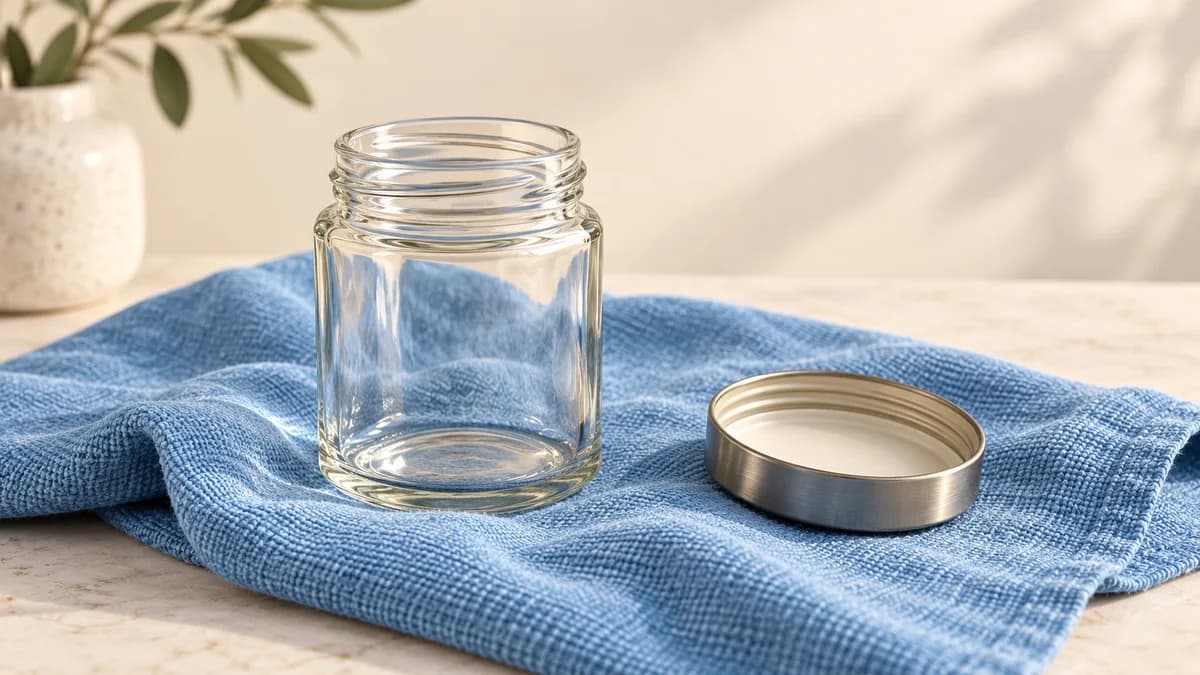
University of Delaware Extension recommends airtight storage and keeping containers out of direct sunlight. A jar with a cracked lid or a poorly fitting decorative stopper is less useful than a plain bottle with a sound closure.
If transferring spices, start with clean, fully dry food-storage containers. Keep the ingredient name, original best-by information and any allergen details. Do not combine an old remnant with a fresh refill simply to save space; keeping batches separate makes freshness problems easier to trace.
Sources: University of Delaware Extension: using herbs and spices; McCormick: spice storage and ingredient FAQs
Measure away from the cooking pot
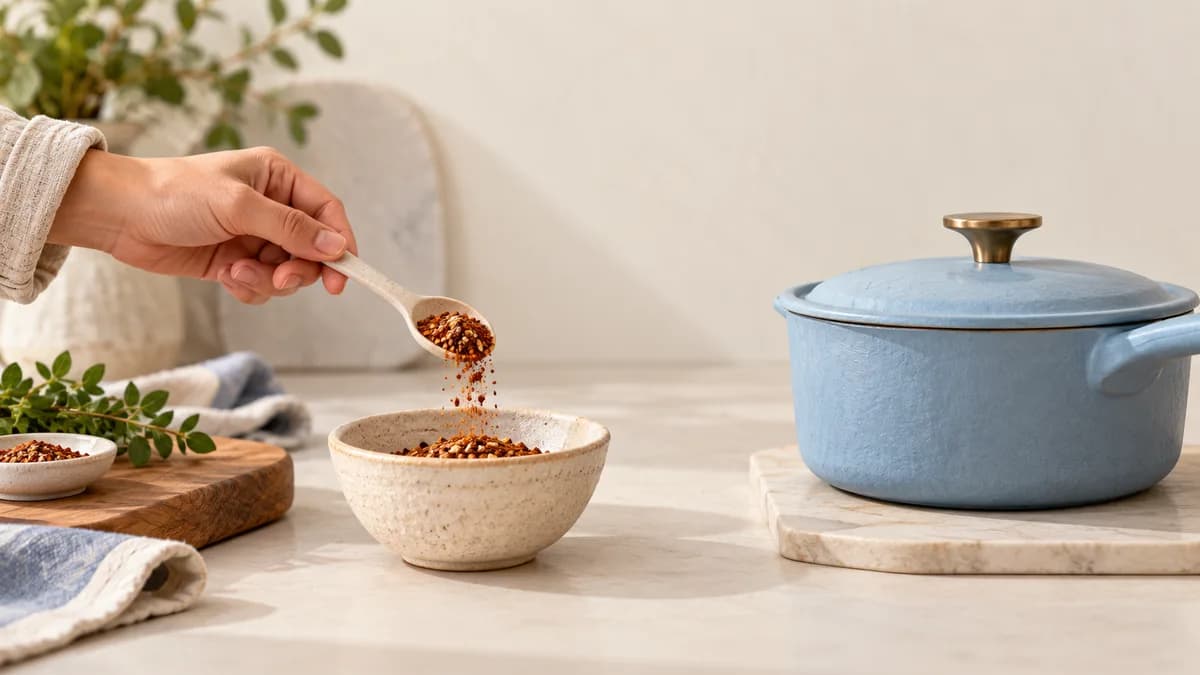
Steam can enter a jar held directly over hot food. McCormick recommends a dry measuring spoon and avoiding direct sprinkling into a steaming pot to reduce moisture and caking.
Set out a small dish before cooking, measure into it away from the stove, and close the jar. Then add the measured spice when the recipe calls for it. This simple sequence also makes it easier to notice whether you have already added a particular ingredient.
Check flavor instead of collecting old jars
Dried spices gradually lose their useful aroma. Delaware Extension suggests crushing a small amount of a whole spice and smelling it as a freshness check. A faded jar may contribute little to a dish even when the recipe quantity is correct.
Use that check to plan replacements before an important meal. If a spice smells weak, adding increasingly large quantities can make a recipe harder to control. Mold, insects or evidence of unwanted moisture call for a different response from ordinary fading: do not use a contaminated jar.
| Pantry finding | Next action |
|---|---|
| Loose or cracked lid | Replace the container or closure |
| Very weak aroma | Consider a fresh, smaller replacement |
| Unknown decanted powder | Do not guess its identity |
| Visible contamination | Discard the affected contents |
Sources: University of Delaware Extension: using herbs and spices
Build a smaller, usable collection
Choose jar size around your cooking habits. If you make one recipe with a particular spice each year, a large refill bag may create more waste than convenience. Grouping jars by the meals you actually cook can expose duplicate purchases.
Keep a short replacement list inside the cupboard and check it before shopping. Follow product-specific refrigeration guidance where supplied. Do not assume repeated trips in and out of the freezer will improve every spice: McCormick specifically warns about condensation from that routine.
Common questions
Should every spice go in the refrigerator?
No. A cool, dry cupboard suits many dried spices, while certain products have specific advice. Follow the package and keep moisture out.
Can I store spices in clear jars?
Yes, provided they close properly and are kept out of direct sunlight. Clear jars on a sunny shelf are a different situation.
Does the best-by date mean a spice becomes unsafe that day?
McCormick describes its dates as flavor and consistency guidance. That does not make visibly contaminated or damp spices acceptable to use.
Sources and editorial approach
ChooseRight researched the sources below to explain the topic and its practical trade-offs. Examples are illustrations, not results from our own product testing. Sources checked October 30, 2026. Artwork is AI-generated for explanation and does not document hands-on testing.